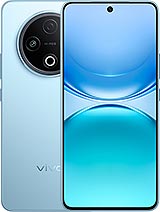
Huawei nova 14 review
The nova 14 suits anyone in a region with good HarmonyOS support who wants a light, thin phone with a brilliant screen and rock-solid battery life without spending flagship money. Skip it if you need top-tier gaming performance, depend on Google Play services, or want a camera that punches above its price—look for a Qualcomm alternative instead.
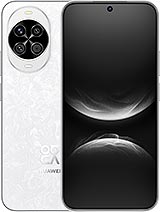
This review is written with AI assistance from Huawei’s published specifications and public benchmark data for the Huawei nova 14, and the rating is spec-based. GoSolo does not physically test devices; where we estimate real-world behaviour such as battery life or charge time, we say so. How we rate phones.
Overview
The nova 14 packs a genuinely bright OLED screen, all-day battery, and 100W charging into a phone that weighs under 200g and doesn't need a case to survive rain—a solid mid-range value play marred only by a mid-tier chipset that will feel age-limited within a year or two.
Design & build
At 192g and 7.2mm thick, the nova 14 feels genuinely light and slim in the hand without the fragility you might expect. The aluminosilicate glass offers decent everyday resilience—it will survive a drop onto tile, though it is not as shatter-proof as Gorilla Glass Armor. IP65 means it brushes off dust and handles splashes (rain, sink spray) but not submersion; anyone who needs serious water resistance should look elsewhere. The build feels solid for the price, and the thin profile is a real daily convenience, especially for pocket carry.
Display
The 6.7-inch OLED screen is where the nova 14 earns its place. The 1100-nit peak brightness (HDR Vivid mode) handles direct sunlight far better than most mid-range rivals; you won't squint at maps or photos outdoors. The 120Hz refresh and 395 ppi density keep everything smooth and sharp—scrolling apps, swiping between screens, and playing casual games all feel responsive. The 20:9 aspect ratio and 88.7% screen-to-body ratio mean you get a large canvas without a phone that is unwieldy. Color accuracy is solid for everyday use, though not calibrated to photo-editing standards. For this price, the display alone justifies the purchase for anyone spending hours on their phone.
Performance
The Kirin 8000 (7 nm) sits firmly in the mid-tier camp for 2025. It handles everyday apps, messaging, streaming, and light multitasking without stuttering. Gaming is feasible but with caveats: competitive titles like PUBG or Genshin Impact run on medium settings, not maxed details, and sustained performance throttles if you push it hard in warm weather. The 12GB of RAM keeps app switching smooth. Where the Kirin 8000 will show its age is AI features (Huawei's local models, for instance) and raw benchmark scores compared to rivals using Snapdragon 8 Gen 4 or MediaTek Dimensity 9300—by mid-2026, the gap will feel more noticeable. For a light user or someone in markets where Huawei dominance matters, this is fine; for anyone planning to keep the phone beyond 18 months or demanding sustained heavy gaming, it is a ceiling.
Software
HarmonyOS 5.0 is mature and responsive, with a strong app ecosystem in China and growing support globally. The OS itself is fluid and intuitive, with customizable widgets and a logical settings layout. The main caveat is app availability: outside China, Google Play services are absent, and reliance on Huawei AppGallery or APK sideloading is a real friction point for anyone accustomed to mainstream Android. If you live in a region where HarmonyOS is well-supported (China, parts of Europe with strong Huawei infrastructure), this is not an issue; elsewhere, it is a legitimate barrier. Expect regular updates and security patches, but do not expect the same third-party app selection as vanilla Android.
Camera
The triple setup is competent but unremarkable. The 50MP f/1.9 main sensor with Dual Pixel PDAF captures good detail in daylight and the f/1.9 aperture helps in moderate low light, though it does not rival the processing finesse of flagships or last year's high-end midrange phones. The 12MP telephoto with 3x optical zoom and OIS is genuinely useful for framing distant subjects without digital crop loss, a feature that rivals often skimp on at this price. The 8MP ultrawide is functional but lacks sharpness at the frame edges. Selfies from the 50MP front camera are sharp and well-exposed, good for video calls and social media. Video stabilization (gyro-EIS) is present across all modes. The real limitation is not individual specs but overall computational photography: Huawei's in-house tuning is solid but lags the contrast-maximizing, shadow-lifting magic of Google or Oppo's algorithms, especially in tricky mixed lighting. For travel, family moments, and everyday documentation, it suffices; for a phone buyer chasing camera prowess, spend more or look at other brands.
Battery & charging
The 5500 mAh battery, paired with the Kirin 8000's modest power draw and an efficient OLED panel, should yield a full day of moderate use (mail, social, some video), or about 1.5 days with light use. Heavy users and mobile gamers will hit the charger by evening. The real standout is 100W wired charging: from zero to 100% in roughly 20–30 minutes is genuinely swift, letting you grab a quick top-up between meetings. Huawei's charging management (SCP, UFCS, PD, PPS, QC5W) plays nice with third-party chargers and standards, though a 100W charger is not universally common outside Asia yet. No wireless charging, but at this price point that is standard compromise. The reverse wired charging (to charge other devices via the nova's battery) is a nice gimmick for emergencies.
Value & verdict-context
At roughly 330 EUR, the nova 14 slots between budget and core midrange in European pricing. For that money, you get a genuinely good screen, reliable all-day battery, fast charging, and thinness without major compromise on durability. The Kirin 8000 is the main weakness: it is not a flagship chip and will feel dated next to Qualcomm or MediaTek's top offerings at a similar price. The camera is capable but not inspirational. If you prioritize screen quality, battery life, charging speed, and slim profile over raw processing power or camera flair, the nova 14 delivers solid value. If you are a gamer planning to keep the phone for three years, or demand cutting-edge computational photography, this is not the answer. The real question is software: HarmonyOS outside China can be a dealbreaker or irrelevant depending on your app habits and region.
Verdict
The nova 14 suits anyone in a region with good HarmonyOS support who wants a light, thin phone with a brilliant screen and rock-solid battery life without spending flagship money. Skip it if you need top-tier gaming performance, depend on Google Play services, or want a camera that punches above its price—look for a Qualcomm alternative instead.
- 1100-nit OLED with 120Hz delivers sharp visuals and smooth scrolling even in direct sunlight
- 5500 mAh battery lasts a full day with moderate use; 100W charging tops it in roughly 20–30 minutes
- At 192g and 7.2mm thick, one of the thinnest modern phones without feeling fragile
- IP65 rating and aluminosilicate glass handle daily splashes and dust without a case
- Kirin 8000 is mid-tier for 2025; performance and AI features will lag rivals at the same price within months
- 50MP main camera competent but not exceptional; no standout advantage in low light or zoom over competitors in this bracket
Huawei nova 14 Key Specifications
The essentials at a glance. See the full spec sheet.
| Released | 2025, May 19 |
|---|---|
| Display | 6.7 inches, 108.3 cm2 (~88.7% screen-to-body ratio), OLED, 1B colors, HDR Vivid, 120Hz, 1100 nits (HBM) |
| Resolution | 1084 x 2412 pixels, 20:9 ratio (~395 ppi density) |
| Chipset | Kirin 8000 (7 nm) |
| RAM & storage | 256GB 12GB RAM, 512GB 12GB RAM |
| Main camera | 50 MP, f/1.9, 23mm (wide), 1/1.56", Dual Pixel PDAF 12 MP, f/2.4, 69mm (telephoto), PDAF, OIS, 3x optical zoom 8 MP, f/2.2, 16mm, 112˚ (ultrawide), AF |
| Selfie camera | 50 MP, f/2.4, 1/2.5" |
| Battery | 5500 mAh |
| Charging | 100W wired, SCP, UFCS, PD, PPS, QC5W reverse wired |
| Software | HarmonyOS 5.0 |
| Dimensions | 161.7 x 75.5 x 7.2 mm (6.37 x 2.97 x 0.28 in) |
| Weight | 192 g (6.77 oz) |
| Durability | IP65 dust tight and water resistant (low pressure water jets) |
| Network | GSM / CDMA / HSPA / CDMA2000 / LTE / 5G |
| NFC | Yes |
| USB | USB Type-C 2.0, OTG |
Huawei nova 14 FAQ
Common questions, answered from the spec sheet.
Does the nova 14 support 5G?
Yes. The nova 14 supports 5G networks.
What chipset does the nova 14 use?
The nova 14 runs on the Kirin 8000 (7 nm).
What display does the nova 14 have?
A 6.7 inches, 108.3 cm2 (~88.7% screen-to-body ratio) OLED, 1B colors, HDR Vivid, 120Hz, 1100 nits (HBM), 1084 x 2412 pixels, 20:9 ratio (~395 ppi density).
How big is the nova 14 battery?
The nova 14 has a 5500 mAh battery. Charging is rated at 100W wired, SCP, UFCS, PD, PPS, QC5W reverse wired.
Does the nova 14 have NFC?
Yes, the nova 14 has NFC.
Is the nova 14 water resistant?
The nova 14 carries a IP65 dust tight and water resistant (low pressure water jets) rating.
Does the nova 14 support a microSD card?
No, the nova 14 does not support expandable storage.
Does the nova 14 have a headphone jack?
No, the nova 14 does not have a 3.5mm headphone jack.
Alternatives to consider
If the nova 14 isn’t quite right, these are the closest calls.

nova 14 Pro
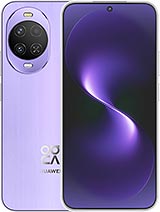
Nova 15
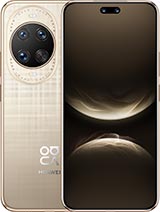
nova 14 Ultra
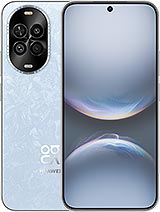
nova 14 Lite
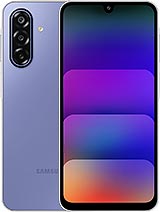
Galaxy F17 5G