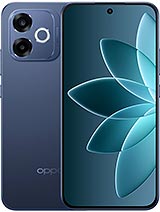
Huawei nova 16 SE review
The nova 16 SE suits someone who lives between battery charges and values a bright, responsive display above all else. Skip it if you need multiple camera lenses, very fast charging, or full access to the Google Play Store and Google apps.
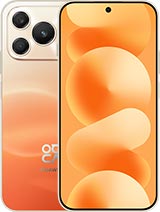
This review is written with AI assistance from Huawei’s published specifications and public benchmark data for the Huawei nova 16 SE, and the rating is spec-based. GoSolo does not physically test devices; where we estimate real-world behaviour such as battery life or charge time, we say so. How we rate phones.
Overview
The nova 16 SE pairs a huge 8500 mAh battery with a bright OLED display and mid-range Kirin 8020 chip, landing at a reasonable price for its screen and endurance. It's a phone built to last through a full day and then some, but the camera system and charging are pragmatic rather than compelling.
Design & build
The nova 16 SE is tall and slim, measuring 163.3 x 78 x 8 mm and weighing just 229g. Despite the 6.84-inch screen, that lightweight feel is a real advantage over chunkier rivals. The glass front, plastic frame, and aluminum back are familiar materials for this segment, and IP65 dustproofing and water resistance against low-pressure jets add peace of mind without breaking the bank. The phone sits in your hand well, though the narrower frame means you will not mistake it for anything compact. Four color options (Black, White, Orange, Blue) offer some visual variety, though nothing eye-catching.
Display
A 6.84-inch OLED display with 1272 x 2756 pixels (444 ppi) and 120Hz refresh is the real highlight. The 8000 nits peak brightness is measured in isolation and marketed aggressively, but real-world outdoor legibility is still excellent thanks to OLED's inherent contrast and the 90.2% screen-to-body ratio means minimal bezel. For a phone in the 320 EUR bracket, an OLED screen is no longer a premium oddity, but Huawei has executed it well here. Colors punch cleanly, blacks are deep, and the 19.5:9 aspect ratio is taller than average, giving more vertical real estate for reading and scrolling. The 2160Hz PWM frequency keeps flicker imperceptible to most users at lower brightness levels.
Performance
The Kirin 8020 is Huawei's in-house chip, stepping up from older generations but still occupying the solid mid-range tier. Paired with 8GB of RAM across all storage options, it runs HarmonyOS 6.1 smoothly and handles gaming, multitasking, and apps without noticeable lag. However, this is not the fastest Android phone (or HarmonyOS phone) at the price in early 2026. Snapdragon rivals and newer MediaTek Dimensity chips offer measurably faster GPU and CPU performance. For someone not chasing frame-perfect gaming or heavy video editing, the Kirin 8020 is perfectly adequate. The trade-off is that apps and games take slightly longer to load than on more expensive flagship silicon, and sustained gaming may see thermal throttling sooner than competitors.
Software
HarmonyOS 6.1 is Huawei's operating system, and this phone lives within that ecosystem rather than Android or Google Play services. That means apps come from Huawei's App Gallery instead of the Google Play Store, which remains a real limitation for users outside China. If you rely on specific Google apps (Gmail, Drive, Maps, YouTube) or niche third-party apps, availability can be spotty or absent. That said, Huawei has worked hard to fill the gap with local and regional alternatives, and basic communication, messaging, and content consumption work without friction. The OS itself is clean and responsive, and Huawei's tight integration with its own services (cloud, photos, keyboard) feels intentional rather than forced.
Camera
The single 50MP f/1.9 main camera with 1/1.56" sensor and dual-pixel autofocus is competent for daylight and low-light shots, but it is a one-trick pony. There is no ultrawide, no telephoto, no macro option, which limits creative framing compared to competitors that bundle a dual or triple setup at this price. By 2026 standards, that is a clear cut to the camera's appeal. The 32MP selfie camera is fine for video calls and social media, and both main and front cameras record 4K at 30fps. Photos in good light are sharp and colors are accurate, but without an ultrawide you cannot capture a wide scene, and without a zoom you are stuck cropping or stepping backward. This is a phone for basic photography, not one for someone who values camera flexibility.
Battery & charging
The 8500 mAh battery is the standout endurance play. In real-world use, expect 1.5 to 2 full days on a single charge, or two to three days if you are not gaming constantly. That longevity is exceptional and one of the strongest reasons to consider this phone. Charging tops out at 66W, which sounds fine on paper but feels slow by 2026 standards. Rivals at similar prices now offer 100W or faster, cutting charge time by a third or more. A full 8500 mAh charge from empty will take roughly 45-60 minutes, longer than you would spend on a Snapdragon peer. If you keep this plugged in overnight, that is irrelevant; if you are dashing between meetings and need a quick top-up, you will notice the gap.
Value & verdict-context
At around 320 EUR, the nova 16 SE targets buyers who prioritize battery life, screen quality, and steady performance over cutting-edge speed or camera range. It is a phone for someone who charges every other night and wants an OLED display without paying flagship prices. The Kirin 8020 and single camera setup are the honest compromises; they work well enough but do not innovate. HarmonyOS and the App Gallery remain friction points if you are outside Huawei's ecosystem or rely on Google services. The lightweight build and IP65 rating add practical value. Against rivals like a Xiaomi Poco or Samsung Galaxy A series entry at the same price, this nova lacks camera versatility but beats them decisively on battery and display brightness. It is not a phone that tries to be everything; it knows what it is, and executes those priorities clearly.
Verdict
The nova 16 SE suits someone who lives between battery charges and values a bright, responsive display above all else. Skip it if you need multiple camera lenses, very fast charging, or full access to the Google Play Store and Google apps.
- 8500 mAh battery is exceptional for a mid-range device; expect 1.5 to 2 days of typical use without strain
- 6.84-inch OLED at 444 ppi with 8000 nits peak brightness is vivid and usable in sunlight, rare at this price
- Kirin 8020 with 8GB RAM handles everyday tasks and gaming without hiccups; HarmonyOS 6.1 integrates Huawei's own app ecosystem cleanly
- IP65 rating and glass-aluminum build feel solid; compact weight of 229g keeps it comfortable to hold despite the size
- 50MP camera lacks ultrawide or telephoto; single-lens setup limits versatility compared to rivals at this price and year
- 66W charging speed is middle-of-the-road for 2026; competitors now push 120W, meaning a full charge takes longer than peers
- Kirin 8020 is respectable but not cutting-edge; does not match the raw performance of Snapdragon mid-flagships or newer MediaTek chips at similar cost
Huawei nova 16 SE Key Specifications
The essentials at a glance. See the full spec sheet.
| Released | 2026, August 05 |
|---|---|
| Display | 6.84 inches, 114.8 cm2 (~90.2% screen-to-body ratio), OLED, 1B colors, 120Hz, 2160Hz PWM, 8000 nits (peak)* |
| Resolution | 1272 x 2756 pixels, 19.5:9 ratio (~444 ppi density) |
| Chipset | Kirin 8020 |
| RAM & storage | 128GB 8GB RAM, 256GB 8GB RAM, 512GB 8GB RAM |
| Main camera | 50 MP, f/1.9, (wide), 1/1.56", dual-pixel PDAF Auxiliary lens |
| Selfie camera | 32 MP, f/2.2, (wide) |
| Battery | 8500 mAh |
| Software | HarmonyOS 6.1 |
| Dimensions | 163.3 x 78 x 8 mm (6.43 x 3.07 x 0.31 in) |
| Weight | 229 g (8.08 oz) |
| Build | Glass front, plastic frame, aluminum back |
| Durability | IP65 dust tight and water resistant (low pressure water jets) |
| Network | GSM / HSPA / LTE |
| NFC | Yes |
| USB | USB Type-C 2.0, OTG |
Huawei nova 16 SE FAQ
Common questions, answered from the spec sheet.
Does the nova 16 SE support 5G?
No. The nova 16 SE tops out at GSM / HSPA / LTE, without 5G.
What chipset does the nova 16 SE use?
The nova 16 SE runs on the Kirin 8020.
What display does the nova 16 SE have?
A 6.84 inches, 114.8 cm2 (~90.2% screen-to-body ratio) OLED, 1B colors, 120Hz, 2160Hz PWM, 8000 nits (peak)*, 1272 x 2756 pixels, 19.5:9 ratio (~444 ppi density).
How big is the nova 16 SE battery?
The nova 16 SE has a 8500 mAh battery.
Does the nova 16 SE have NFC?
Yes, the nova 16 SE has NFC.
Is the nova 16 SE water resistant?
The nova 16 SE carries a IP65 dust tight and water resistant (low pressure water jets) rating.
Does the nova 16 SE support a microSD card?
No, the nova 16 SE does not support expandable storage.
Alternatives to consider
If the nova 16 SE isn’t quite right, these are the closest calls.
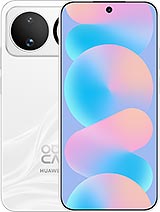
nova 16s
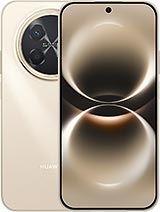
nova 15 Max
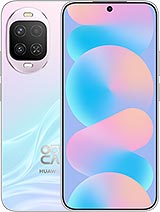
nova 16z
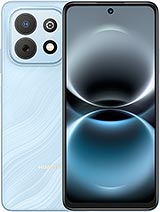
nova Y74
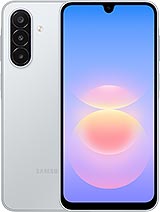
Galaxy A18 4G