Huawei nova 16s review
The nova 16s is for people who want their phone to last two days without anxiety and don't need the latest silicon or charging theatre. If your priorities are efficiency, practical zoom, and a display that won't tire your eyes, it earns consideration. Skip it if you chase performance benchmarks, demand fast charging, or need cutting-edge AI features—those buyers should look to newer chips and faster wattage.
This review is written with AI assistance from Huawei’s published specifications and public benchmark data for the Huawei nova 16s, and the rating is spec-based. GoSolo does not physically test devices; where we estimate real-world behaviour such as battery life or charge time, we say so. How we rate phones.
Overview
The nova 16s is a slim, thin flagship built for long battery days and clean, practical performance—exactly what Huawei's mid-tier line has always been about. It won't blow you away with specs, but it delivers a competent OLED display, a capable dual-cam setup, and real staying power without bloat.
Design & build
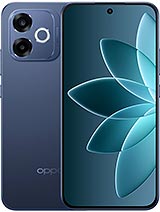
At 7.3mm thick and 199g, the nova 16s feels genuinely light and slips into a pocket without drama. The glass-plastic-aluminum sandwich is smart cost engineering: you get a solid feel without the weight penalty of a full metal frame. IP65 rating is honest about what you get—it'll handle rain and dust, but don't submerge it. The design is clean and forgettable in the best way; no flashy curves or awkward camera placement, just a rectangular slab that works.
Display
The 6.68-inch OLED is where Huawei has not cut corners. 120Hz refresh is standard now, but the 2160Hz PWM dimming means flicker-sensitive eyes won't get headaches during long sessions. Colors are punchy without looking false, and HDR content pops. The 1280 x 2800 resolution gives you 461 ppi, which is respectable but not razor-sharp—at arm's length, fine text shows the pixel grid. It's the trade-off for keeping the device slim; rivals with taller screens fit higher density more easily. For everyday use it is perfectly fine, and the OLED blacks are where this screen earns its keep.
Performance
The Kirin 8020 is a solid all-rounder without being a speed monster. It handles apps, games, and multitasking without stuttering, but it is not the latest-gen chip and benchmarks will lag behind Snapdragon 8 Gen 3 or MediaTek's newer flagships. For someone who browses, messages, shoots photos, and streams video, it is more than enough. The 12GB of RAM ensures apps stay in memory and switching between them is fluid. If you are chasing raw single-threaded speed or running demanding games at ultra settings, look elsewhere.
Software
EMUI 16 is Android-based and Huawei's own layer has matured into something coherent. It is not stock Android—there are Huawei services and customizations—but if you are used to EMUI, nothing jarring happens here. The interface is logical, animations are reasonable, and bloat is mild compared to the days when Huawei packed ten duplicate apps. For Global markets, Google Play integration is the deciding factor; Huawei's own app ecosystem works within China and some regions, but if you rely on Google services, your mileage varies by region.
Camera
The dual setup is practical and balanced. The main 50MP sensor with f/1.9 and Dual Pixel PDAF is where focus speed and low-light sharpness happen—fast autofocus in dim rooms matters more than raw megapixels. The 88mm periscope telephoto with 3.7x optical zoom means you can frame tighter shots without resorting to digital zoom garbage; OIS keeps them steady. The 50MP ultrawide selfie is overkill for video calls but gives you framing options. Video specs say 4K with HDR Vivid, which is solid, though real-world stabilization and color accuracy depend on Huawei's tuning. Overall, you get practical focal lengths and fast response, not computational wizardry.
Battery & charging
The 7000 mAh battery is the standout feature. At this capacity and 7.3mm thickness, Huawei has nailed efficiency—expect two full days of moderate use or a solid 24+ hours with heavier social media and video. However, the spec sheet does not list charging wattage, which is conspicuous in 2026; this is either an oversight or a signal that charging speed is not a headline feature. If it is 100W or slower, rivals are already at 120W+, so battery size has to compensate. Fast charging specs matter; without them, even a large battery feels less convenient.
Value & verdict-context
The nova 16s sits in a middle lane—not a budget phone, not a flagship price, but solid enough that you know what you are getting. For someone who values battery endurance, clean design, and practical cameras over raw performance or charging speed, it is easy to live with. The OLED display, periscope zoom, and all-day battery make sense together. The Kirin 8020 is a mild disappointment if you are comparing head-to-head spec sheets with newer rivals, and the missing charging spec is a worry. In 2026, a device at this price wants either class-leading battery, or class-leading speed, or class-leading camera—and this phone picks endurance. That is a valid choice, but it leaves less room for error on the other fronts.
Verdict
The nova 16s is for people who want their phone to last two days without anxiety and don't need the latest silicon or charging theatre. If your priorities are efficiency, practical zoom, and a display that won't tire your eyes, it earns consideration. Skip it if you chase performance benchmarks, demand fast charging, or need cutting-edge AI features—those buyers should look to newer chips and faster wattage.
- 7000 mAh battery is genuinely unusual at this thinness (7.3mm); real all-day endurance without a bulge
- Dual Pixel PDAF on the main 50MP gives sharp, fast focusing in everyday light—more useful than sensor megapixel chasing
- Periscope telephoto with 3.7x optical zoom and OIS means you can frame closer shots without relying on aggressive cropping
- OLED at 120Hz and 2160Hz PWM is a solid display for a 2026 mid-ranger—keeps scrolling smooth and colors natural
- Kirin 8020 is a competent but not cutting-edge chip; rivals at this price are moving to newer silicon with better multi-threaded performance
- 461 ppi on a 6.68-inch screen is functional but noticeably less sharp than flagships at 500+ ppi—text at arm's length shows fine pixellation
- No charging spec listed; this is a red flag for a flagship in 2026 where rivals routinely hit 100W+
Huawei nova 16s Key Specifications
The essentials at a glance. See the full spec sheet.
| Released | 2026, September 03 |
|---|---|
| Display | 6.68 inches, 108.9 cm2 (~90.3% screen-to-body ratio), OLED, 1B colors, HDR Vivid, 120Hz, 2160Hz PWM |
| Resolution | 1280 x 2800 pixels, 19.5:9 ratio (~461 ppi density) |
| Chipset | Kirin 8020 |
| RAM & storage | 256GB 12GB RAM, 512GB 12GB RAM |
| Main camera | 50 MP, f/1.9, 23mm (wide), 1/1.56", Dual Pixel PDAF 50 MP, f/2.6, 88mm (periscope telephoto), PDAF, OIS, 3.7x optical zoom |
| Selfie camera | 50 MP, f/2.4, (ultrawide), 1/2.5" |
| Battery | 7000 mAh |
| Software | EMUI 16, Android-based |
| Dimensions | 159.6 x 75.5 x 7.3 mm (6.28 x 2.97 x 0.29 in) |
| Weight | 199 g (7.02 oz) |
| Build | Glass front, plastic frame, aluminum back |
| Durability | IP65 dust tight and water resistant (low pressure water jets) |
| Network | GSM / HSPA / LTE / 5G |
| NFC | Yes |
| USB | USB Type-C 2.0, OTG |
Huawei nova 16s FAQ
Common questions, answered from the spec sheet.
Does the nova 16s support 5G?
Yes. The nova 16s supports 5G networks.
What chipset does the nova 16s use?
The nova 16s runs on the Kirin 8020.
What display does the nova 16s have?
A 6.68 inches, 108.9 cm2 (~90.3% screen-to-body ratio) OLED, 1B colors, HDR Vivid, 120Hz, 2160Hz PWM, 1280 x 2800 pixels, 19.5:9 ratio (~461 ppi density).
How big is the nova 16s battery?
The nova 16s has a 7000 mAh battery.
Does the nova 16s have NFC?
Yes, the nova 16s has NFC.
Is the nova 16s water resistant?
The nova 16s carries a IP65 dust tight and water resistant (low pressure water jets) rating.
Does the nova 16s support a microSD card?
No, the nova 16s does not support expandable storage.
Alternatives to consider
If the nova 16s isn’t quite right, these are the closest calls.
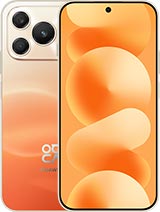
nova 16 SE
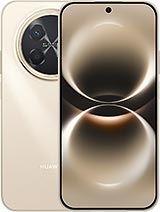
nova 15 Max
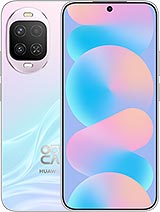
nova 16z
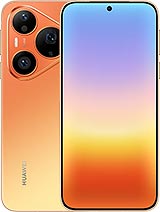
Pura 90s Pro
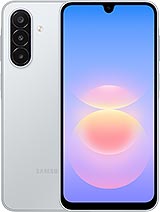
Galaxy A18 4G