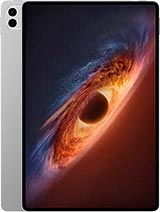
Huawei Osta O1 Pro review
The Osta O1 Pro suits buyers who prioritize multi-day battery life, durability, and a bright display in a slim package, particularly in markets with established Huawei support. Skip it if you need the fastest charging, highest pixel density, or seamless access to the Google Play ecosystem."antml:parameter> </invoke>

This review is based on Huawei’s published specifications and public benchmark data for the Huawei Osta O1 Pro, and the rating is spec-based. GoSolo does not physically test devices; where we estimate real-world behaviour such as battery life or charge time, we say so. How we rate phones.
Overview
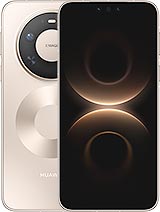
The Huawei Osta O1 Pro is a sleek, durable flagship designed around a large 7000 mAh battery and a bright OLED screen, running HarmonyOS 7.0 on the Kirin 9030S. It's a solid 2026 phone for the price, though it falls short of the most aggressive flagship specs and charging speeds, and the absence of detailed charging wattage figures leaves questions unanswered.
Design & build
At 200g and 6.7mm thick, the Osta O1 Pro is a slim, light flagship for its battery class. The glass and aluminum frame with Kunlun Glass protection is a standard flagship recipe, and the IP68/IP69 rating with 2m immersion makes it tough enough for spills and splashes. The form factor is immediately comfortable in hand—no dead weight, no bloat—and the 92.1% screen-to-body ratio shows restraint; Huawei has not chased the edge-to-edge extreme at the cost of bezel practicality. Colors are conventional (White, Black, Purple), and the finish feels appropriate for a 750 EUR phone. Build quality is not a differentiator here, but it is not a liability either.
Display
The 6.39-inch OLED with 6500 nits peak brightness and 2160Hz PWM is a genuinely good screen, especially outdoors. The 1 billion color palette and HDR Vivid support are table stakes for flagships now, and the refresh rate maxes at 120Hz, which is fine—not cutting-edge, but not behind for this price. The weak point is resolution: 1320 × 2232 pixels yields 406 ppi, and while that is not blurry, it falls noticeably short of rivals at this price point who routinely hit 440–500 ppi. For social media and video, you won't notice; for text and detail work, it is a small step down. The brightness story more than compensates for most people, but the resolution choice suggests Huawei prioritized thinness and battery life over pixel density.
Performance
The Kirin 9030S at 5nm and the Maleoon 935F GPU sit firmly in the high-end for 2026, handling demanding apps and games without strain. The CPU configuration (1×2.7 GHz big core, 3×2.15 GHz mid cores, 4×1.62 GHz efficiency cores) is a sound split for mixed workloads. Performance memory ranges from 12GB to 16GB, so even the base model is not starved. Real-world performance should be smooth across productivity, content creation, and gaming. The only unknown is thermal management under sustained load—no word on cooling solutions—but for typical use, this chipset will not disappoint. It is not a Snapdragon 8 Elite, but it closes the gap enough that the gap feels academic.
Software
HarmonyOS 7.0 is Huawei's answer to Android, and by now it is feature-complete and reasonably polished. The OS has matured beyond its early awkwardness, though global app availability remains patchy outside China. If you rely heavily on Google Play services or specific Android apps, HarmonyOS can be a friction point. Huawei's ecosystem (Mate, Watch, Earbuds) integrates well, but for a Western or global audience, the software is a commitment. Within its own garden, HarmonyOS 7 performs admirably, and updates have been regular.
Camera
The 200MP main sensor with f/1.8 aperture and OIS is a headline figure, but processing matters more than megapixel count. The 50MP periscope telephoto at 3.7x optical zoom is a sensible middle ground—not as aggressive as rivals' 5–10x zooms, but enough for practical framing without leaving macro territory. The color spectrum sensor is a thoughtful touch for white balance. Video tops out at 4K with gyro stabilization and HDR Vivid, which is solid. The selfie camera at 50MP with 4K is generous, though the f/2.4 aperture is not particularly bright. Without hands-on samples, it is hard to call whether the 200MP sensor translates to genuinely better photos or just more crop headroom; rivals with smaller, smarter sensors often outperform in dynamic range and low-light scenarios. The zoom reach is conservative for a 2026 flagship at this price, but it is not a glaring hole.
Battery & charging
The 7000 mAh battery is the phone's headline endurance feature, and it should deliver two full days of moderate use, possibly more. That is a genuine strength in a market where many flagships rely on fast charging to mask smaller batteries. The critical missing piece is charging wattage—the spec sheet omits it entirely, which is a red flag for a 750 EUR flagship. If Huawei went conservative (say, 50W) to keep the phone thin, then users are trading charging speed for endurance. If the wattage is hidden because it is slower than competitors, that matters. The spec sheet label hints at '66W50W,' which is cryptic; clarification is needed. Wireless charging is not mentioned, suggesting none. For a device this large and this price, the charging story is incomplete.
Value & verdict-context
At roughly 750 EUR, the Osta O1 Pro occupies the upper-midrange-to-flagship border. The battery, screen brightness, and processor are genuinely competitive; the design is trim and durable. The resolution is a step back for the price, the camera is competent but not exceptional, and the charging speed remains unclear—a gap that matters for 2026. HarmonyOS is a wall for Western buyers, though for markets where Huawei's ecosystem is established, it is a natural fit. The phone is well-rounded, but it does not lead its class in any single area beyond battery capacity. For buyers in Huawei-friendly regions who value endurance, build quality, and a bright screen over raw performance or cutting-edge zoom, it is a sensible pick. Those who need fastest charging, sharpest displays, or unrestricted app access should look elsewhere.
Verdict
The Osta O1 Pro suits buyers who prioritize multi-day battery life, durability, and a bright display in a slim package, particularly in markets with established Huawei support. Skip it if you need the fastest charging, highest pixel density, or seamless access to the Google Play ecosystem."antml:parameter> </invoke>
- 7000 mAh battery is genuinely large for a modern flagship, promising real multi-day endurance even at this thickness.
- 6500 nits peak brightness and 2160Hz PWM on OLED make this screen competitive with the best 2026 panels for outdoor visibility and flicker-free viewing.
- Kirin 9030S and Maleoon 935F GPU bring high-end computing to a mid-tier flagship price point.
- IP68/IP69 rating with Kunlun Glass offers solid durability; 2m immersion is reassuring.
- No charging wattage figure in the spec sheet despite a 7000 mAh battery—if fast charging is weak, that's a significant omission for the class.
- 200MP main sensor is marketing spec; real-world detail depends on binning and processing, and rivals often achieve better dynamic range and low-light performance with smaller sensors.
- 6.39-inch screen at 406 ppi is functional but not sharp; 1320 × 2232 resolution feels a step back when 2024–2026 flagships routinely hit 440+ ppi.
Huawei Osta O1 Pro Key Specifications
The essentials at a glance. See the full spec sheet.
| Released | 2026, November 20 |
|---|---|
| Display | 6.39 inches, 115.4 cm2 (~92.1% screen-to-body ratio), OLED, 1B colors, 120Hz, 2160Hz PWM, HDR Vivid, 6500 nits (peak) |
| Resolution | 1320 x 2232 pixels, 5:3 ratio (~406 ppi density) |
| Chipset | Kirin 9030S (5 nm) |
| RAM & storage | 256GB 12GB RAM, 512GB 12GB RAM, 512GB 16GB RAM, 1TB 16GB RAM |
| Main camera | 200 MP, f/1.8, 23mm (wide), PDAF, OIS 50 MP, f/2.6, 88mm (periscope telephoto), PDAF, OIS, 3.7x optical zoom |
| Selfie camera | 50 MP, f/2.4, (wide) |
| Battery | 7000 mAh |
| Software | HarmonyOS 7.0 |
| Dimensions | 144.1 x 87 x 6.7 mm (5.67 x 3.43 x 0.26 in) |
| Weight | 200 g (7.05 oz) |
| Build | Glass front (Kunlun Glass), glass back, aluminum frame |
| Durability | IP68/IP69 dust tight and water resistant (high pressure water jets; immersible up to 2m for 30 min) |
| Network | GSM / HSPA / LTE / 5G |
| NFC | Yes |
| USB | USB Type-C |
Huawei Osta O1 Pro FAQ
Common questions, answered from the spec sheet.
Does the Osta O1 Pro support 5G?
Yes. The Osta O1 Pro supports 5G networks.
What chipset does the Osta O1 Pro use?
The Osta O1 Pro runs on the Kirin 9030S (5 nm).
What display does the Osta O1 Pro have?
A 6.39 inches, 115.4 cm2 (~92.1% screen-to-body ratio) OLED, 1B colors, 120Hz, 2160Hz PWM, HDR Vivid, 6500 nits (peak), 1320 x 2232 pixels, 5:3 ratio (~406 ppi density).
How big is the Osta O1 Pro battery?
The Osta O1 Pro has a 7000 mAh battery.
Does the Osta O1 Pro have NFC?
Yes, the Osta O1 Pro has NFC.
Is the Osta O1 Pro water resistant?
The Osta O1 Pro carries a IP68/IP69 dust tight and water resistant (high pressure water jets; immersible up to 2m for 30 min) rating.
Does the Osta O1 Pro support a microSD card?
No, the Osta O1 Pro does not support expandable storage.
Alternatives to consider
If the Osta O1 Pro isn’t quite right, these are the closest calls.
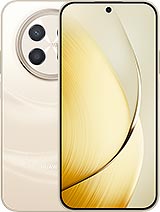
Enjoy 100 Pro Max
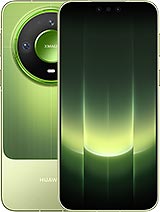
Mate 90 Pro Max
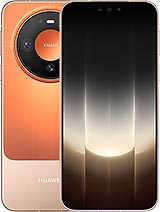
Mate 90 Pro
Mate 80 Pro Max Wind

Pixel 11 Pro Fold