Huawei P60 Art review
The P60 Art suits photographers and everyday users in LTE-only regions who value fast charging and a capable zoom lens more than bleeding-edge processing power. For anyone with access to 5G infrastructure or shopping in 2026, a newer phone at the same or lower price is the smarter move.
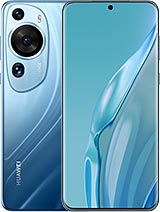
This review is based on Huawei’s published specifications and public benchmark data for the Huawei P60 Art, and the rating is spec-based. GoSolo does not physically test devices; where we estimate real-world behaviour such as battery life or charge time, we say so. How we rate phones.
Overview
The P60 Art is a well-rounded 2023 flagship with a bright OLED display, fast wired charging, and a capable three-lens camera setup, but its lack of 5G and last-gen Snapdragon chip make it feel dated in 2026 at this price point. For regions locked into LTE and users who prioritize photography and charging speed over cutting-edge performance, it remains solid; for everyone else, newer competition offers more for less.
Design & build
At 206g and 8.3mm thick, the P60 Art is light and slim without feeling fragile. The Kunlun Glass front and IP68 rating (waterproof to 1.5m for 30 minutes) are practical touches. The dual nano-SIM layout and nano memory card slot offer flexibility for travellers, though the shared SIM/card slot means you cannot use both at once. There is nothing that stands out here, but there is nothing wrong either: this is competent industrial design for a large flagship.
Display
The 6.67-inch LTPO OLED with 1220×2700 resolution (444 ppi) is exactly what a 2023 flagship should deliver. The 120Hz variable refresh rate keeps scrolling buttery without calling it that, and the 89.8% screen-to-body ratio leaves little bezel. Brightness is respectable for outdoor use, and the 1 billion colour depth handles video and photography without banding. There is little to fault here unless you are comparing directly to 2024 and 2025 rivals, which have pushed refresh rates higher and screens brighter; for 2023 arrival, this screen holds up.
Performance
The Snapdragon 8+ Gen 1 with 12GB RAM handles everyday use, browsing, and even demanding games like Genshin Impact on high settings without meaningful stuttering. By 2026 standards, it is beginning to show its age, but for a phone launched in early 2023, it was solid then and remains capable now. The real limitation is the absence of 5G: if your carrier has rolled out 5G and pricing has become standard, this phone will feel noticeably slower on paper. That said, in LTE-only regions—common across much of the global south—this limitation is irrelevant.
Camera
Three lenses cover the basics: a 48MP wide with f/1.4-f/4.0 variable aperture and OIS, a 48MP 90mm telephoto with 3.5x optical zoom, and a 40MP 13mm ultrawide. All three have optical image stabilisation and laser autofocus, which matters for video and low-light stills. The colour spectrum sensor refines white balance, a thoughtful addition. In practice, this setup produces sharp daylight shots and usable night photography, though the ultrawide softens noticeably at the edges. The 90mm tele is genuinely useful for distant subjects without resorting to digital zoom. For a 2023 phone at this price, the camera performance is respectable without being exceptional; it does not match the absolute best from Samsung or Apple's telephoto work, but the trio of focal lengths covers 95% of what most people shoot.
Battery & charging
The 5100mAh battery delivers roughly one full day with moderate mixed use (browsing, messaging, video). Heavy gaming or video recording cuts that to about 12 to 15 hours. The 88W wired charging refills the phone in roughly 30 to 40 minutes from empty, which is genuinely quick and stands out from rivals who still offer 65W or 75W at this price tier. The 50W wireless charging is available but much slower (60 to 90 minutes), so most people will reach for the cable. For a phone from early 2023, the charging speed remains competitive; by 2026, some rivals have moved to 120W or higher, but 88W wired is still faster than many.
Software
The P60 Art ships with HarmonyOS 3.1 in China and EMUI 13.1 internationally. HarmonyOS has matured considerably and includes useful multi-device integration if you own other Huawei hardware; EMUI on the international variant is Huawei's take on an Android-like experience, though it lacks Google Play Services on certain variants. Updates and long-term support depend on your region and Huawei's ongoing relationship with carriers. The software is functional and fast, but the lack of Play Services in some markets and the uncertainty around future updates are real concerns for international buyers.
Value & verdict
At roughly 1200 EUR at launch in early 2023, the P60 Art was positioned as a premium flagship alternative. In 2026, that price point is high for a phone with no 5G and a last-gen chipset, even if charging speed and camera capability are solid. The phone makes most sense in regions where 5G infrastructure is either absent or too expensive to justify, and where fast wired charging is a genuine advantage. Buyers in developed markets with mature 5G rollout will find better value in newer flagships or last year's models at lower cost. For photographers in LTE-only zones who value speed and optical zoom, the P60 Art remains a practical choice; for everyone else, the age of the platform is hard to overlook at this asking price.
Verdict
The P60 Art suits photographers and everyday users in LTE-only regions who value fast charging and a capable zoom lens more than bleeding-edge processing power. For anyone with access to 5G infrastructure or shopping in 2026, a newer phone at the same or lower price is the smarter move.
- 88W wired charging fills the battery in 30-40 minutes, faster than rivals at similar price
- Three-lens camera with 90mm optical tele and dual OIS across all focal lengths handles photography well across most scenarios
- LTPO OLED display with 120Hz refresh, 444 ppi, and strong brightness for outdoor visibility
- No 5G support—a serious gap for a 2026 buyer, especially in markets with established 5G networks
- Snapdragon 8+ Gen 1 is now two processor generations old and shows it in direct comparison to 2024+ flagships
- Software uncertainty: HarmonyOS or EMUI depending on region, and global Google Play Services support is patchy
Huawei P60 Art Key Specifications
The essentials at a glance. See the full spec sheet.
| Released | 2023, March 23 |
|---|---|
| Display | 6.67 inches, 107.7 cm2 (~89.8% screen-to-body ratio), LTPO OLED, 1B colors, 120Hz |
| Resolution | 1220 x 2700 pixels (~444 ppi density) |
| Chipset | Qualcomm SM8475 Snapdragon 8+ Gen 1 4G (4 nm) |
| RAM & storage | 512GB 12GB RAM, 1TB 12GB RAM |
| Main camera | 48 MP, f/1.4-f/4.0, 25mm (wide), PDAF, OIS 48 MP, f/2.1, 90mm (telephoto), PDAF, OIS, 3.5x optical zoom 40 MP, f/2.2, 13mm (ultrawide) |
| Selfie camera | 13 MP, f/2.4, (ultrawide) |
| Battery | 5100 mAh |
| Charging | 88W wired50W wireless |
| Software | HarmonyOS 3.1 (China), EMUI 13.1 (International) |
| Dimensions | 161 x 74.5 x 8.3 mm (6.34 x 2.93 x 0.33 in) |
| Weight | 206 g (7.27 oz) |
| Durability | IP68 dust tight and water resistant (immersible up to 1.5m for 30 min) |
| Network | GSM / CDMA / HSPA / CDMA2000 / LTE |
| NFC | Yes |
| USB | USB Type-C 3.1, OTG |
Huawei P60 Art FAQ
Common questions, answered from the spec sheet.
Does the P60 Art support 5G?
No. The P60 Art tops out at GSM / CDMA / HSPA / CDMA2000 / LTE, without 5G.
What chipset does the P60 Art use?
The P60 Art runs on the Qualcomm SM8475 Snapdragon 8+ Gen 1 4G (4 nm).
What display does the P60 Art have?
A 6.67 inches, 107.7 cm2 (~89.8% screen-to-body ratio) LTPO OLED, 1B colors, 120Hz, 1220 x 2700 pixels (~444 ppi density).
How big is the P60 Art battery?
The P60 Art has a 5100 mAh battery. Charging is rated at 88W wired50W wireless.
Does the P60 Art have NFC?
Yes, the P60 Art has NFC.
Is the P60 Art water resistant?
The P60 Art carries a IP68 dust tight and water resistant (immersible up to 1.5m for 30 min) rating.
Does the P60 Art support a microSD card?
Yes, the P60 Art supports expandable storage (Nano Memory (uses shared SIM slot)).
Does the P60 Art have a headphone jack?
No, the P60 Art does not have a 3.5mm headphone jack.
Alternatives to consider
If the P60 Art isn’t quite right, these are the closest calls.
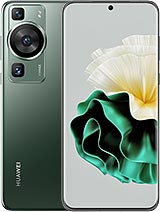
P60
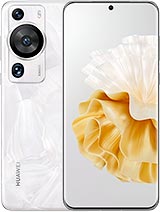
P60 Pro
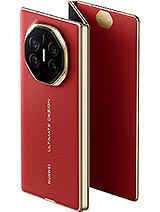
Mate XT Ultimate
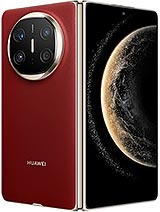
Mate X6
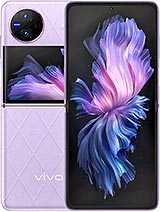
X Flip