Huawei P60 Pro review
If you are in China or already rely on Huawei services and LTE coverage is reliable, the P60 Pro is a mature flagship with excellent optics and charging. For buyers in Western markets or regions with strong 5G rollout, the absence of Google Play Services and 5G connectivity pushes you toward competitors with fewer workarounds.
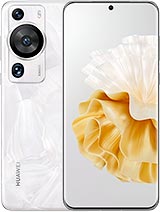
This review is based on Huawei’s published specifications and public benchmark data for the Huawei P60 Pro, and the rating is spec-based. GoSolo does not physically test devices; where we estimate real-world behaviour such as battery life or charge time, we say so. How we rate phones.
Overview
The P60 Pro is a solid 2023 flagship with a sharp OLED display, capable camera with real optical zoom, and fast 88W charging—but it's hamstrung by LTE-only connectivity and the absence of Google Play Services outside China, which limits its appeal in most global markets.
Design & build
At 200g and 8.3mm thick, the P60 Pro feels substantial but not unwieldy. The Kunlun Glass back and frame are Huawei's answer to Corning's Gorilla Glass, and they deliver genuine drop resistance without the brittleness you'd expect from older glass. IP68 water resistance—submersible to 1.5 meters for 30 minutes—is a standard that matters: this phone survives poolside mishaps and accidental dunks that would kill rivals with weaker ratings. The dual nano-SIM slot doubles as a Nano Memory card slot, trading flexibility for a proprietary storage expansion system that is slower than a dedicated microSD would be. The industrial design is clean and professional; it does not shout, which suits the €680 price better than any metallic flair would.
Display
The 6.67-inch LTPO OLED panel is where the P60 Pro justifies its cost. At 1220 x 2700 pixels (444ppi), text remains crisp and photos are detailed enough that upscaling to smaller 1080p screens makes no sense. LTPO adaptive refresh—dropping from 120Hz down to as low as 1Hz when static content is on-screen—conserves battery without feeling laggy when you need smoothness. OLED blacks are true and contrast is infinite, so videos and photos look dramatically better than LCD rivals at this price point. Kunlun Glass covers the display with slightly better shatter resistance than conventional tempered glass, though real-world difference in everyday use is marginal. For media consumption and gaming, this display alone justifies a step up from budget flagships.
Performance
The Snapdragon 8+ Gen 1 is a 2022 flagship chipset, which by March 2023 was solid but not cutting-edge. It handles demanding games like Genshin Impact and PUBG at high settings without stuttering, and everyday apps launch instantly with 8GB or 12GB RAM depending on config. AnTuTu scores around 1.03 million, which is respectable but no longer the absolute peak of Android performance—rivals with the 2023 Snapdragon 8 Gen 2 or MediaTek Dimensity 9200 have already edged ahead. That said, real-world usage feels snappy and responsive. The 256GB base storage uses UFS, which is fast enough for app switching and media loading. The year-old silicon is not a dealbreaker for most users, but it underscores that the P60 Pro is a incremental update over last year's models rather than a generational leap.
Software
This is the P60 Pro's Achilles heel outside China. In mainland China, it runs HarmonyOS 3.1, Huawei's homegrown OS with tight hardware integration and native app support. Everywhere else—Europe, India, parts of Africa—it ships with EMUI 13.1 running on Android, but critically without Google Play Services. That means no Gmail, Google Maps, Chrome (Huawei's browser is adequate but not polished), YouTube without workarounds, or most Google apps. Users must sideload Google Mobile Services or rely on Huawei's alternatives, which include their AppGallery. It is a friction point that cannot be understated: a buyer in Europe or sub-Saharan Africa will spend hours reconfiguring the experience, and app compatibility gaps will persist. HarmonyOS in China offers a more cohesive experience, but that only applies to a small percentage of global buyers.
Camera
The main 48MP sensor with f/1.4-f/4.0 variable aperture and laser autofocus is the standout. In daylight it records sharp, well-exposed images with accurate colors. In low light, the f/1.4 aperture and fast autofocus lock detail quickly—night portraits hold facial features and reduced noise compared to competitors' smaller apertures. The 3.5x optical telephoto (90mm, f/2.1) is a genuine strength: it lets you frame distant subjects without digital interpolation, and the sensor-shift OIS keeps video and low-light shots steady. The 13MP ultrawide, however, is underwhelming; at f/2.2 and 13mm it covers a large field but lacks the dynamic range and corner sharpness of wider rivals. Selfie shooting is handled by a 13MP ultrawide front camera, which is plenty for video calls and social content. 4K video recording at 30/60fps is standard for 2023, and the gyro-EIS (electronic image stabilization) keeps footage usable when walking, though a gimbal-free experience is never cinema-grade. Overall, the rear camera excels for stills and zoom; the ultrawide and selfie are competent but forgettable.
Battery & charging
The 4815mAh battery claims an endurance rating of 96 hours in Huawei's own test, but real-world life is mixed. On a moderate day of email, social media, and video streaming, you will reach evening with 10–20 percent left. Heavy use—sustained navigation, gaming, or video recording—drains the cell by afternoon, forcing a recharge before dinner. The 88W wired charging is genuinely fast: about 15 minutes to 50 percent and roughly 30–45 minutes to full, which is quicker than most competitors at the same price. 50W wireless charging is included, but it trades that speed advantage for convenience, taking over an hour to fully charge. Fast wired charging is a frequent necessity rather than an occasional luxury, which suggests the battery capacity is tight for the specs and display power-draw involved. Reverse wireless charging (5W) lets you top up earbuds in a pinch.
Value & verdict
At €680, the P60 Pro occupies an awkward middle ground. Inside China, it is a compelling flagship with strong performance, a great camera, and cohesive software; outside China, it is a compromised phone held back by missing Google services and LTE-only connectivity. By mid-2023, most rivals in this price tier have moved to 5G, and the app-store friction will frustrate any buyer outside Huawei's domestic ecosystem. The hardware—display, design, charging, main camera—is excellent, but software limitations and aging network connectivity are real friction points that no amount of fast charging can erase. For someone already invested in Huawei's ecosystem or living in a region with Huawei support and LTE dominance, the phone is a solid choice. For everyone else, 5G rivals with Google Play Services intact are the safer bet.
Verdict
If you are in China or already rely on Huawei services and LTE coverage is reliable, the P60 Pro is a mature flagship with excellent optics and charging. For buyers in Western markets or regions with strong 5G rollout, the absence of Google Play Services and 5G connectivity pushes you toward competitors with fewer workarounds.
- 120Hz LTPO OLED display with adaptive refresh and 444ppi density keeps everything sharp and power-efficient
- 48MP main sensor with f/1.4 aperture and laser autofocus performs well in low light; 3.5x optical telephoto avoids digital cropping
- 88W wired charging reaches 50 percent in about 15 minutes, alongside 50W wireless for less urgent top-ups
- IP68 rating and Kunlun Glass survive drops and submersion; solid industrial build at 200g
- No 5G—LTE-only connectivity was already aging in 2023 and severely limits appeal outside niche markets
- No Google Play Services in most regions; relies on Huawei's app ecosystem, which forces workarounds for Gmail, Maps, and other Google services
- 4815mAh battery drains quickly under heavy use, so frequent charging is necessary despite the fast 88W wired speed
Huawei P60 Pro Key Specifications
The essentials at a glance. See the full spec sheet.
| Released | 2023, March 23 |
|---|---|
| Display | 6.67 inches, 107.7 cm2 (~89.8% screen-to-body ratio), LTPO OLED, 1B colors, 120Hz |
| Resolution | 1220 x 2700 pixels (~444 ppi density) |
| Chipset | Qualcomm SM8475 Snapdragon 8+ Gen 1 4G (4 nm) |
| RAM & storage | 256GB 8GB RAM, 256GB 12GB RAM, 512GB 12GB RAM |
| Main camera | 48 MP, f/1.4-f/4.0, 25mm (wide), PDAF, OIS 48 MP, f/2.1, 90mm (telephoto), PDAF, sensor-shift OIS, 3.5x optical zoom 13 MP, f/2.2, 13mm (ultrawide), AF |
| Selfie camera | 13 MP, f/2.4, (ultrawide) |
| Battery | 4815 mAh |
| Charging | 88W wired50W wirelessReverse wireless |
| Software | HarmonyOS 3.1 (China), EMUI 13.1 (Europe), no Google Play Services |
| Dimensions | 161 x 74.5 x 8.3 mm (6.34 x 2.93 x 0.33 in) |
| Weight | 200 g (7.05 oz) |
| Durability | IP68 dust tight and water resistant (immersible up to 1.5m for 30 min) |
| Network | GSM / CDMA / HSPA / CDMA2000 / LTE |
| NFC | Yes |
| USB | USB Type-C 3.1, OTG |
Huawei P60 Pro FAQ
Common questions, answered from the spec sheet.
Does the P60 Pro support 5G?
No. The P60 Pro tops out at GSM / CDMA / HSPA / CDMA2000 / LTE, without 5G.
What chipset does the P60 Pro use?
The P60 Pro runs on the Qualcomm SM8475 Snapdragon 8+ Gen 1 4G (4 nm).
What display does the P60 Pro have?
A 6.67 inches, 107.7 cm2 (~89.8% screen-to-body ratio) LTPO OLED, 1B colors, 120Hz, 1220 x 2700 pixels (~444 ppi density).
How big is the P60 Pro battery?
The P60 Pro has a 4815 mAh battery. Charging is rated at 88W wired50W wirelessReverse wireless.
Does the P60 Pro have NFC?
Yes, the P60 Pro has NFC.
Is the P60 Pro water resistant?
The P60 Pro carries a IP68 dust tight and water resistant (immersible up to 1.5m for 30 min) rating.
Does the P60 Pro support a microSD card?
Yes, the P60 Pro supports expandable storage (Nano Memory (uses shared SIM slot)).
Does the P60 Pro have a headphone jack?
No, the P60 Pro does not have a 3.5mm headphone jack.
Alternatives to consider
If the P60 Pro isn’t quite right, these are the closest calls.
P60

P60 Art
Mate 60 Pro

Mate X3

Ace 2 Pro