Huawei Pocket 2 review
The Pocket 2 suits readers, video watchers, and multitaskers who charge daily and genuinely value a large inner screen—but only if you are in a region where HarmonyOS apps are readily available and LTE coverage is reliable. For anyone outside that niche, or who needs 5G speed and a flagship processor, the price is hard to justify given the connectivity and performance gaps versus competitors.
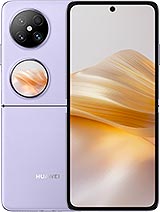
This review is based on Huawei’s published specifications and public benchmark data for the Huawei Pocket 2, and the rating is spec-based. GoSolo does not physically test devices; where we estimate real-world behaviour such as battery life or charge time, we say so. How we rate phones.
Overview
The Pocket 2 is a foldable for people who want a large inner screen for reading, video, and multitasking, but it's held back by LTE-only connectivity, modest battery capacity for its size, and a price that demands genuine need rather than flagging a cutting-edge refresh rate or processing power.
Design & build
At 199–202 grammes, the Pocket 2 is lighter than many foldables and feels balanced in hand. Folded, it is 15.3 mm thick—chunky compared to a regular phone, but not a shock for a foldable hinge. The IPX8 rating survives submersion to 2 metres for 30 minutes, which is genuine water resistance; however, the spec says water-resistant, not dust-sealed, so sand and fine dust can still work into the fold and hinge over time. The dual nano-SIM setup is practical, though swapping one for Nano Memory means you trade a second SIM for storage expansion. Colours range across black, purple, white, and grey, all understated choices that suit a premium price point without visual drama.
Display
The 6.94-inch inner OLED is the Pocket 2's main argument: LTPO tech means 120Hz when you scroll, lower refresh rates when you are reading static text, all without requiring manual intervention. Peak brightness hits 2200 nits, which matters outdoors when sunlight washes out lesser screens. Resolution is 1136 × 2690 pixels, a bit coarse for the screen diagonal compared to modern flagships, but at arms length for reading or video you will not notice. The outer cover display is a 1.15-inch OLED strip with 340 × 340 pixels—enough to check the time, notifications, or quick replies without unfolding, but cramped for any real task. For someone who reads digital books, browses the web, or watches video on their phone, this inner screen is the draw; for users accustomed to a regular 6.1–6.5-inch phone, it will feel oversized and will need a second hand to hold comfortably.
Performance
Huawei lists only octa-core without naming the chipset, which is unusual and hints at a mid-tier processor rather than a flagship SoC. Paired with 12GB or 16GB RAM, that will handle everyday apps, media, and light multitasking without stuttering, but do not expect the headroom of a Snapdragon 8-series rival or raw gaming performance. HarmonyOS 4.0 is Huawei's own OS, built to work without Google Play Services; app availability outside China is uneven, and some users in Europe or other regions report friction with third-party apps or sideloading. If you depend on specific apps not commonly available in Huawei's ecosystem, this is a deal-breaker. For light browsing, email, and media, it works fine.
Camera
The rear setup is sensible: 50MP f/1.6 wide with optical image stabilisation and phase-detect autofocus, an 8MP 80mm telephoto with 3x optical zoom and OIS, a 12MP ultrawide, and a 2MP spectral sensor. Laser autofocus sharpens fast in dim light, and the lens variety means you are not forced to crop or compromise to handle landscapes or distant subjects. The selfie camera is 10.7MP ultrawide on the outer display and a second inside the fold. In good light, the 50MP wide will resolve fine detail; indoors or at dusk, the f/1.6 aperture helps, but a mid-range processor may not apply computational photography as aggressively as flagship rivals. The real-world difference between a 50MP and 100MP sensor is often overstated in marketing; here, sensor size and stabilisation matter more than megapixel count.
Battery & charging
4520 mAh is underwhelming for a screen this large. On moderate use—scrolling, calls, messaging, some video—expect around 16 to 18 hours before hitting empty. Casual power users will need to charge daily. The 66W wired charger is quick: 52% in 20 minutes, so a brief sit-down with a cable gives you enough juice for several more hours. 40W wireless charging is available but slower, and 5W reverse wireless means you can top up earbuds or another device in a pinch. The fast wired speed salvages the small capacity, but it does not erase the truth that you cannot do an all-day heavy user session without planning a charge.
Connectivity & software
LTE only. No 5G bands are listed, which is the most surprising omission at 960 EUR in 2024. LTE handles browsing, video, and general use fine, but in cities with 5G rollout, you will see slower download speeds than rivals, and the limitation ages poorly over a two-year ownership span. Wi-Fi 6 is on board, Bluetooth 5.2 supports HD audio, NFC enables contactless payments. GPS is robust with support for L5 and multiple systems (GPS, GLONASS, Galileo, BDS, QZSS, NavIC). HarmonyOS 4.0 works but remains a walled garden outside China; app hunting, sideloading, or using workarounds like APK mirrors is common. If you live in a region with strong Huawei ecosystem support—China, parts of Asia, some European markets—friction is minimal. Elsewhere, it requires tolerance for friction.
Value & verdict-context
At 960 EUR, the Pocket 2 is not cheap. Foldables are inherently pricey due to hinge complexity and yield, but rivals in the same price band often include 5G, flagship processors, and larger batteries. The Pocket 2 trades raw horsepower and network speed for a genuinely useful inner screen and water resistance. If your use case is reading, video, or light productivity, the screen justifies the cost; if you are a gamer, heavy downloader, or someone who values 5G connectivity and single-charge endurance, you are paying for a feature set that does not align with your needs. The absence of 5G in 2024 is the hardest sell: you are locking in an LTE phone for the next few years when network infrastructure worldwide has or will shift.
Verdict
The Pocket 2 suits readers, video watchers, and multitaskers who charge daily and genuinely value a large inner screen—but only if you are in a region where HarmonyOS apps are readily available and LTE coverage is reliable. For anyone outside that niche, or who needs 5G speed and a flagship processor, the price is hard to justify given the connectivity and performance gaps versus competitors.
- 6.94-inch 120Hz OLED unfolds to a truly workable tablet-like screen, with 2200 nits peak brightness and LTPO refresh tuning for outdoor readability and battery efficiency
- 66W charging hits 52% in 20 minutes, so a quick top-up before leaving the house is realistic even with daily use
- 50MP f/1.6 wide with laser autofocus, 3x telephoto, and 13mm ultrawide cover everyday shooting without forcing you to choose between lenses
- IPX8 water resistance to 2 metres handles rain and splashes, leaving this foldable genuinely usable in daily weather
- LTE only—no 5G means slower peak speeds on networks that have rolled out 5G coverage, a limitation that will age poorly given the 960 EUR price tag
- 4520 mAh battery is modest for a 6.94-inch display unfolded; expect around 16 to 18 hours of mixed use on a charge, so daily charging is not optional
- No named chipset in the spec sheet and octa-core CPU suggest mid-range processing power, not flagship performance, which blunts the appeal of paying flagship money
Huawei Pocket 2 Key Specifications
The essentials at a glance. See the full spec sheet.
| Released | 2024, February 22 |
|---|---|
| Display | 6.94 inches, 111.9 cm2 (~87.2% screen-to-body ratio), Foldable LTPO OLED, 1B colors, 120Hz, 2200 nits (peak) |
| Resolution | 1136 x 2690 pixels (~420 ppi density) |
| RAM & storage | 256GB 12GB RAM, 512GB 12GB RAM, 512GB 16GB RAM, 1TB 12GB RAM, 1TB 16GB RAM |
| Main camera | 50 MP, f/1.6, 23mm (wide), PDAF, OIS 8 MP, f/2.4, 80mm (telephoto), PDAF, 3x optical zoom, OIS 12 MP, f/2.2, 13mm (ultrawide), AF 2 MP, (spectral) |
| Selfie camera | 10.7 MP, f/2.2, (ultrawide) |
| Battery | 4520 mAh |
| Charging | 66W wired, 52% in 20 min40W wireless5W reverse wireless5W reverse wired |
| Software | HarmonyOS 4.0 |
| Dimensions | Unfolded: 170 x 75.5 x 7.3 mmFolded: 87.8 x 75.5 x 15.3 mm |
| Weight | 199 g or 202 g (7.02 oz) |
| Durability | IPX8 dust/water resistant (up to 2m for 30 min) |
| Network | GSM / CDMA / HSPA / CDMA2000 / LTE |
| NFC | Yes |
| USB | USB Type-C 2.0, OTG |
Huawei Pocket 2 FAQ
Common questions, answered from the spec sheet.
Does the Pocket 2 support 5G?
No. The Pocket 2 tops out at GSM / CDMA / HSPA / CDMA2000 / LTE, without 5G.
What display does the Pocket 2 have?
A 6.94 inches, 111.9 cm2 (~87.2% screen-to-body ratio) Foldable LTPO OLED, 1B colors, 120Hz, 2200 nits (peak), 1136 x 2690 pixels (~420 ppi density).
How big is the Pocket 2 battery?
The Pocket 2 has a 4520 mAh battery. Charging is rated at 66W wired, 52% in 20 min40W wireless5W reverse wireless5W reverse wired.
Does the Pocket 2 have NFC?
Yes, the Pocket 2 has NFC.
Is the Pocket 2 water resistant?
The Pocket 2 carries a IPX8 dust/water resistant (up to 2m for 30 min) rating.
Does the Pocket 2 support a microSD card?
Yes, the Pocket 2 supports expandable storage (Nano Memory (uses shared SIM slot)).
Does the Pocket 2 have a headphone jack?
No, the Pocket 2 does not have a 3.5mm headphone jack.
Alternatives to consider
If the Pocket 2 isn’t quite right, these are the closest calls.
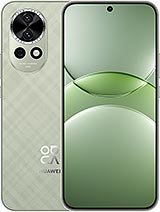
nova 13
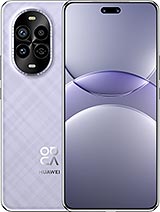
nova 13 Pro
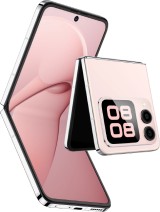
nova Flip
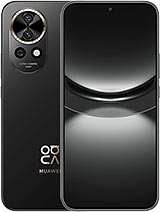
nova 12
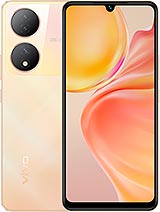
Y100 4G