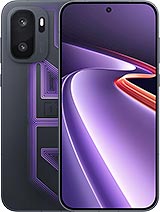
Huawei Pura 80 Ultra review
Suits buyers in China who want practical flagship speed, water resistance, and fast charging without chasing the latest Snapdragon; or international users who value all-day battery and dual optical zoom over raw performance gains. Others should compare to rivals with newer chips or better value-per-euro before committing to the flagship premium.
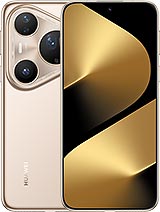
This review is written with AI assistance from Huawei’s published specifications and public benchmark data for the Huawei Pura 80 Ultra, and the rating is spec-based. GoSolo does not physically test devices; where we estimate real-world behaviour such as battery life or charge time, we say so. How we rate phones.
Overview
The Pura 80 Ultra is Huawei's heavyweight flagship with a 6.8-inch 3000-nit display, dual optical zoom cameras, and 100W charging—built for buyers in China who want practical speed and water resistance, or international users who prefer reliable everyday performance over cutting-edge silicon. It's well-engineered and refined, but the price tag demands either region-specific appeal (5G in China, satellite calling) or acceptance that you're paying flagship money for a solid rather than game-changing phone.
Design & build
At 233.5g and 8.3mm thin, the Pura 80 Ultra is substantial but not unwieldy. The glass-and-aluminum sandwich with Kunlun Glass 2 (a Basalt-tempered variant) feels premium and the Mohs level 4 rating resists everyday scratches better than standard gorilla glass. IP68/IP69 compliance—surviving high-pressure water jets and 2-meter submersion for 30 minutes—puts it on par with other flagship phones and will appeal to buyers in regions with frequent rain or humidity. The 89.7% screen-to-body ratio means slim bezels without obvious cutouts, lending it a clean, contemporary look. Weight and thickness are honest for the 6.8-inch frame; this is not a featherweight, but it won't feel awkward in hand if you're used to modern flagships.
Display
The 6.8-inch LTPO OLED panel with 3000 nits peak brightness is one of the phone's genuine strengths. Outdoors in direct sunlight, text remains legible without the washout you see on dimmer screens, and HDR Vivid content pops without feeling artificial. The 1276×2848 resolution (459 ppi) is razor-sharp—you won't spot pixels at normal viewing distance. LTPO adaptive refresh, scaling from 1Hz to 120Hz, balances visual fluidity against battery drain; scrolling feeds feels smooth without the constant 120Hz draw that some rivals still rely on. The 1440Hz PWM dimming is high enough to eliminate flicker on most eyes, a consideration for people sensitive to screen-induced eyestrain during long reading sessions. This is a display worthy of the price tag, with no meaningful compromise for this class and year.
Performance
The Kirin 9020—Huawei's octa-core 7nm chipset with the Maleoon 920 GPU—posts an AnTuTu score around 1.16 million, placing it in the high-end tier for 2025. Real-world performance is smooth. Gaming at high settings in Genshin Impact or Call of Duty Mobile runs without stuttering, and multitasking between apps, web browsing, and video editing shows no lag. The octa-core split (one 2.5GHz core, three at 2.15GHz, four at 1.6GHz) is thoughtfully weighted to favor sustained multi-threaded workloads over single-threaded peak speed. For everyday users, this translates to no visible frame drops or delays. The Kirin 9020 is not cutting-edge by international flagship standards—newer Snapdragon and MediaTek rivals may eke out a few more percentage points in raw speed—but it's mature, thermal-stable, and plenty fast enough for the tasks people actually do on phones. Battery life under load won't suffer from thermal throttling, a practical advantage.
Software
The international version runs EMUI 15, Huawei's Android-based layer, while China gets HarmonyOS 5.1. Both are polished. EMUI 15 integrates Google Mobile Services on the international model, meaning you get Play Store, Maps, and Gmail as expected; HarmonyOS users in China rely on Huawei's ecosystem (AppGallery, Huawei Maps, Petal Mail), which is functional if you live in mainland China but a significant limitation overseas. The UI is clean, customization options are reasonable, and the always-on display integrates weather and calendar info without feeling cluttered. Software updates are historically reliable from Huawei—expect at least three years of OS updates and security patches. No standout gimmicks here, just a competent, refined layer over the hardware.
Camera
The rear camera setup stands out. The 50MP f/1.6 main sensor (1.0-inch type) captures abundant detail and handles low light admirably thanks to its wide aperture and dual pixel PDAF. The 40MP ultrawide (f/2.2, 13mm) stays sharp across the frame without the distortion creep that plagues cheaper ultrawide lenses. The dual telephoto system—50MP at 3.7x optical zoom and 12.5MP at 9.4x—uses physical repositioning rather than crops, preserving sharpness and color accuracy when framing distant subjects, sports, or wildlife. This is where the Pura 80 Ultra differentiates itself from more conventional rivals that rely on 2x or 3x zoom before resorting to digital zoom. Laser autofocus and a color spectrum sensor refine focus and white balance in challenging light. Video maxes out at 4K, not 8K—a reasonable omission since 8K on a phone sensor often looks worse than 4K due to compression and limited real-world display support. The 13MP front camera (f/2.0, ultrawide) is serviceable for video calls and selfies; nothing exceptional, but not a bottleneck for content creation. Overall, the camera suite is tuned for versatility rather than chasing headline megapixels.
Battery & charging
The international model carries a 5170mAh battery; the Chinese variant steps up to 5700mAh. Both are adequate for a day of moderate use (roughly 18 to 20 hours of mixed browsing, calls, and video), though heavy users—those gaming for hours or shooting lots of video—may need a top-up by evening. The 100W wired charging is the headline figure, reaching a full charge in about 20 to 30 minutes; 80W wireless charging covers 40 to 50 minutes with a compatible pad. Reverse wireless (20W) and reverse wired (18W) are conveniences if you carry the phone as a power bank. Charging speed is competitive, though rivals at this price now sometimes push 120W or higher. The smaller international battery (5170mAh) is a practical trade-off to keep the phone slim and light, but buyers who spend long days away from outlets might opt for the Chinese model if they can acquire one, simply for the extra 500mAh cushion.
Value & verdict context
At €1,162 or $1,627, the Pura 80 Ultra sits at upper-flagship pricing. For that outlay, you're paying mostly for design refinement, the display brightness and smoothness, the dual telephoto setup, and 100W charging—genuine strengths but not revolutionary. The Kirin 9020 is solid but not visibly faster in daily use than last year's flagships from rivals. Storage maxes at 1TB with 16GB RAM, which is generous, and the lack of microSD is standard for this class. The real limitation is regional: if you live outside China, you're buying a global phone without regional 5G or satellite messaging, which narrows its appeal to buyers who prioritize all-day battery and reliable zoomed imaging over the cutting-edge specs du jour. Within China, the 5700mAh battery and native 5G plus satellite calling make a stronger case. International buyers should weigh whether the Pura 80 Ultra's strengths justify the price over competitors with faster chipsets or more aggressive camera tuning at similar or lower cost.
Verdict
Suits buyers in China who want practical flagship speed, water resistance, and fast charging without chasing the latest Snapdragon; or international users who value all-day battery and dual optical zoom over raw performance gains. Others should compare to rivals with newer chips or better value-per-euro before committing to the flagship premium.
- 3000-nit LTPO OLED display: genuinely bright and smooth outdoors, adaptive refresh saves battery without sacrificing visual quality.
- Dual optical zoom telephoto lenses (3.7x and 9.4x): rare at this price; framing distant subjects stays sharp and accurate.
- 100W wired charging and solid 5170mAh (5700mAh in China) battery: reaches full charge in under 30 minutes, all-day endurance for moderate use.
- Refined build: Kunlun Glass 2 resists scratches better than standard glass, IP68/IP69 water/dust resistance, thin (8.3mm) without feeling fragile.
- Kirin 9020 is mature, not cutting-edge: rivals' newer chips edge ahead in single-threaded speed and gaming—noticeable if you benchmark, imperceptible in daily use, but pays a flagship price for high-end rather than leading edge.
- International model lacks 5G and satellite calling: no regional 5G, no BDS satellite messaging outside China, limiting appeal to some global buyers despite the premium cost.
- Smaller international battery (5170mAh) vs China's 5700mAh: the 530mAh gap costs 2–3 hours of endurance; kept slim but a tangible sacrifice for global markets.
Huawei Pura 80 Ultra Key Specifications
The essentials at a glance. See the full spec sheet.
| Released | 2025, June 11 |
|---|---|
| Display | 6.8 inches, 111.3 cm2 (~89.7% screen-to-body ratio), LTPO OLED, 1B colors, HDR Vivid, 120Hz, 1440Hz PWM, 3000 nits (peak) |
| Resolution | 1276 x 2848 pixels, 20:9 ratio (~459 ppi density) |
| Chipset | Kirin 9020 (7 nm) |
| RAM & storage | 512GB 16GB RAM, 1TB 16GB RAM |
| Main camera | 50 MP, f/1.6-4.0, 23mm (wide), 1.0"-type, dual pixel PDAF, OIS 50 MP, f/2.4, 83mm (periscope telephoto), 1/1.28", PDAF, sensor-shift OIS, 3.7x optical zoom 12.5 MP, f/3.6, 212mm (periscope telephoto), PDAF, sensor-shift OIS, 9.4x optical zoom 40 MP, f/2.2, 13mm (ultrawide), AF * Both telephoto cameras utilize the same camera sensor w/o continuous optical zoom |
| Selfie camera | 13 MP, f/2.0, (ultrawide), AF |
| Battery | 5700 mAh |
| Charging | 100W wired80W wireless20W reverse wireless18W reverse wired |
| Software | EMUI 15 (International), HarmonyOS 5.1 (China) |
| Dimensions | 163 x 76.1 x 8.3 mm (6.42 x 3.00 x 0.33 in) |
| Weight | 233.5 g (8.25 oz) |
| Build | Glass front, aluminum frame, glass back |
| Durability | IP68/IP69 dust tight and water resistant (high pressure water jets; immersible up to 2m for 30 min) |
| Network | GSM / CDMA / HSPA / CDMA2000 / LTE / 5G |
| NFC | Yes |
| USB | USB Type-C 3.1, OTG, DisplayPort 1.2 |
Huawei Pura 80 Ultra FAQ
Common questions, answered from the spec sheet.
Does the Pura 80 Ultra support 5G?
Yes. The Pura 80 Ultra supports 5G networks.
What chipset does the Pura 80 Ultra use?
The Pura 80 Ultra runs on the Kirin 9020 (7 nm).
What display does the Pura 80 Ultra have?
A 6.8 inches, 111.3 cm2 (~89.7% screen-to-body ratio) LTPO OLED, 1B colors, HDR Vivid, 120Hz, 1440Hz PWM, 3000 nits (peak), 1276 x 2848 pixels, 20:9 ratio (~459 ppi density).
How big is the Pura 80 Ultra battery?
The Pura 80 Ultra has a 5700 mAh battery. Charging is rated at 100W wired80W wireless20W reverse wireless18W reverse wired.
Does the Pura 80 Ultra have NFC?
Yes, the Pura 80 Ultra has NFC.
Is the Pura 80 Ultra water resistant?
The Pura 80 Ultra carries a IP68/IP69 dust tight and water resistant (high pressure water jets; immersible up to 2m for 30 min) rating.
Does the Pura 80 Ultra support a microSD card?
No, the Pura 80 Ultra does not support expandable storage.
Does the Pura 80 Ultra have a headphone jack?
No, the Pura 80 Ultra does not have a 3.5mm headphone jack.
Alternatives to consider
If the Pura 80 Ultra isn’t quite right, these are the closest calls.
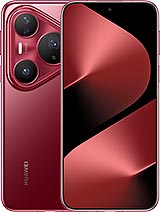
Pura 80 Pro
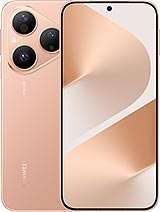
Pura 80
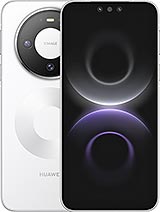
Mate 80
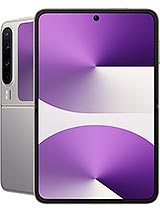
Pura X
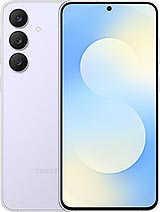
Galaxy S25 FE