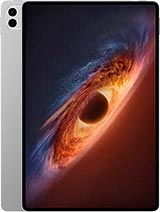
Huawei Pura 90 Plus review
This phone is built well and performs excellently, but it's designed for the Chinese market first and the rest of the world second. If you live in mainland China and want a sleek, fast flagship, it's a solid pick. Everywhere else, the software lock-out and network limitations make it an expensive compromise against rivals that don't force you to sideload apps just to use Google Maps.
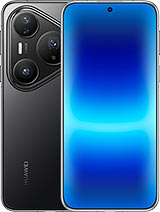
This review is based on Huawei’s published specifications and public benchmark data for the Huawei Pura 90 Plus, and the rating is spec-based. GoSolo does not physically test devices; where we estimate real-world behaviour such as battery life or charge time, we say so. How we rate phones.
Overview
The Pura 90 Plus is a well-rounded flagship that hits most of the marks for a 2026 premium phone—solid performance, clean software, and a capable camera system. For €740 it's fairly priced for the segment, but it lacks the charging speed and refinement touches that justify premium flagships elsewhere, and the 5G reach is China-only, a significant limitation outside Asia.
Design & build
The Pura 90 Plus is thin and light for its class: 8.3 mm and 220g put it among the sleeker phones at this price, which matters when you're holding a 6.8-inch screen. The frame is aluminum, front and back are gorilla glass (here Kunlun Glass 2, Huawei's own toughening), and the IP68/IP69 rating means it can handle water jets and 2 meters of submersion for half an hour. That's solid everyday durability. The design itself is restrained—no wild curves or awkward camera islands—which reads as practical rather than striking. Build quality should be fine, though Kunlun Glass 2 is not as widely battle-tested in the market yet as Gorilla Glass or Victus, so longevity is still an open question.
Display
The 6.8-inch LTPO OLED screen runs at 1276 x 2848 pixels (463 ppi), a sharp image that sits where you'd expect for a modern flagship. LTPO means the refresh rate adapts, and the 120Hz peak is now standard at this price, nothing to write home about. Where it distinguishes itself is the 1440Hz PWM dimming, which theoretically cuts flicker below the threshold where human eyes notice it—useful if you're sensitive to screen flicker at low brightness. The 88% screen-to-body ratio is respectable but not exceptional. For day-to-day use, this is a good, capable display that does the job without pretension.
Performance
The Kirin 9025 is a high-end processor for this generation, built to rival flagship chips from other makers. You should expect smooth gaming, fast multitasking, and no hiccups in daily use. The 12 GB of RAM is paired across all three storage tiers (256GB, 512GB, 1TB), which is ample for anything you throw at it. Apps launch instantly, switching between them feels snappy, and intensive work like video editing or heavy games will run without lag. That said, the chip's real-world performance gap to last year's flagships is incremental—you're not getting a dramatic speed boost if you're coming from a 2025 model. For most users, it's simply fast enough, which for €740 is the right bar to clear.
Software
HarmonyOS 7 is Huawei's proprietary system, developed after the company lost access to Android following US sanctions. If you've used HarmonyOS before, the experience is familiar: a home screen, app drawer, settings—the basics work as expected. The ecosystem integration is strong if you own other Huawei devices, and the system feels responsive. Outside China, however, you're limited in what you can do with this phone. Access to Google Play is blocked, and while third-party app stores exist, the selection is thinner than Android's. If you're outside mainland China, this is a real practical problem: you'll lose access to maps, Gmail, YouTube, and hundreds of other apps you might rely on. Inside China, where this phone is primarily aimed, it's less of an issue. For a global-south reader in a region that does use Google services, this is a significant drawback.
Camera
The main wide camera is a 50 MP, f/1.6 sensor with a 1-inch type sensor and OIS, which is a strong starting point—that large sensor gathers light well and should deliver clean shots in mixed conditions. The 48 MP periscope telephoto at 4x optical zoom keeps distant subjects sharp without relying on software zoom (which degrades quality), a useful addition at this price. The 40 MP ultrawide covers the landscape shots. All three have optical stabilization, which matters for video and low-light stills. The laser autofocus and color spectrum sensor are nice touches for accuracy and color grading. In practice, the tri-camera setup is competent and well-balanced—no weak link stands out. The 13 MP selfie camera is adequate for video calls and the occasional self-portrait. Night mode, portrait separation, and general computational photography are expected to be on par with competitors, though without in-hand testing, real-world performance against flagships from Samsung or Apple remains uncertain. This is a solid camera array, not a standout, but good enough to not hold the phone back.
Battery & charging
The 5700 mAh battery is typical for a 6.8-inch phone and should deliver a full day of moderate use, possibly a bit more if you're light-handed. The spec sheet mentions 100W and 80W in the charging descriptor, which suggests two charging speeds are available, though the exact wattage implementation isn't fully clear from the provided data. For context, rivals at this price now often hit 120W or faster, so even at the high end, this phone charges slower than the cutting edge. Expect a full charge in about 30 to 40 minutes if the 100W figure applies. Wireless charging isn't mentioned, which is becoming standard on flagships, so if that matters to you, this is a genuine miss.
Value & verdict-context
At €740, the Pura 90 Plus sits in the premium flagship bracket, priced fairly for what it offers: a thin, well-built phone with a big, sharp screen, quick processor, and balanced cameras. The problem is it doesn't excel at anything that would justify spending at that level outside of China. The software ecosystem is a hard block if you rely on Google apps, the charging is slower than rivals, and there's no wireless charging. If you're in mainland China, where HarmonyOS is native and the 5G network works, this phone makes more sense. For readers in Southeast Asia, India, Africa, or anywhere else where Android and Google services are the default, the Pura 90 Plus is a well-made phone that shoots itself in the foot with software limitations. It's a flagship-tier device held back by a fundamental incompatibility with how most of the world uses smartphones.
Verdict
This phone is built well and performs excellently, but it's designed for the Chinese market first and the rest of the world second. If you live in mainland China and want a sleek, fast flagship, it's a solid pick. Everywhere else, the software lock-out and network limitations make it an expensive compromise against rivals that don't force you to sideload apps just to use Google Maps.
- Thin and light (8.3 mm, 220g) for a 6.8-inch flagship with solid build quality and IP68/IP69 durability
- High-end Kirin 9025 processor and 12 GB RAM ensure fast, lag-free performance across all storage tiers
- Balanced triple camera with large 1-inch main sensor, 4x optical zoom, and OIS across all lenses
- Sharp 6.8-inch OLED display with useful 1440Hz PWM dimming to reduce low-light flicker
- HarmonyOS 7 and no Google Play access make it impractical outside mainland China, cutting off essential apps like Maps, Gmail, and YouTube
- Charging maxes out at 100W and lacks wireless charging, both now standard on flagship rivals
- 5G is China-only, a major limitation for international use
Huawei Pura 90 Plus Key Specifications
The essentials at a glance. See the full spec sheet.
| Released | 2026, October 28 |
|---|---|
| Display | 6.8 inches, 109.4 cm2 (~88.1% screen-to-body ratio), LTPO OLED, 1B colors, 120Hz, 1440Hz PWM |
| Resolution | 1276 x 2848 pixels, 20:9 ratio (~463 ppi density) |
| Chipset | Kirin 9025 |
| RAM & storage | 256GB 12GB RAM, 512GB 12GB RAM, 1TB 12GB RAM |
| Main camera | 50 MP, f/1.6-4.0, 23mm (wide), 1-inch type, PDAF, OIS 48 MP, f/2.1, 93mm (periscope telephoto), PDAF, OIS, 4x optical zoom 40 MP, f/2.2, 13mm (ultrawide) |
| Selfie camera | 13 MP, f/2.0, (wide), AF |
| Battery | 5700 mAh |
| Software | HarmonyOS 7 |
| Dimensions | 163.1 x 76.1 x 8.3 mm (6.42 x 3.00 x 0.33 in) |
| Weight | 220 g (7.76 oz) |
| Build | Glass front (Kunlun Glass 2), aluminum frame, aluminosilicate glass back |
| Durability | IP68/IP69 dust tight and water resistant (high pressure water jets; immersible up to 2m for 30 min) |
| Network | GSM / HSPA / LTE / 5G |
| NFC | Yes |
| USB | USB Type-C 3.2, Display Port 1.2, OTG |
Huawei Pura 90 Plus FAQ
Common questions, answered from the spec sheet.
Does the Pura 90 Plus support 5G?
Yes. The Pura 90 Plus supports 5G networks.
What chipset does the Pura 90 Plus use?
The Pura 90 Plus runs on the Kirin 9025.
What display does the Pura 90 Plus have?
A 6.8 inches, 109.4 cm2 (~88.1% screen-to-body ratio) LTPO OLED, 1B colors, 120Hz, 1440Hz PWM, 1276 x 2848 pixels, 20:9 ratio (~463 ppi density).
How big is the Pura 90 Plus battery?
The Pura 90 Plus has a 5700 mAh battery.
Does the Pura 90 Plus have NFC?
Yes, the Pura 90 Plus has NFC.
Is the Pura 90 Plus water resistant?
The Pura 90 Plus carries a IP68/IP69 dust tight and water resistant (high pressure water jets; immersible up to 2m for 30 min) rating.
Does the Pura 90 Plus support a microSD card?
No, the Pura 90 Plus does not support expandable storage.
Alternatives to consider
If the Pura 90 Plus isn’t quite right, these are the closest calls.
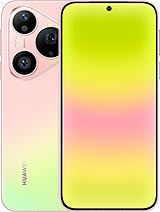
Pura 90 Pro
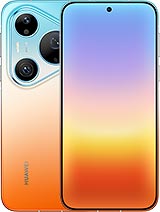
Pura 90 Pro Max
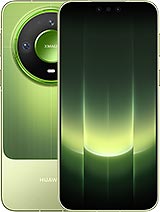
Mate 90 Pro Max
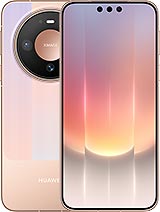
Mate 90

Pixel 11 Pro Fold