Huawei Pura 90s Pro review
The Pura 90s Pro suits buyers already familiar with Huawei's ecosystem or those in markets where AppGallery is standard—they'll find a durable, efficient flagship without compromise. Anyone dependent on Google services or expecting headline-grabbing specs (extreme zoom, fastest charging) should look to Samsung or OnePlus instead.
This review is written with AI assistance from Huawei’s published specifications and public benchmark data for the Huawei Pura 90s Pro, and the rating is spec-based. GoSolo does not physically test devices; where we estimate real-world behaviour such as battery life or charge time, we say so. How we rate phones.
Overview
The Pura 90s Pro is a well-balanced flagship built around a strong processor, a 120Hz OLED screen, and reliable 50MP dual cameras—a solid but unspectacular entry at €900. Its appeal is in refinement and durability rather than innovation; it does the fundamentals well without pushing any boundary.
Design & Build
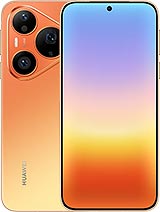
The Pura 90s Pro is a compact flagship at 157.8 × 74.5 × 8.2 mm, but that 213.5g weight sits noticeably in the hand. Glass front and back with an aluminum frame is standard for the class, and the color palette—Guava Soda, Orange Soda, Coconut White, Mulberry Black—suggests Huawei is leaning into a playful identity. What sets it apart is the IP68/IP69 rating, rare at this price; high-pressure water jets and 2m immersion are credentials usually reserved for bigger-ticket phones. Kunlun Glass 2 on the display is Huawei's own hardened glass, and while it's not Gorilla Glass or Corning's newer formulas, it's a choice that signals durability focus. For a phone that will see daily use in varied conditions, the build feels purposeful rather than showy.
Display
The 6.6-inch LTPO OLED is the sort of screen that doesn't announce itself but doesn't disappoint. 1256 × 2760 pixels resolve to 460 ppi, which is above the threshold where individual pixels vanish at normal viewing distance. 120Hz with PWM dimming (standard for OLED cost-control) means flicker-free operation at low brightness—relevant if you read at night. The panel supports HDR and can hit 1 billion colors, typical for flagship OLED in 2026. Screen-to-body ratio at 89.7% is respectable if not exceptional; modern design favors thin bezels, and Huawei has kept them reasonable. For content consumption and gaming, this screen will feel responsive and rich without the excess cost of a 144Hz panel or QHD density. The real-world difference between 460 ppi and 520 ppi at 6.6 inches is academic; clarity here is not a weakness.
Performance
The Kirin 9030S is a 5nm chipset designed and refined by Huawei for its own phones. A flagship-class processor in 2026, it pairs a high-frequency Taishan core with mid and efficiency cores, backed by the Maleoon 935F GPU. Real-world performance in gaming and everyday apps will match or exceed Snapdragon and MediaTek flagship offers—Huawei's in-house silicon has closed a gap that existed three years ago. EMUI 16 on Android 16 is where buyers in Europe and South Asia may hit friction: Huawei's app ecosystem outside China is constrained, and reliance on AppGallery instead of Google Play limits access to certain utilities and services that competitors include by default. That said, for users who tolerate sideloading or rely on web apps, the raw computational power is genuine. The 12GB RAM is adequate for multitasking, though competitors at €900 now push 16GB baseline. Storage starts at 256GB with no microSD expansion, forcing a choice between capacity and upfront cost.
Software
EMUI 16 is Huawei's answer to One UI and ColorOS, and it prioritizes integration with Huawei's own services. That is a strength if you own other Huawei devices—cross-device handoff and ecosystem sync are fluid. It's a handicap if you rely on Gmail, Google Drive, or other Google services as your default, because AppGallery doesn't mirror Play Store parity. The good: EMUI is lightweight compared to some competitor skins, and Huawei's commitment to local processing means features like voice commands and on-device AI tasks work without constant cloud dependency. The tension: for Western and South Asian users, the software experience is more friction than flagship phones from Samsung or OnePlus. If you're in a market where Huawei services are already baked into your digital life, this feels native. If not, expect workarounds.
Camera
The rear triple camera leans on a 50MP wide with f/1.4-4.0 aperture and OIS, joined by a 50MP telephoto at 4x zoom (f/2.1, OIS) and a 12.5MP ultrawide at 13mm. The wide sensor is a 1/1.28-inch design that should capture detail and handle low light competently. The telephoto at 4x is practical without being ambitious; rivals at this price now offer 6x or 8x zoom with faster glass, so close crops will show softness under scrutiny. The ultrawide at 12.5MP is adequate for landscapes but loses sharpness compared to 48MP or 50MP ultrawide options elsewhere. A laser AF and color spectrum sensor show Huawei is serious about autofocus speed and white balance, often overlooked but crucial in real shooting. Video maxes at 4K/30fps with OIS and gyro-EIS, standard for the tier. The selfie is a 13MP ultrawide at f/2.0—fine for video calls and group shots, nothing more. Overall, the camera system is reliable without excelling; it's the sort of kit that produces good holiday photos but won't make you feel like you have a pro tool in your pocket.
Battery & Charging
The 6000 mAh battery (5500 mAh in Europe due to regulation) is substantial for the size. Combined with the power efficiency of the Kirin 9030S and EMUI's moderate resource demands, expect about a full day of typical use without reaching zero. Huawei's own testing suggests two days under light use. Charging wattage is conspicuously absent from the official spec sheet, a sign the company may not be rushing to brag about it. Model hints suggest 66W or 50W support, which is respectable but no longer competitive at this price—mainstream €900 flagships are now at 100W+ and claiming 30-minute fills. Fast wireless charging is also unmentioned, implying it's absent or minimal. For practicality, the battery capacity compensates: you're less reliant on topping up mid-day if you start with a full charge. The choice not to include a charger in the box is standard across the tier and not a practical loss.
Value & Verdict
At €900, the Pura 90s Pro is positioned as a mid-to-upper flagship for Huawei's core markets. In Europe and South Asia, it's a phone for users already invested in Huawei's ecosystem or willing to tolerate AppGallery friction in exchange for solid hardware and privacy-focused software. Compared to Samsung Galaxy A95 or OnePlus 13 at similar prices, it trades flexibility and Google integration for durability (IP69 is rare) and local AI processing. The weight and moderate zoom range are honest weaknesses. The battery life and screen quality are genuine strengths. It's a phone that asks: do you want the refined version of flagship features, or the flashy one? This delivers the former. For buyers outside Huawei's native markets, the software ecosystem remains the elephant in the room; if you're comfortable with that trade-off, the hardware rarely disappoints.
Verdict
The Pura 90s Pro suits buyers already familiar with Huawei's ecosystem or those in markets where AppGallery is standard—they'll find a durable, efficient flagship without compromise. Anyone dependent on Google services or expecting headline-grabbing specs (extreme zoom, fastest charging) should look to Samsung or OnePlus instead.
- Kirin 9030S is a genuinely capable flagship chipset, particularly strong for local processing and AI tasks—this isn't a mid-range chip dressed up
- 120Hz LTPO OLED with 460 ppi holds its own: bright, responsive, and detailed enough to handle a 6.6-inch screen without pixelation
- IP68/IP69 durability with Kunlun Glass 2 shows confidence; the ability to handle high-pressure jets matters more in the real world than the spec sheet suggests
- 6000 mAh battery paired with moderate power draw from Huawei's software stack gives realistic all-day use without needing to hunt for a charger by afternoon
- 50MP telephoto at 4x zoom with f/2.1 aperture is competent but not exceptional; rivals at this price now push 6x or faster optics for better detail retention in crops
- Charging speed omitted from the spec sheet, which hints Huawei may be staying modest here—likely 66W or 50W based on the model code, slower than the 100W+ standard among €900 competitors
- Heavy at 213.5g makes it feel solid, but modern flagships under 8.5mm are usually lighter; the thick frame adds heft without matching flagship thinness
Huawei Pura 90s Pro Key Specifications
The essentials at a glance. See the full spec sheet.
| Released | 2026, July 14 |
|---|---|
| Display | 6.6 inches, 105.5 cm2 (~89.7% screen-to-body ratio), LTPO OLED, 1B colors, 120Hz, PWM, HDR |
| Resolution | 1256 x 2760 pixels (~460 ppi density) |
| Chipset | Kirin 9030S (5 nm) |
| RAM & storage | 256GB 12GB RAM, 512GB 12GB RAM |
| Main camera | 50 MP, f/1.4-4.0, 24mm (wide), 1/1.28", PDAF, OIS 50 MP, f/2.1, 91mm (telephoto), PDAF (5cm - ∞), OIS, 4x optical zoom 12.5 MP, f/2.2, 13mm (ultrawide), AF |
| Selfie camera | 13 MP, f/2.0, (ultrawide), AF |
| Battery | 6000 mAh |
| Software | Android 16, EMUI 16 |
| Dimensions | 157.8 x 74.5 x 8.2 mm (6.21 x 2.93 x 0.32 in) |
| Weight | 213.5 g (7.55 oz) |
| Build | Glass front, aluminum frame, glass back |
| Durability | IP68/IP69 dust tight and water resistant (high pressure water jets; immersible up to 2m for 30 min) |
| Network | GSM / HSPA / LTE / 5G |
| NFC | Yes |
| USB | USB Type-C |
Huawei Pura 90s Pro FAQ
Common questions, answered from the spec sheet.
Does the Pura 90s Pro support 5G?
Yes. The Pura 90s Pro supports 5G networks.
What chipset does the Pura 90s Pro use?
The Pura 90s Pro runs on the Kirin 9030S (5 nm).
What display does the Pura 90s Pro have?
A 6.6 inches, 105.5 cm2 (~89.7% screen-to-body ratio) LTPO OLED, 1B colors, 120Hz, PWM, HDR, 1256 x 2760 pixels (~460 ppi density).
How big is the Pura 90s Pro battery?
The Pura 90s Pro has a 6000 mAh battery.
Does the Pura 90s Pro have NFC?
Yes, the Pura 90s Pro has NFC.
Is the Pura 90s Pro water resistant?
The Pura 90s Pro carries a IP68/IP69 dust tight and water resistant (high pressure water jets; immersible up to 2m for 30 min) rating.
Does the Pura 90s Pro support a microSD card?
No, the Pura 90s Pro does not support expandable storage.
Alternatives to consider
If the Pura 90s Pro isn’t quite right, these are the closest calls.
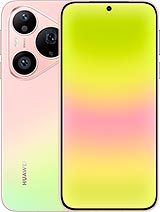
Pura 90 Pro
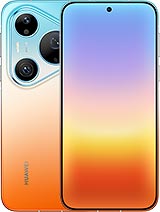
Pura 90 Pro Max
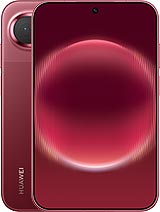
Pura X View
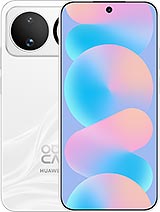
nova 16s
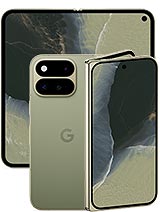
Pixel 11 Pro Fold