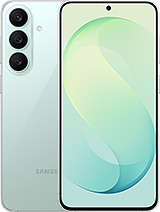
Huawei Pura 90s Pro Max review
The Pura 90s Pro Max suits buyers in markets where Huawei has a following and who prioritize battery life, zoom reach, and a sharp display over software innovation and video performance. Others should compare it side-by-side with a Samsung S-series or similar flagship first—the weight, video limits, and price may outweigh the strengths."
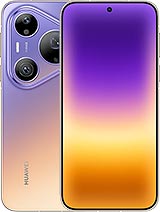
This review is written with AI assistance from Huawei’s published specifications and public benchmark data for the Huawei Pura 90s Pro Max, and the rating is spec-based. GoSolo does not physically test devices; where we estimate real-world behaviour such as battery life or charge time, we say so. How we rate phones.
Overview
The Pura 90s Pro Max is a large, high-end Android phone with a sharp 120Hz display, solid Kirin 9030S performance, and a versatile triple camera setup anchored by a capable 50MP wide and impressive 200MP telephoto. It's a capable flagship for its price, though the lack of meaningful software differentiation and slower refresh rate for video capture leave it feeling incremental rather than exceptional.
Design & build
The Pura 90s Pro Max commits to glass sandwich construction with an aluminum frame, hitting IP68/IP69 durability that handles serious water resistance up to 2 meters for 30 minutes. The trade-off is weight: at 230.5 grams, it's the upper end of comfortable for a 6.9-inch phone, a consequence of the battery capacity and build materials combined. The 8.1mm thickness is actually modest by this generation's standards, yet the phone still feels substantial in hand—not unwieldy, but definitely present. For buyers prioritizing durability and long battery life over featherweight pocket comfort, that's acceptable. The color options—Blush Gold, Orange Ocean, Blaze Purple, and Graphite Black—are characterful without being polarizing. The nano-SIM and eSIM support with a maximum of two active lines simultaneously is flexible enough for regional SIM juggling, common in South Asian markets.
Display
The 6.9-inch LTPO OLED screen is the highlight of the hardware. Running 1308x2880 pixels yields 460 ppi density, which is sharp enough that individual pixels disappear in normal use. The 120Hz LTPO refresh with dynamic scaling is where modern flagships should live by 2026, and Huawei executes it cleanly—scrolling text and feeds remain butter-smooth without sacrificing battery life when scrolling static content. Kunlun Glass protection and an anti-reflective coating keep reflections minimal in sunlight. HDR support and 1 billion color depth mean video and photo viewing are faithful to the source. The 90.7% screen-to-body ratio uses the space efficiently without the visual distraction of an obvious notch or a gimmicky hole-punch. For reading, document work, and video consumption, this screen is a serious tool.
Performance
The Kirin 9030S is Huawei's current flagship silicon, and it shows: an AnTuTu score of 1.29 million places it in the conversation with high-end peers. The octa-core setup (1x2.7 GHz Taishan Big, 3x2.15 GHz Taishan Mid, 4x1.62 GHz Taishan Little) handles multitasking, gaming, and productivity apps without hiccup. The Maleoon 935F GPU handles graphics workloads competently. 12GB of RAM is the baseline for this class, and storage maxes out at 512GB—no expansion slot, but the capacity is ample for most users. Real-world performance won't disappoint; apps launch snappily, task-switching is seamless, and demanding games run at high settings. The active use score of 13 hours suggests battery endurance under a typical mixed load, which is respectable but not exceptional for 6000 mAh in 2026.
Software
Android 16 with EMUI 16 brings the latest version of Huawei's interface layer, which continues to prioritize utility over ornament. EMUI remains straightforward and reasonably responsive, though it doesn't offer anything that competes with Samsung's One UI or Google's Pixel UI in terms of visual polish or exclusive features that justify the price premium. The Kirin's efficiency, rather than software ingenuity, is what keeps the experience feeling sharp. Security gets GPS, GLONASS, BDS, Galileo, QZSS, and NavIC positioning support—overkill for most users but valuable if you navigate frequently in areas where western systems struggle.
Camera
The triple rear camera is the second major story here. The 50MP wide at f/1.4-4.0 with a 1/1.28" sensor and OIS is the workday driver and capable in good and fading light. The 200MP telephoto at 89mm with 4x optical zoom is where Huawei differentiates: most rivals at this tier offer 2-3x, so the extra reach is genuine and useful for portrait-length framing or distant subjects. Optical zoom means you're not cropping a smaller sensor, preserving image quality. The 40MP ultrawide at 13mm and f/2.2 fills the wide-angle slot competently, though it's not a star; ultrawide lenses rarely are at this price. Laser autofocus and a color spectrum sensor add precision to focus and white balance, and OIS on the main and telephoto helps in video. The caveat: video maxes out at 4K 30fps, which is a genuine step backward compared to rivals offering 4K60fps or even 8K. For phone videography, 30fps is limiting; it's a real cost to the creative potential and a oddly conservative choice for a device with this much processing power. The 13MP front camera handles selfies and video calls adequately but with no standout features.
Battery & charging
The 6000 mAh battery is the lifeline here, and its size is no accident: Huawei is betting on endurance over thinness, and the wager pays off. The 13-hour active use score is solid for a phone of this size and brightness, meaning a day of heavy use shouldn't drain it entirely. Charging speed is where a critical regional split emerges: the international model supports 100W charging, which is competitive for 2026, while the European variant drops to 80W and a smaller 5500 mAh battery. That's a material downgrade for EU buyers—fewer mAh and slower charging together mean longer time tethered to a charger. Neither figure is revolutionary anymore; flagship rivals sit at 120W or higher, so the Pura 90s Pro Max is following rather than leading. No charger in the box is standard, so you'll need to source one separately.
Value & verdict
At 1150 EUR, the Pura 90s Pro Max prices itself as a flagship, and the hardware mostly justifies it: the battery, display, and 200MP telephoto are legitimate strengths. However, the software doesn't differentiate meaningfully from phones several tiers below it, video capture maxes out at 4K30fps when rivals offer more fluidity, and the weight is noticeable enough to annoy over a full day. The regional variance on charging and battery for Europe is particularly frustrating. For South Asian markets where Huawei phones fill a gap left by restricted Chinese brands and where large batteries and durability are valued, the proposition is stronger. For Western buyers, the value calculation tilts toward alternatives with faster video, more innovative software, and lighter bodies at the same price.
Verdict
The Pura 90s Pro Max suits buyers in markets where Huawei has a following and who prioritize battery life, zoom reach, and a sharp display over software innovation and video performance. Others should compare it side-by-side with a Samsung S-series or similar flagship first—the weight, video limits, and price may outweigh the strengths."
- 6000 mAh battery in a phone under 231g, with 100W charging (EU gets 5500 mAh and 80W, a notable step back)
- Sharp, bright 1308x2880 OLED display with 460 ppi density and 120Hz LTPO refresh—pixel-perfect for text and video
- 200MP telephoto with 4x optical zoom and OIS delivers real zoom reach beyond the usual 2-3x crop at this price
- Kirin 9030S with AnTuTu 1.29M handles flagship workloads and stays efficient, avoiding last-gen silicon
- Video maxes out at 4K30fps when rivals in this tier routinely offer 8K or higher frame rates; a real gap for content creators
- Heavy at 230.5g—noticeably more than competitors, and the 8.1mm thickness doesn't justify the weight penalty
- Chunky 1150 EUR price for a phone missing IP70 (only IP68/IP69) and software that doesn't clearly differentiate it from lower-priced alternatives
Huawei Pura 90s Pro Max Key Specifications
The essentials at a glance. See the full spec sheet.
| Released | 2026, July 14 |
|---|---|
| Display | 6.9 inches, 114.6 cm2 (~90.7% screen-to-body ratio), LTPO OLED, 1B colors, 120Hz, PWM, HDR |
| Resolution | 1308 x 2880 pixels (~460 ppi density) |
| Chipset | Kirin 9030S (5 nm) |
| RAM & storage | 256GB 12GB RAM, 512GB 12GB RAM |
| Main camera | 50 MP, f/1.4-4.0, 24mm (wide), 1/1.28", PDAF, OIS 200 MP, f/2.6, 89mm (telephoto), 1/1.28", PDAF, OIS, 4x optical zoom 40 MP, f/2.2, 13mm (ultrawide), AF |
| Selfie camera | 13 MP, f/2.0, (ultrawide), AF |
| Battery | 6000 mAh |
| Software | Android 16, EMUI 16 |
| Dimensions | 164 x 77.1 x 8.1 mm (6.46 x 3.04 x 0.32 in) |
| Weight | 230.5 g (8.15 oz) |
| Build | Glass front, aluminum frame, glass back |
| Durability | IP68/IP69 dust tight and water resistant (high pressure water jets; immersible up to 2m for 30 min) |
| Network | GSM / HSPA / LTE / 5G |
| NFC | Yes |
| USB | USB Type-C |
Huawei Pura 90s Pro Max FAQ
Common questions, answered from the spec sheet.
Does the Pura 90s Pro Max support 5G?
Yes. The Pura 90s Pro Max supports 5G networks.
What chipset does the Pura 90s Pro Max use?
The Pura 90s Pro Max runs on the Kirin 9030S (5 nm).
What display does the Pura 90s Pro Max have?
A 6.9 inches, 114.6 cm2 (~90.7% screen-to-body ratio) LTPO OLED, 1B colors, 120Hz, PWM, HDR, 1308 x 2880 pixels (~460 ppi density).
How big is the Pura 90s Pro Max battery?
The Pura 90s Pro Max has a 6000 mAh battery.
Does the Pura 90s Pro Max have NFC?
Yes, the Pura 90s Pro Max has NFC.
Is the Pura 90s Pro Max water resistant?
The Pura 90s Pro Max carries a IP68/IP69 dust tight and water resistant (high pressure water jets; immersible up to 2m for 30 min) rating.
Does the Pura 90s Pro Max support a microSD card?
No, the Pura 90s Pro Max does not support expandable storage.
Alternatives to consider
If the Pura 90s Pro Max isn’t quite right, these are the closest calls.
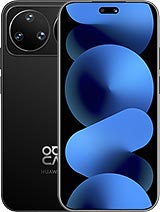
nova 16s Pro
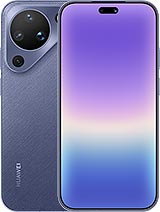
Pura 90
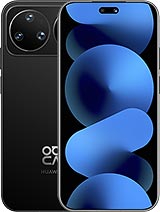
nova 16 Pro
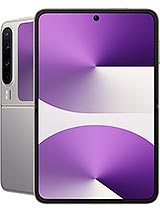
Pura X

Pixel 10a