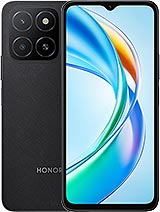
Infinix Hot 30 Play review
The Hot 30 Play suits someone who needs a reliable, large-screen companion for light daily use—messaging, browsing, video, light gaming—and can tolerate a soft display and modest performance to gain two days of battery. Skip it if you game regularly, demand screen sharpness, or expect fast charging; look elsewhere if comparable phones at the same price offer 1080p displays or faster processors.
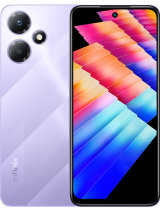
This review is based on Infinix’s published specifications and public benchmark data for the Infinix Hot 30 Play, and the rating is spec-based. GoSolo does not physically test devices; where we estimate real-world behaviour such as battery life or charge time, we say so. How we rate phones.
Overview
The Hot 30 Play is a large-screen budget phone built to last all day on a single charge, but its 720p display and aging Helio G37 chipset mean it handles light tasks smoothly while stumbling on anything demanding. It makes sense for someone in emerging markets who needs messaging, video, and casual browsing without premium frills, but not for gaming or multitasking.
Design and build
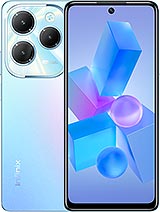
At 205g and 8.6mm thick, the Hot 30 Play feels substantial in hand without being clumsy. The glass front, plastic frame, and plastic back are honest about the price: nothing fancy, but solid enough for accidental drops. The side-mounted fingerprint sensor sits where your thumb naturally rests, and it responds quickly. The large 6.82-inch footprint makes it less pocketable than a 6.5-inch phone, but that is the deliberate trade-off for screen real estate in this segment. It arrives in three colours—Mirage Black, Blade White, Bora Purple—with no visual surprises, which is fine.
Display
The 6.82-inch IPS LCD screen is where the budget cuts bite hardest. At 720 x 1640 pixels (263 ppi), it is noticeably soft compared to 1080p screens that now dominate phones at this price. Reading text, browsing social media, and viewing photos all show the weakness; icons and fonts lack crispness. The 90Hz refresh does its job smoothing scrolling in apps that support it—WhatsApp, TikTok, and browser movement feel slicker than 60Hz—but only when the developer has built it in. 500 nits peak brightness is adequate for indoor and dull outdoor use, though direct sunlight remains a struggle. For video and casual browsing, the size compensates for the low pixel density; for reading or detail work, it falls short of modern expectations at this price.
Performance
The Helio G37 is a 2019-vintage chipset aimed at everyday tasks, not ambition. Opening apps, messaging, and light browsing work without lag. Heavier loads—switching between five or six apps, running social media with many tabs open, or any recent game—will expose its limits. The 4GB base model feels the strain more noticeably; 8GB helps but does not fully overcome the CPU's modest speed. Video playback and music are handled cleanly. Gaming is possible only on older titles or new games at minimum settings and reduced frame rates. If your day consists of messaging, calling, browsing, and casual video, it copes fine. If you juggle many apps or expect to play modern games, this chipset will frustrate you within weeks.
Software
Android 13 with Infinix's XOS 12.6 skin sits on top. XOS is lightweight compared to some overlays and does not bulk up the interface with unwanted bloat, though Infinix's own apps and services occupy the home screen by default. Updates will likely be limited; budget Infinix phones rarely receive more than one major Android upgrade. For a 2023 device, security patches should arrive on a reasonable schedule, but expect this phone to age out of active support within two years. If you just need a stable, familiar Android experience without long-term upgrade promises, this is acceptable.
Camera
The 16MP main sensor with f/1.8 aperture and PDAF sounds decent on paper, but real-world output is ordinary. Daylight photos are sharp and well-exposed, but colour saturation is flat and detail retrieval is below what 16MP phones at similar prices deliver. The dual-LED flash helps in very dim settings, though it casts hard shadows. The 8MP selfie camera is functional for video calls and casual selfies; it won't impress on social media. Both cameras are locked to 1080p video, so if you plan to shoot beyond 30fps or higher resolution, you will find limits quickly. Night mode is absent entirely. For documenting daily life and casual social sharing, it passes; for anyone who cares about photo quality, the camera is a weak spot.
Battery and charging
The 6000mAh battery is the Hot 30 Play's strongest card. On light to moderate use—messaging, browsing, an hour or two of video—expect two full days before needing to plug in. Even with heavier use, one full day is reliable. The screen-on time hovers around 6 to 8 hours depending on brightness and app load, which is respectable for this chipset and size. The 18W charging, however, is a handicap. It takes roughly 100-120 minutes to fully charge from empty, while rivals at this price now bundle 30W to 65W chargers and cut that time in half. If you prioritize endurance over fast refills, the battery capacity wins; if you are always on the move, the slow charging becomes tedious.
Value and verdict
The Hot 30 Play occupies a specific niche: a large-screen, long-battery budget phone for people who value simplicity and endurance over raw power or modern display quality. It delivers on battery life and screen size, two things that matter to people who travel, work in the field, or simply want to charge less often. The weak points are real—720p display, entry-level chipset, slow charging, mediocre camera—and buyers in markets where higher-spec rivals are available at similar prices should consider alternatives. But in regions where budget options are thin and reliability matters, this phone justifies its position through sheer battery stamina and straightforward design.
Verdict
The Hot 30 Play suits someone who needs a reliable, large-screen companion for light daily use—messaging, browsing, video, light gaming—and can tolerate a soft display and modest performance to gain two days of battery. Skip it if you game regularly, demand screen sharpness, or expect fast charging; look elsewhere if comparable phones at the same price offer 1080p displays or faster processors.
- 6000mAh battery delivers genuine two-day battery life on light use, a rare comfort in this segment
- Large 6.82-inch screen with 90Hz refresh smooths scrolling in supported apps, more pleasant than the flat 60Hz many budget rivals offer
- Dedicated microSD slot lets you expand storage up to 1TB, useful when the base 128GB fills up with video and photos
- Solid build feel with glass front and dual-LED flash on both cameras for low-light shots
- 720p resolution on a 6.82-inch screen (263 ppi) makes text and icons visibly soft; rivals in this price now push 1080p
- Helio G37 is entry-level by 2023 standards and struggles with new games, heavy apps, and multitasking on the 4GB base model
- 18W charging is glacially slow by today's market; rivals at this price now offer 30W to 65W, cutting charge time in half
Infinix Hot 30 Play Key Specifications
The essentials at a glance. See the full spec sheet.
| Released | 2023, May 22 |
|---|---|
| Display | 6.82 inches, 110.5 cm2 (~83.5% screen-to-body ratio), IPS LCD, 90Hz, 500 nits (peak) |
| Resolution | 720 x 1640 pixels (~263 ppi density) |
| Chipset | Mediatek MT6765 Helio G37 (12 nm) |
| RAM & storage | 128GB 4GB RAM, 128GB 8GB RAM |
| Main camera | 16 MP, f/1.8, (wide), PDAF Auxiliary lens |
| Selfie camera | 8 MP, f/2.0, (wide) |
| Battery | 6000 mAh |
| Software | Android 13, XOS 12.6 |
| Dimensions | 170.6 x 77.5 x 8.6 mm (6.72 x 3.05 x 0.34 in) |
| Weight | 205 g (7.23 oz) |
| Build | Glass front, plastic frame, plastic back |
| Network | GSM / HSPA / LTE |
| NFC | Yes |
| USB | USB Type-C 2.0, OTG |
Infinix Hot 30 Play FAQ
Common questions, answered from the spec sheet.
Does the Hot 30 Play support 5G?
No. The Hot 30 Play tops out at GSM / HSPA / LTE, without 5G.
What chipset does the Hot 30 Play use?
The Hot 30 Play runs on the Mediatek MT6765 Helio G37 (12 nm).
What display does the Hot 30 Play have?
A 6.82 inches, 110.5 cm2 (~83.5% screen-to-body ratio) IPS LCD, 90Hz, 500 nits (peak), 720 x 1640 pixels (~263 ppi density).
How big is the Hot 30 Play battery?
The Hot 30 Play has a 6000 mAh battery.
Does the Hot 30 Play have NFC?
Yes, the Hot 30 Play has NFC.
Does the Hot 30 Play support a microSD card?
Yes, the Hot 30 Play supports expandable storage (microSDXC (dedicated slot)).
Alternatives to consider
If the Hot 30 Play isn’t quite right, these are the closest calls.
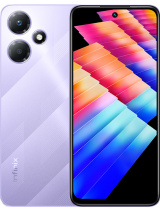
Hot 30 Play NFC
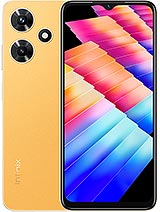
Hot 30i (50 MP)
Hot 40

Hot 30 Free Fire
Galaxy XCover 7