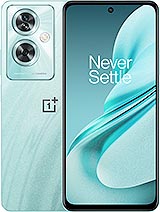
Infinix Hot 30i review
The Hot 30i suits buyers who live with weak mobile infrastructure, rely on dual SIM, and prize battery endurance over speed; everyone else should look for a faster chipset and 30W+ charging, which are now standard at comparable prices.
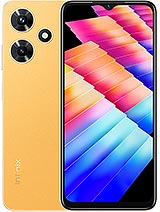
This review is based on Infinix’s published specifications and public benchmark data for the Infinix Hot 30i, and the rating is spec-based. GoSolo does not physically test devices; where we estimate real-world behaviour such as battery life or charge time, we say so. How we rate phones.
Overview
The Hot 30i is a straightforward budget phone built for emerging markets: reliable calling and messaging, a large 6.56-inch screen, and a 5000mAh battery that lasts 1.5 to 2 days on light use. The weak Unisoc T606 chipset and slow 18W charging mean it only suits buyers who prioritize battery life and screen size over performance or speed.
Design & build
The Hot 30i is thin and light at 191g and 8.4mm, with a glass front and plastic frame and back that feel basic but durable. The industrial design is unremarkable but functional: a side-mounted fingerprint sensor, dual Nano-SIM tray, and a dedicated microSD slot that doesn't cannibalize your SIM space. At 164 x 75.8mm, it sits between pocketable and unwieldy. Build quality reads as honest budget—nothing creaks or feels fragile, but nothing impresses either. For the price tier and release date in 2023, this is precisely what you would expect: no surprises.
Display
The 6.56-inch 90Hz IPS LCD is the main selling point. At 720 x 1612 pixels, pixel density sits at 269 ppi, which is sharp enough for text at normal viewing distance but noticeably coarser than modern 1080p budget phones side by side. The 90Hz refresh does make scrolling feel smoother than 60Hz, and the 500-nit peak brightness handles outdoor reading in direct sun without forcing you to find shade, though very bright days still require tilting. The 20:9 aspect ratio and tall frame work well for video calls and reading articles. By 2023 standards this is a competent, unremarkable display for the money: large and readable, but not sharp and not particularly vibrant in color.
Performance
The Unisoc T606 (12nm, octa-core with two Cortex-A75 cores and six A55 cores) is entry-level by design and shows it in daily use. Calls, messaging, light web browsing, and social media scroll without strain. Apps launch, but not snappily. Open a photo gallery with hundreds of images, and you will feel lag. Gaming is a non-starter: 3D titles demand low graphics and frame rates to avoid stuttering, and anything demanding will simply be unplayable. The Mali-G57 MP1 GPU is adequate for 2D work but undersized for modern mobile gaming. If your life is calls, texts, and YouTube, this is fine. If you use heavier apps, multitask heavily, or expect snappy performance, look elsewhere. This is what entry-level performance looked like in 2023, and it has aged no better than expected.
Software
Android 12 with Infinix's XOS 10.6 overlay ships out of the box. XOS adds custom icons, launcher tweaks, and app management features that some users appreciate and others find cluttered. Updates are the weak point: Infinix's track record on maintaining budget phones is poor, so do not expect years of OS upgrades or timely security patches. If clean, stock Android matters to you, this phone will disappoint. For casual users in regions where Infinix support is minimal anyway, it is a non-issue.
Camera
The main camera is 13MP at f/1.9 (1/3.07-inch sensor) with autofocus, dual-LED flash, and HDR. Daylight photos are acceptable for a budget phone: color is natural, detail holds up in good light, and the f/1.9 aperture helps in dim rooms. Low light reveals the limits: shadows fill with noise, and fine detail turns to mush. The 8MP selfie (f/2.0, 1/3.94-inch) is sharp enough for video calls but soft for group photos. Video is capped at 1080p@30fps, which works but looks stuttering in fast motion. For snapshots and casual video, this is enough; for anything demanding, do not expect much.
Battery & charging
The 5000mAh battery is the Hot 30i's most honest asset. With the modest 720p display and weak chipset, mixed use spans 8–10 hours of screen time, stretching to 1.5–2 days if you stay light with calls and messaging. Idle drain is minimal. The tradeoff is 18W charging, which fills the battery in about 90–120 minutes. This is slow by 2023 standards, when competitors were already shipping 30W, 50W, or even 65W. If you charge overnight, it is a non-issue. If you rely on quick top-ups during the day, plan ahead. The battery itself will likely hold 80% capacity after two to three years of normal use, so it is not a ticking time bomb.
Value & verdict
The Hot 30i is a phone that knows its lane: buyers in emerging markets who need reliable dual-SIM calling, messaging, long battery life, and a large screen, without premium performance or camera quality. The 5000mAh battery and dual SIM are genuine strengths. The 90Hz display is nice to have. The Unisoc T606 is the realistic performance ceiling, and slow charging is the actual grind. At its launch price in mid-2023, it represented reasonable value for the target audience. By 2024–2025, faster 50W chargers and better-binned entry chips became standard at similar prices, so this phone now feels dated. It is not broken, but it is not a smart buy if faster rivals exist in your market at the same cost. Worth considering only if battery life and screen size are your top priorities and you are willing to live with sluggish performance and slow charging.
Verdict
The Hot 30i suits buyers who live with weak mobile infrastructure, rely on dual SIM, and prize battery endurance over speed; everyone else should look for a faster chipset and 30W+ charging, which are now standard at comparable prices.
- 5000mAh battery delivers real 1.5–2 day stamina on mixed use, rare in this price bracket
- 6.56-inch 90Hz display is roomy for video calls and reading; 500 nits peak helps in daylight
- Dual SIM with LTE bands covering most regions, plus a dedicated microSD slot for storage expansion
- Headphone jack and FM radio retained, still handy for emerging markets without streaming everywhere
- 18W charging takes 1.5–2 hours for a full 5000mAh; rivals in this space now hit 30–65W
- Unisoc T606 is visibly slow for anything beyond calls, messaging, and light browsing; games stutter badly
- 269 ppi display is readable but noticeably sharp compared to modern budget standards; 720p feels dated even at 6.56 inches
Infinix Hot 30i Key Specifications
The essentials at a glance. See the full spec sheet.
| Released | 2023, March 31 |
|---|---|
| Display | 6.56 inches, 103.4 cm2 (~83.2% screen-to-body ratio), IPS LCD, 90Hz, 500 nits (peak) |
| Resolution | 720 x 1612 pixels, 20:9 ratio (~269 ppi density) |
| Chipset | Unisoc T606 (12 nm) |
| RAM & storage | 64GB 4GB RAM, 128GB 4GB RAM, 128GB 8GB RAM |
| Main camera | 13 MP, f/1.9, (wide), 1/3.07", AF Auxiliary lens |
| Selfie camera | 8 MP, f/2.0, (wide), 1/3.94" |
| Battery | 5000 mAh |
| Charging | 18W wired |
| Software | Android 12, XOS 10.6 |
| Dimensions | 164 x 75.8 x 8.4 mm (6.46 x 2.98 x 0.33 in) |
| Weight | 191 g (6.74 oz) |
| Build | Glass front, plastic frame, plastic back |
| Network | GSM / HSPA / LTE |
| NFC | Yes (Hot 30i NFC only) |
| USB | USB Type-C 2.0, OTG |
Infinix Hot 30i FAQ
Common questions, answered from the spec sheet.
Does the Hot 30i support 5G?
No. The Hot 30i tops out at GSM / HSPA / LTE, without 5G.
What chipset does the Hot 30i use?
The Hot 30i runs on the Unisoc T606 (12 nm).
What display does the Hot 30i have?
A 6.56 inches, 103.4 cm2 (~83.2% screen-to-body ratio) IPS LCD, 90Hz, 500 nits (peak), 720 x 1612 pixels, 20:9 ratio (~269 ppi density).
How big is the Hot 30i battery?
The Hot 30i has a 5000 mAh battery. Charging is rated at 18W wired.
Does the Hot 30i have NFC?
Yes, the Hot 30i has NFC.
Does the Hot 30i support a microSD card?
Yes, the Hot 30i supports expandable storage (microSDXC (dedicated slot)).
Does the Hot 30i have a headphone jack?
Yes, the Hot 30i has a 3.5mm headphone jack.
Alternatives to consider
If the Hot 30i isn’t quite right, these are the closest calls.
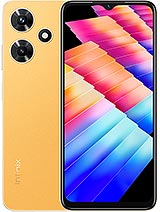
Hot 30i (50 MP)
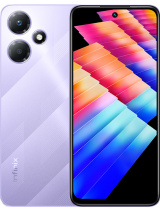
Hot 30 Play NFC
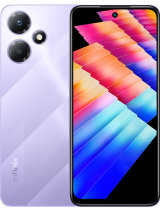
Hot 30 Play
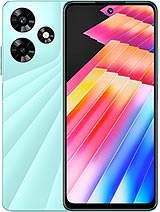
Hot 30
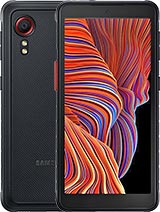
Galaxy XCover 7