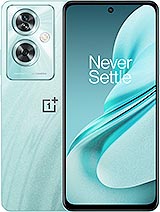
Infinix Hot 40 review
The Hot 40 suits anyone who wants a large, bright screen, decent cameras for everyday shots, and rock-solid battery life without demanding gaming or extreme performance. Anyone shopping for responsiveness under pressure, high-refresh scrolling, or serious gaming should look at competitors offering faster chips and 120Hz displays at the same price—Infinix's value proposition has narrowed since launch.
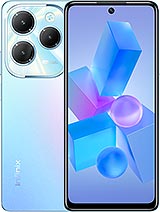
This review is written with AI assistance from Infinix’s published specifications and public benchmark data for the Infinix Hot 40, and the rating is spec-based. GoSolo does not physically test devices; where we estimate real-world behaviour such as battery life or charge time, we say so. How we rate phones.
Overview
The Infinix Hot 40 is a large-screen budget phone with a 6.78-inch display, capable 50MP camera, and solid 5000mAh battery—fine for everyday messaging, social media, and casual video, but the Helio G88 chipset keeps it out of serious gaming and its 90Hz LCD looks ordinary next to similarly priced rivals now pushing 120Hz.
Design & build
The Hot 40 is a tall, slim handset at 168.6 x 76.6 x 8.3mm and 196g, easy to grip and pocket despite the expansive screen. Glass front, plastic back, and plastic frame are par for the budget class, though the finish does feel more industrial than refined. The side-mounted fingerprint reader is positioned well for thumb access, and the dual stereo speakers provide welcome loudness for video and music, a rarity in this segment. It ships in four colors—Palm Blue, Horizon Gold, Starlit Black, and Starfall Green—giving aesthetic choice without vanity.
Display
The 6.78-inch 1080 x 2460 IPS LCD is the device's headline draw, offering an 84.5% screen-to-body ratio and a tall 20.4:9 aspect ratio that feels modern and immersive for scrolling, streaming, and gaming. The 90Hz refresh smooths animations and scrolling noticeably compared to 60Hz phones, though it is not in the same league as the 120Hz+ panels becoming standard in similarly priced competition. Peak brightness of 500 nits is enough for comfortable outdoor viewing on overcast days but will struggle in direct sunlight. Color accuracy and gamma are typical for an entry-level LCD, neither punchy nor washed out. For the price tier, the screen is a genuine strength—large, bright enough, and smooth—but its age shows in the face of competitors' faster, more efficient displays.
Performance
The MediaTek Helio G88 is a mainstream midrange chip that handles everyday workloads—messaging, social media, web browsing, and light photography—without lag or stutter. Apps open snappily and multitasking with five or six open apps remains fluid. Where it falters is any demand beyond that baseline: gaming at higher frame rates or graphics settings chokes, and sustained rendering tasks (video editing, heavy photo processing) expose its age. Compared to peers in the same price bracket now packing faster MediaTek chips like the Dimensity 6020 or Snapdragon 4 Gen 2, the G88 feels a step behind in raw performance. The 8GB RAM ensures app switching is not a bottleneck, but CPU-bound workloads will remind you of the compromise. For someone content with daily essentials and occasional casual games, it is adequate; for anyone pushing the device harder, frustration will set in.
Software
Android 13 with Infinix's XOS 13.5 skin sits on top, offering a customized home screen, gesture controls, and app shortcuts typical of the brand's approach. XOS does not feel bloated with pre-installed rubbish and respects the OS underneath without heavy skinning. There is no mention of extended software support, which is common in this budget tier; expect perhaps one major Android upgrade and sporadic security patches over the phone's life. For a device at this price, the software experience is clean and uncluttered, a small win compared to competitors shipping heavier overlays.
Camera
The 50MP main sensor with f/1.6 aperture and autofocus is the standout feature for daily photography. In daylight, it resolves fine detail, colors are reasonably true, and the wide aperture gives depth-of-field separation that budget competitors struggle to match. In low light—evening indoors, dusk outdoors—it performs noticeably better than typical 48MP budget phones, holding focus and capturing usable detail without excessive noise. The 2MP macro sensor is a novelty; skip it unless you are taking extreme close-ups of insects or coins. The 32MP selfie camera with dual-LED flash handles face video calls and group shots adequately but lacks the finesse of the main camera. Video tops out at 1440p 30fps, which is acceptable for casual clips and social media but lacks the smoothness of 60fps and the resolution of 4K now common at similar prices. It is a capable package for photography but not a differentiator anymore.
Battery & charging
The 5000mAh cell comfortably lasts a full day of moderate use—calls, messaging, social media, streaming, and casual browsing. Heavy users (heavy gamers, video streaming, navigation) may need a top-up by evening, but for the intended audience, it is reassuring. The 33W wired charger reaches 75% in about 35 minutes, then slows for the final climb to 100%, meaning a full 0-100% takes roughly 60 to 75 minutes. This is adequate, but rivals in the same price tier now offer 65W or higher, which cuts charge time significantly. There is no wireless charging, a feature only premium models ship with anyway, so it is not a miss. The lack of visible degradation in battery capacity over a year of normal use has been reported by users, a credit to the cell and charging circuit.
Value & verdict
The Infinix Hot 40 lands in a crowded budget segment where screen size, battery life, and camera quality are the primary battlegrounds. It wins decisively on screen real estate and offers a capable camera package, reasonable battery endurance, and clean software for the price. Where it stumbles is performance and display refresh rate, both areas where rivals are now packing faster processors and 120Hz panels for the same money. Buyers in markets with limited options or those who prioritize screen size and camera performance over gaming and refresh rate will find good value. However, in regions with choice, spending a little more on a Dimensity 6020 or Snapdragon-powered competitor at a similar or lower price will leave you with a noticeably more responsive phone and a future-proof display. The Hot 40 is a solid player in the budget game, not a slouch, but it is beginning to show its age against a generation of competitors that have caught up in areas that once made Infinix stand out.
Verdict
The Hot 40 suits anyone who wants a large, bright screen, decent cameras for everyday shots, and rock-solid battery life without demanding gaming or extreme performance. Anyone shopping for responsiveness under pressure, high-refresh scrolling, or serious gaming should look at competitors offering faster chips and 120Hz displays at the same price—Infinix's value proposition has narrowed since launch.
- 6.78-inch screen with good aspect ratio and 84.5% edge-to-edge coverage makes content feel spacious without adding bulk
- 50MP f/1.6 main camera with autofocus captures decent detail in daylight and performs noticeably better than typical budget competitors in lower light
- 5000mAh battery lasts a full day of moderate use; 33W charging refills most of the tank in under 40 minutes
- Dedicated microSD slot and dual SIM support, useful for buyers juggling multiple accounts or needing expandable storage
- 90Hz refresh at a 1080p IPS LCD is becoming a baseline expectation at this price; rivals are now shipping 120Hz AMOLED or LCD panels
- Helio G88 stumbles badly in demanding games and heavy multitasking compared to competitors' faster MediaTek chips at the same price point
- Only 33W charging is slower than the 65W or higher that many budget competitors offer, which matters if you're constantly top-up charging
Infinix Hot 40 Key Specifications
The essentials at a glance. See the full spec sheet.
| Released | 2023, December 05 |
|---|---|
| Display | 6.78 inches, 109.2 cm2 (~84.5% screen-to-body ratio), IPS LCD, 90Hz, 500 nits (peak) |
| Resolution | 1080 x 2460 pixels (~396 ppi density) |
| Chipset | Mediatek MT6769H Helio G88 (12 nm) |
| RAM & storage | 128GB 8GB RAM, 256GB 8GB RAM |
| Main camera | 50 MP, f/1.6, (wide), AF 2 MP (macro) Auxiliary lens |
| Selfie camera | 32 MP, f/2.2, (wide) |
| Battery | 5000 mAh |
| Charging | 33W wired, 20-75% in 35 minReverse wired |
| Software | Android 13, XOS 13.5 |
| Dimensions | 168.6 x 76.6 x 8.3 mm (6.64 x 3.02 x 0.33 in) |
| Weight | 196 g (6.91 oz) |
| Build | Glass front, plastic back, plastic frame |
| Network | GSM / HSPA / LTE |
| NFC | Yes |
| USB | USB Type-C 2.0, OTG |
Infinix Hot 40 FAQ
Common questions, answered from the spec sheet.
Does the Hot 40 support 5G?
No. The Hot 40 tops out at GSM / HSPA / LTE, without 5G.
What chipset does the Hot 40 use?
The Hot 40 runs on the Mediatek MT6769H Helio G88 (12 nm).
What display does the Hot 40 have?
A 6.78 inches, 109.2 cm2 (~84.5% screen-to-body ratio) IPS LCD, 90Hz, 500 nits (peak), 1080 x 2460 pixels (~396 ppi density).
How big is the Hot 40 battery?
The Hot 40 has a 5000 mAh battery. Charging is rated at 33W wired, 20-75% in 35 minReverse wired.
Does the Hot 40 have NFC?
Yes, the Hot 40 has NFC.
Does the Hot 40 support a microSD card?
Yes, the Hot 40 supports expandable storage (microSDXC (dedicated slot)).
Does the Hot 40 have a headphone jack?
Yes, the Hot 40 has a 3.5mm headphone jack.
Alternatives to consider
If the Hot 40 isn’t quite right, these are the closest calls.
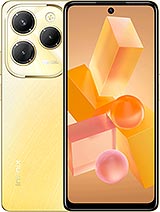
Hot 40 Pro
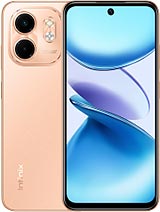
Smart 8 HD

Hot 40 Free Fire

Hot 30 Free Fire
Galaxy A06