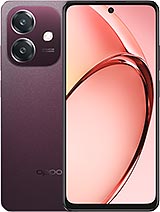
Infinix Note 30 5G review
The Note 30 5G suits someone in a 5G market who prioritizes screen size, battery endurance, and conveniences like the 3.5mm jack over raw performance or prestige—a media watcher or commuter who can live with moderate gaming and doesn't need flagship-class processing. Anyone expecting flagship performance, fast charging, or long-term OS support should look at competitors from OnePlus, Poco, or Samsung's A-series instead.
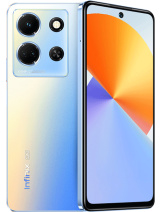
This review is based on Infinix’s published specifications and public benchmark data for the Infinix Note 30 5G, and the rating is spec-based. GoSolo does not physically test devices; where we estimate real-world behaviour such as battery life or charge time, we say so. How we rate phones.
Overview
The Note 30 5G is a large, practical phone that leans on battery endurance and a 5G antenna more than raw performance or camera innovation. For the 2023 budget-to-midrange space, it delivers the basics well—a 120Hz screen, 5000mAh capacity, and a 108MP sensor that takes decent daytime shots—but the Dimensity 6080 and 1080p screen density expose the limits of its class.
Design & build
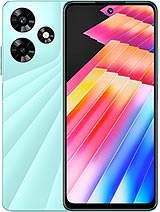
At 205g and 8.5mm thick, the Note 30 5G is thin and light for its 6.78-inch frame, which feels deliberately engineered for one-handed scrolling rather than pocketability. The glass front and back paired with a plastic frame are standard for the budget tier, but the thin chassis means any lateral flex or drop lands hard on the edges. The side-mounted fingerprint sensor is reliably fast and doesn't get in the way, though it's clear this phone treats durability as a secondary concern. For the price point in 2023, the build feels honest if unremarkable—it won't turn heads, and it won't survive a drop onto concrete without a case.
Display
The 6.78-inch IPS LCD with 120Hz refresh and 1080p resolution strikes a familiar compromise for mid-range phones. At 396 ppi, the pixel density is acceptable for everyday viewing, but side-by-side with sharper OLED rivals, text at arm's length shows the trade-off clearly. The 120Hz animation smoothness is genuine and makes scrolling through feeds and apps feel polished, while the 580-nit peak brightness handles outdoor sunlight adequately without excessive glare. The 84.7% screen-to-body ratio is competitive for 2023, and the tall 20.5:9 aspect ratio suits video and reading. For a budget phone focused on screen real estate, this LCD does the job without pretense.
Performance
The Mediatek Dimensity 6080 is the kind of chip that handles everyday tasks—messaging, social media, web browsing, video playback—without noticeable stutter or delay. Games like PUBG Mobile and Fortnite run smoothly at reduced graphics settings, and multitasking between apps feels responsive as long as you stick to light workloads. The Mali-G57 GPU, however, struggles noticeably with demanding 3D titles and heavy photo editing, which is the realistic ceiling for this tier. With 4GB or 8GB of RAM options, the 8GB variant is the safer bet for longevity, though neither config will rival a Snapdragon 870 or Apple A15. For its era and price, the Dimensity 6080 is exactly what you'd expect: adequate for the masses, not built for power users.
Software
Android 13 ships out of the box, which is current but not cutting-edge by 2023 standards. Infinix's skin sits light on top, keeping the experience recognizable for anyone familiar with Android, though bloatware is present and can slow updates. Security patches and OS upgrades are where budget brands often stumble; Infinix has historically offered two years of Android updates, which is passable but trails the five-year commitments from Google and Samsung. For someone who swaps phones every two or three years, this is liveable; for anyone planning to hold onto the Note 30 5G longer, software support is a genuine weakness compared to mainstream flagships.
Camera
The 108MP main sensor with f/1.75 aperture and phase-detect autofocus captures sharp, well-exposed daytime photos with punchy colors, and the quad-LED flash actually helps in dim indoor settings—a rarity at this price. Low-light performance is better than cheaper budget phones but still noticeably behind flagship sensors, with more noise visible at ISO 400 and above. The 1440p video recording caps out at 30fps, which feels dated next to the 1080p 60fps standard on competitors; 4K is off the table entirely. The 16MP selfie camera is serviceable for video calls and casual portraits, though there's visible softening even at good lighting. For social media uploads and casual photography, the camera exceeds expectations; for anyone who demands sharp night shots or smooth video, it falls short.
Battery & charging
The 5000mAh battery consistently delivers about a day of moderate use—messaging, browsing, some video playback, light gaming—before hitting the red line, which is the realistic middle ground for this size and class. The 45W wired charging fills the tank in roughly 45 minutes to an hour, which is respectable but not standout; rivals at the same price hit 65W to 80W by 2023, shaving 10-15 minutes off the cycle. The bypass charging feature helps when you're gaming or streaming while plugged in, keeping the battery cool and prolonging its lifespan. For a phone designed for all-day use rather than speed charging, the balance works.
Value & verdict-context
In 2023, the Note 30 5G occupies the slot where 5G connectivity, a large screen, and long battery life matter more than processing horsepower or premium materials. The 3.5mm headphone jack and microSDXC expansion are increasingly rare and valuable for certain users, while the dual nano-SIM tray appeals to anyone running work and personal lines. Against outright budget phones, it delivers meaningful screen and battery improvements; against flagship killers from OnePlus or Poco, it falls behind on performance and charging speed. The main question is whether you value practicality and longevity of battery health over raw speed and cutting-edge camera features.
Verdict
The Note 30 5G suits someone in a 5G market who prioritizes screen size, battery endurance, and conveniences like the 3.5mm jack over raw performance or prestige—a media watcher or commuter who can live with moderate gaming and doesn't need flagship-class processing. Anyone expecting flagship performance, fast charging, or long-term OS support should look at competitors from OnePlus, Poco, or Samsung's A-series instead.
- 5000mAh battery lasts a full day on moderate use, and 45W charging refills it in under an hour—solid endurance for the price
- 6.78-inch 120Hz LCD is spacious for video and reading, with decent brightness and smoothness despite 1080p density
- 108MP main camera with f/1.75 and PDAF takes sharp, well-lit daytime shots and handles low-light better than cheaper alternatives
- 3.5mm jack and microSDXC slot are genuine conveniences increasingly absent from rivals, plus dual SIM tray covers work-and-personal use
- Dimensity 6080 and 1GB RAM struggle visibly with demanding games and heavy multitasking—not future-proof if your workload grows
- 1440p 30fps video cap and no 4K recording look dated next to 1080p 60fps rivals; charging speed lags competitors at the same price by 20-30W
Infinix Note 30 5G Key Specifications
The essentials at a glance. See the full spec sheet.
| Released | 2023, May 22 |
|---|---|
| Display | 6.78 inches, 109.2 cm2 (~84.7% screen-to-body ratio), IPS LCD, 120Hz, 580 nits (peak) |
| Resolution | 1080 x 2460 pixels (~396 ppi density) |
| Chipset | Mediatek Dimensity 6080 (6 nm) |
| RAM & storage | 128GB 4GB RAM, 256GB 8GB RAM |
| Main camera | 108 MP, f/1.75, 26mm (wide), 1/1.67", 0.64µm, PDAF Auxiliary lenses |
| Selfie camera | 16 MP, f/2.0, (wide) |
| Battery | 5000 mAh |
| Charging | 45W wired, bypass charging |
| Software | Android 13 |
| Dimensions | 168.5 x 76.5 x 8.5 mm (6.63 x 3.01 x 0.33 in) |
| Weight | 205 g (7.23 oz) |
| Build | Glass front, plastic frame, glass or leather back |
| Network | GSM / HSPA / LTE / 5G |
| NFC | Yes |
| USB | USB Type-C 2.0, OTG |
Infinix Note 30 5G FAQ
Common questions, answered from the spec sheet.
Does the Note 30 5G support 5G?
Yes. The Note 30 5G supports 5G networks.
What chipset does the Note 30 5G use?
The Note 30 5G runs on the Mediatek Dimensity 6080 (6 nm).
What display does the Note 30 5G have?
A 6.78 inches, 109.2 cm2 (~84.7% screen-to-body ratio) IPS LCD, 120Hz, 580 nits (peak), 1080 x 2460 pixels (~396 ppi density).
How big is the Note 30 5G battery?
The Note 30 5G has a 5000 mAh battery. Charging is rated at 45W wired, bypass charging.
Does the Note 30 5G have NFC?
Yes, the Note 30 5G has NFC.
Does the Note 30 5G support a microSD card?
Yes, the Note 30 5G supports expandable storage (microSDXC (dedicated slot)).
Does the Note 30 5G have a headphone jack?
Yes, the Note 30 5G has a 3.5mm headphone jack.
Alternatives to consider
If the Note 30 5G isn’t quite right, these are the closest calls.

Hot 30 5G
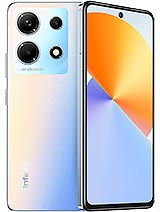
Note 30
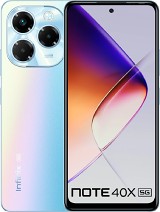
Note 40X 5G
Hot 30

Galaxy M15 5G