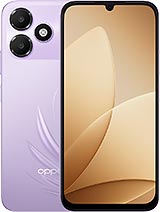
Infinix Smart 20 HD review
The Smart 20 HD suits buyers who need a phone that lasts two days, survives drops, and does not drain their wallet, and who are willing to accept slow performance and basic cameras as the trade. It should be a second choice for anyone who can stretch their budget further or who uses their phone for anything more demanding than calling and casual scrolling.
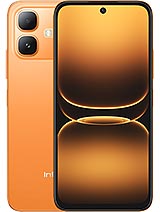
This review is based on Infinix’s published specifications and public benchmark data for the Infinix Smart 20 HD, and the rating is spec-based. GoSolo does not physically test devices; where we estimate real-world behaviour such as battery life or charge time, we say so. How we rate phones.
Overview
The Smart 20 HD is a big-screened budget phone built for everyday use on a tight budget, with a 5000 mAh battery and 120Hz display that punch above its price. It lacks grunt and camera quality, making it feel dated even by entry-level standards, but it does the basics—calls, messages, light browsing, video—without asking much in return.
Design & build
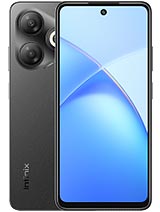
At 8.3mm thick and spanning 6.67 inches, the Smart 20 HD is slim and large in hand—a contradictory feel that takes getting used to. Glass front, plastic back, and plastic frame hit the marks for a sub-€100 device without pretense. The side-mounted fingerprint sensor is responsive, and the dual-SIM slot plus dedicated microSD slot mean you can expand storage without sacrificing a SIM. IP64 rating and 1.5m drop resistance are not flagship-level, but they matter in the real world, especially for buyers who can't afford to replace a broken phone quickly. The phone feels like it could handle daily knocks and splashes from a coffee cup, which is what counts.
Display
The 6.67-inch 120Hz IPS LCD is the Smart 20 HD's strongest single feature. At 720x1600 resolution (263 ppi), it is not sharp by 2026 standards, but it is never jagged or blurry in normal use—text reads cleanly, and web pages scroll without obvious pixelation. The 120Hz refresh makes scrolling Twitter or TikTok feel genuinely smooth, a quality usually reserved for phones twice the price. Brightness peaks at 700 nits, which is solid enough to see in direct sunlight without squinting. The 20:9 aspect ratio is typical and not a con; the 84.2% screen-to-body ratio means minimal bezels for the size. For a budget phone, this is a display that actually justifies keeping.
Performance
The Unisoc T7250 is the weak point. It is an older chipset designed for light lifting—calls, messages, social media, video—and it does those tasks without crashing. But open a camera app, switch between five browser tabs, or try to run a more demanding game, and you feel the strain. Apps launch slower than on equivalent MediaTek or Snapdragon entry-level chips available at the same price. With only 3GB of RAM, multitasking is a compromise; close one app to open another without stuttering. The Mali-G57 MP1 GPU is not built for gaming or video editing. Buyers used to a mid-range phone from a year or two back will notice the drop in responsiveness.
Software
Android 15 with Infinix's XOS 15.1 skin is refreshingly light. There is no heavy customization layer bloating the interface or filling the storage with apps you cannot remove. The system menu is straightforward, icons are clear, and updates should flow regularly—Infinix has improved its track record here. Fingerprint unlock is instant, and the always-on display offers basic watch-face options. There is nothing here to excite, but there is also nothing to frustrate, which is the right attitude for an entry-level phone.
Camera
Both the main and selfie cameras max out at 8MP, which is a real limit in 2026. In bright daylight, stills are acceptable—colors are present, focus is reliable thanks to autofocus on the main sensor, and you can make out detail at normal viewing size. Indoors or at dusk, noise creeps in quickly and fine details blur. There is no zoom (no telephoto), no ultra-wide, and no macro—just a single fixed perspective. Video maxes at 1440p 30fps, which is adequate but not competitive even for the price tier; rivals now offer 1080p 60fps as standard. The dual-LED flash helps in darkness but does not work miracles. If photography matters to you at all, this phone will disappoint.
Battery & charging
The 5000 mAh battery is the real winner here. In moderate to light daily use—texting, calls, an hour of video, social media—you will see two full days before the charger is needed. Heavy use might bring you back to evening of day one, but even that is respectable in 2026. The spec sheet lists 15W charging, which is slow; rivals at this price now push 25W to 33W. Budget about 90 minutes to top up from zero. There is no wireless charging, which no one at this price expects. The battery itself should hold 80% capacity after about 500 charge cycles based on modern lithium aging, meaning real longevity if you use this phone for a year or two.
Value & verdict
At around €100, the Smart 20 HD is positioned squarely for buyers in Global South markets where that price buys reliable basics, not compromises on the frills. The big, bright 120Hz display and all-day battery make it livable for light users. The slow chipset, cramped RAM, and weak cameras are the price of admission. There is no hidden trick or surprising strength beyond what you see on the spec sheet; this is an honest entry-level device. It will handle the essentials—calls, texts, email, YouTube, messaging apps—without fuss. If you are considering a used phone from a year ago or a competing budget phone from another brand, compare specs and real-world app speed side by side; the T7250 will likely feel sluggish in that context. For someone upgrading from a 2019 phone or buying their first smartphone on a very tight budget, it works. For anyone else, a slightly older flagship or a rival brand's current entry model may offer better day-to-day experience.
Verdict
The Smart 20 HD suits buyers who need a phone that lasts two days, survives drops, and does not drain their wallet, and who are willing to accept slow performance and basic cameras as the trade. It should be a second choice for anyone who can stretch their budget further or who uses their phone for anything more demanding than calling and casual scrolling.
- 5000 mAh battery easily lasts two days of moderate use, a real strength in this price tier
- 120Hz IPS LCD display is smooth for scrolling and crisp in sunlight at 700 nits, well-matched to its 6.67-inch frame
- Clean Android 15 with XOS 15.1 adds minor tweaks without bloat, simple to navigate
- IP64 rating and 1.5m drop resistance offer practical durability for the price
- 8MP cameras front and back capture competent stills in bright light but lack the clarity and dynamic range rivals now offer at this price
- Unisoc T7250 is noticeably slower than competing MediaTek and Snapdragon entry chips, causing lag in heavy apps and multitasking
- 3GB RAM paired with 64GB eMMC storage feels tight; internal space fills fast and app switching stutters under load
Infinix Smart 20 HD Key Specifications
The essentials at a glance. See the full spec sheet.
| Released | 2026, October 06 |
|---|---|
| Display | 6.67 inches, 107.4 cm2 (~84.2% screen-to-body ratio), IPS LCD, 120Hz, 700 nits (HBM) |
| Resolution | 720 x 1600 pixels, 20:9 ratio (~263 ppi density) |
| Chipset | Unisoc T7250 (12 nm) |
| RAM & storage | 64GB 3GB RAM |
| Main camera | 8 MP, f/2.0, 27mm (wide), 1/4.0", 1.12µm, AF |
| Selfie camera | 8 MP, f/2.0, (wide), 1/4.0", 1.12µm |
| Battery | 5000 mAh |
| Software | Android 15, XOS 15.1 |
| Dimensions | 165.6 x 77 x 8.3 mm (6.52 x 3.03 x 0.33 in) |
| Build | Glass front, plastic back, plastic frame |
| Durability | IP64 dust tight and water resistant (water splashes) Drop resistant up to 1.5m |
| Network | GSM / HSPA / LTE |
| NFC | Yes |
| USB | USB Type-C 2.0, OTG |
Infinix Smart 20 HD FAQ
Common questions, answered from the spec sheet.
Does the Smart 20 HD support 5G?
No. The Smart 20 HD tops out at GSM / HSPA / LTE, without 5G.
What chipset does the Smart 20 HD use?
The Smart 20 HD runs on the Unisoc T7250 (12 nm).
What display does the Smart 20 HD have?
A 6.67 inches, 107.4 cm2 (~84.2% screen-to-body ratio) IPS LCD, 120Hz, 700 nits (HBM), 720 x 1600 pixels, 20:9 ratio (~263 ppi density).
How big is the Smart 20 HD battery?
The Smart 20 HD has a 5000 mAh battery.
Does the Smart 20 HD have NFC?
Yes, the Smart 20 HD has NFC.
Is the Smart 20 HD water resistant?
The Smart 20 HD carries a IP64 dust tight and water resistant (water splashes) Drop resistant up to 1.5m rating.
Does the Smart 20 HD support a microSD card?
Yes, the Smart 20 HD supports expandable storage (microSDXC (dedicated slot)).
Alternatives to consider
If the Smart 20 HD isn’t quite right, these are the closest calls.
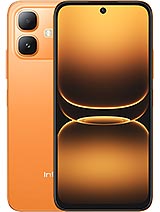
Smart 20
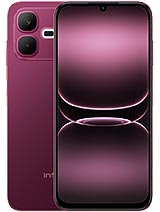
Smart 20e
Smart 10 HD
Smart 9 HD
N6 Lite