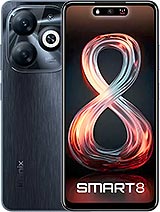
Infinix Smart 8 (India) review
This phone suits light users in smaller Indian cities and towns who need dual SIM, a long-lasting battery, and do not demand fluid scrolling or fast video, but anyone expecting snappy performance, a sharp display, or quick charging should look elsewhere—even in the budget tier, the Helio G36 and 720p panel feel dated in 2024.
This review is written with AI assistance from Infinix’s published specifications and public benchmark data for the Infinix Smart 8 (India), and the rating is spec-based. GoSolo does not physically test devices; where we estimate real-world behaviour such as battery life or charge time, we say so. How we rate phones.
Overview
The Infinix Smart 8 is a bare-bones budget phone with a surprisingly roomy 6.6-inch screen and a big battery, but the 720p display, weak Helio G36 processor, and sluggish 10W charging make it feel slow and dated even at this price. It suits light users in South Asia who value dual SIM and a headphone jack over smooth performance.
Design & build
At 189 grams and 8.5 mm thick, the Smart 8 feels light and slim in hand, which works both ways: the glass front and metal-look frame suggest more durability than it has, but there is no stated water resistance and the plastic back and overall thinness invite scratches and drops. The phone lands somewhere between toy and tool, more durable-looking than a ₹6,000 budget phone but fragile enough to need a case immediately. Dual nano-SIM is a real convenience for Indian users switching carriers or managing work and personal lines, and the dedicated microSD slot means you do not have to choose between expandable storage and dual SIM.
Display
The 6.6-inch screen is genuinely large and 84.6 percent screen-to-body ratio is respectable, but the 720p resolution at 267 ppi is where it all falls apart. Text is noticeably fuzzy at arm's length, icons lack crispness, and web pages feel rough compared to even mid-range phones. The 90Hz refresh rate smooths scrolling and swiping, which masks the low resolution problem while you are moving, but stop scrolling and the softness is obvious. 500 nits peak brightness is adequate for indoor use but will struggle in direct sunlight. For a phone launched in early 2024, shipping with 720p display is a cost-cutting step that shows—rivals at this price now push 1080p or higher.
Performance
The Helio G36 is entry-level even by budget standards, and it shows. Everyday tasks—messaging, email, social media, web browsing—work fine, but there is no margin for heavy use. Switch between apps and you see brief pauses. Open a second browser tab or stream video and the lag becomes visible. Light gaming (Candy Crush, low-setting PUBG Mobile) runs but does not feel smooth. Demanding titles or heavy multitasking will stutter noticeably. The 4 GB of RAM compounds the issue; more RAM would help, but Infinix kept it low to cut costs. For someone checking WhatsApp and Instagram in bursts, it is fine. For anyone who apps-switches frequently or plays anything beyond casual games, it feels slow and frustrating.
Software
Android 13 (Go edition) is a lightweight variant designed for low-spec phones, stripping bloat to stretch performance on weak hardware. XOS 13 layered on top is Infinix's custom interface—relatively clean and inoffensive, with minimal pre-installed junk. The real issue is that even a lightweight OS struggles on the Helio G36, so you are running a slimmed-down OS on an underpowered chip. Android 13 Go also means fewer resources for background tasks and foreground apps, which is a fair trade for keeping the phone responsive in light use. Updates are a question mark; Infinix's track record on budget lines is patchy, so expect Android 13 to be the ceiling.
Camera
The 50 MP main sensor with AF sounds ambitious but does not deliver proportionally. The wider megapixel count helps capture fine detail in good light, and HDR works adequately for mixed-light scenes, but the processing is basic and colors feel slightly dull. The 8 MP selfie is serviceable for video calls and casual snaps. Where the camera really stumbles is video: capped at 1080p@30fps, it is stiff and choppy for anything faster than a walking pace—panning, running, or talking with hand gestures reveal the frame rate limit painfully. For stills in daylight, it is passable; for video or low-light work, expectations need to be very low. The auxiliary lens (likely a macro or depth sensor) does little to improve output.
Battery & charging
The 5000 mAh battery is the phone's genuine strength. On moderate use—calls, messages, social media, light browsing—it comfortably runs two full days, and heavy standby (phone in pocket) stretches it further. Power consumption is low, partly because the weak processor does not drain the cell quickly. Heavy social media and video use drop it to one day, which is expected, but the baseline is solid. Charging, though, is a real pain: 10W is anemic even by entry-level standards, and rivals at this price have moved to 30W or 33W. Expect 2 to 2.5 hours from zero to 100 percent, which means you either charge overnight or plan a long break mid-day. For budget buyers used to chargers sitting plugged in all night anyway, this is tolerable; for anyone wanting flexibility, it is a drawback.
Value & verdict
The Infinix Smart 8 is genuinely budget hardware at a budget price (about ₹6,500 in India). It delivers basic communication and light entertainment without pretense. The large screen, long battery life, headphone jack, and dual SIM appeal to specific users—small-town buyers with spotty connectivity, older users who value simplicity and FM radio, or anyone picking up a second phone for work-life separation. The weak display, slow processor, and painfully slow charging are real compromises, but at this price, compromises are the point. It is not a phone for anyone expecting smooth performance, crisp visuals, or fast charging; it is a functional backup or entry-level upgrade for someone with low expectations and low use.
Verdict
This phone suits light users in smaller Indian cities and towns who need dual SIM, a long-lasting battery, and do not demand fluid scrolling or fast video, but anyone expecting snappy performance, a sharp display, or quick charging should look elsewhere—even in the budget tier, the Helio G36 and 720p panel feel dated in 2024.
- 5000 mAh battery lasts two full days on moderate use, unusual stamina for the price
- Dedicated microSDXC slot lets you expand storage without sacrificing dual SIM
- 3.5mm headphone jack and FM radio—rare now, valuable for offline users
- Glass-front design and metallic finishes feel less cheap than typical budget rivals
- 10W charging is painfully slow; nearly 2.5 hours to fill the battery, forcing overnight or mid-day charging sessions
- 720p display at 267 ppi looks soft and pixelated; text frays at normal reading distance
- Helio G36 stumbles on anything beyond light social media; gaming and heavy multitasking bring visible lag
Infinix Smart 8 (India) Key Specifications
The essentials at a glance. See the full spec sheet.
| Released | 2024, January 13 |
|---|---|
| Display | 6.6 inches, 104.6 cm2 (~84.6% screen-to-body ratio), IPS LCD, 90Hz, 500 nits (peak) |
| Resolution | 720 x 1612 pixels, 20:9 ratio (~267 ppi density) |
| Chipset | Mediatek Helio G36 (12 nm) |
| RAM & storage | 64GB 4GB RAM |
| Main camera | 50 MP, (wide), AF Auxiliary lens |
| Selfie camera | 8 MP, (wide) |
| Battery | 5000 mAh |
| Charging | 10W wiredReverse wired |
| Software | Android 13 (Go edition), XOS 13 |
| Dimensions | 163.6 x 75.6 x 8.5 mm (6.44 x 2.98 x 0.33 in) |
| Weight | 189 g (6.67 oz) |
| Build | Glass front, plastic back, plastic frame |
| Network | GSM / HSPA / LTE |
| NFC | No |
| USB | USB Type-C 2.0, OTG |
Infinix Smart 8 (India) FAQ
Common questions, answered from the spec sheet.
Does the Smart 8 (India) support 5G?
No. The Smart 8 (India) tops out at GSM / HSPA / LTE, without 5G.
What chipset does the Smart 8 (India) use?
The Smart 8 (India) runs on the Mediatek Helio G36 (12 nm).
What display does the Smart 8 (India) have?
A 6.6 inches, 104.6 cm2 (~84.6% screen-to-body ratio) IPS LCD, 90Hz, 500 nits (peak), 720 x 1612 pixels, 20:9 ratio (~267 ppi density).
How big is the Smart 8 (India) battery?
The Smart 8 (India) has a 5000 mAh battery. Charging is rated at 10W wiredReverse wired.
Does the Smart 8 (India) have NFC?
No, the Smart 8 (India) does not list NFC support.
Does the Smart 8 (India) support a microSD card?
Yes, the Smart 8 (India) supports expandable storage (microSDXC (dedicated slot)).
Does the Smart 8 (India) have a headphone jack?
Yes, the Smart 8 (India) has a 3.5mm headphone jack.
Alternatives to consider
If the Smart 8 (India) isn’t quite right, these are the closest calls.
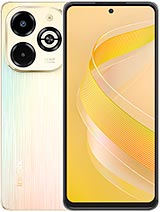
Smart 8 Plus
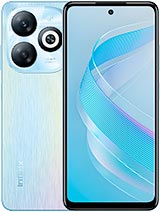
Smart 8 Pro
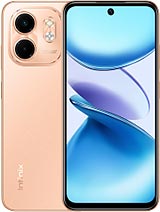
Smart 8 HD
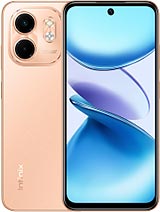
Smart 9 HD
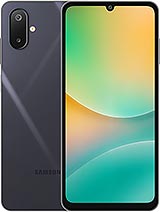
Galaxy M06 5G