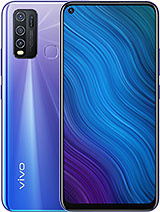
Infinix Smart 8 Pro review
The Smart 8 Pro suits someone who makes calls and sends messages more than anything else, has a big-phone preference, and does not game. It is a rational phone for a tight budget. Anyone who browses heavily, plays games, or works with photo or video apps will outgrow it fast and feel every performance compromise."
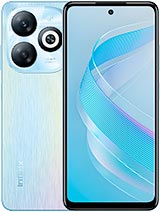
This review is written with AI assistance from Infinix’s published specifications and public benchmark data for the Infinix Smart 8 Pro, and the rating is spec-based. GoSolo does not physically test devices; where we estimate real-world behaviour such as battery life or charge time, we say so. How we rate phones.
Overview
The Smart 8 Pro is a no-frills 6.6-inch Android Go phone for light daily use—calls, messages, browsing—with a big battery and 90Hz screen that makes scrolling smooth. It's honest value at €100, but the Helio G36 and 720p display mean compromises that anyone with heavier app needs or gaming ambitions will feel quickly.
Design & build
At 189 g and 8.5 mm, the Smart 8 Pro feels slim and light in the hand—welcome relief from the thick, heavy budget phones of years past. The glass front and plastic back with plastic frame are standard fare for the price, and the build feels sturdy enough for daily knocks. Nano-SIM and microSDXC slots are both onboard, letting you run two numbers or swap cards without drama. No surprises, but nothing to fault either.
Display
The 6.6-inch 90Hz IPS screen is the phone's strongest feature. Scrolling through feeds and webpages feels smooth and immediate, a rarity in this price bracket. The 500 nits peak brightness holds up in daylight and outdoor reading. The problem is resolution: 720p on a 6.6-inch panel means 267 ppi, which leaves text and edges noticeably soft when you look directly at the screen. If you spend hours reading PDFs, small fonts, or fine-print apps, this will annoy you. For casual browsing and video, it suffices.
Performance
The Helio G36 is among the weakest chips in the Android market today. Its octa-core Cortex-A53 cluster with PowerVR GE8320 GPU handles messages, calls, light web browsing, and older apps without lag. Heavy social media feeds, multitasking, or newer games will stutter or crawl. Fortnite and PUBG run, but only on minimum settings with frame drops; anything released in 2023 or later will struggle. For someone who avoids games and keeps app use modest, it is adequate. For anyone else, you will feel the limits within weeks.
Software
Android 13 Go Edition is the OS here, a stripped-down flavor Google builds for low-RAM, low-storage phones. It is lean and quick, which helps the Helio G36 keep pace. The overlay is Infinix's XOS 13, which adds some design tweaks and preloaded apps. Updates are the weak spot: Infinix's support track record is patchy, and you should not expect more than one or two major version bumps during the phone's life. Security patches may arrive late or sparse.
Camera
The 50 MP main sensor with f/1.9 and autofocus does brighten daylight shots and produces sharp, well-saturated photos in good light. The f/1.9 aperture and auxiliary lens help with focus speed. The 8 MP front camera is functional for video calls. The real limit is the software: there is no telephoto, no ultra-wide, no night mode—just the wide angle. Video caps at 1080p 30fps, which is slow by 2024 standards. For holiday snaps and WhatsApp previews, the 50MP main works. For anything more ambitious, this camera will disappoint.
Battery & charging
The 5000 mAh battery is the phone's lasting charm. Paired with Android Go and a modest chip, it clears a full day of light to moderate use with a few hours to spare—texts, calls, some browsing, music streaming. Gaming or heavy app use will drain it faster, but a typical user will charge every evening, not midday. Charging, though, is glacially slow at 10 W; you are looking at 2-plus hours to full from empty. Rivals now offer 30 W, 50 W, even 100 W at similar or lower prices. If you do charge daily anyway, the slow speed is a minor inconvenience. If you ever need a quick top-up, you will regret this choice.
Value & verdict-context
At around €100, the Smart 8 Pro slots into the ultra-budget tier. It is not a bargain hunter's dream; it is a trade-off device. You gain a large screen, smooth scrolling, a day-long battery, and a 50MP camera that takes respectable daylight photos. You lose performance headroom, a clear display, fast charging, and the kind of app ecosystem freedom a stronger chip would give. For someone in a market where €100 is a serious purchase and whose needs are calls, messages, light browsing, and basic photography, this makes sense. For anyone who games, edits photos, or runs multiple heavy apps, you should find something with at least a Helio G37 or Snapdragon 680 and a brighter display.
Verdict
The Smart 8 Pro suits someone who makes calls and sends messages more than anything else, has a big-phone preference, and does not game. It is a rational phone for a tight budget. Anyone who browses heavily, plays games, or works with photo or video apps will outgrow it fast and feel every performance compromise."
- 5000 mAh battery delivers a full day of typical use, paired with lean Android 13 Go to stretch runtime
- 6.6-inch 90Hz IPS display is large and smooth to scroll, readable in sunlight at 500 nits peak brightness
- 50MP main camera with f/1.9 and autofocus captures sharp daylight photos; expandable storage via microSDXC
- Side fingerprint sensor, 3.5mm jack, FM radio, and dual SIM keep practical features intact
- 10W charging crawls toward a full battery in 2+ hours; rivals at this price now push 30–50W
- Helio G36 is entry-level even by 2024 budget standards, stumbling with any demanding game or app beyond basic tasks
- 720p resolution on a 6.6-inch screen means visible pixelation at normal reading distance, and 500 nits is dim indoors under bright lighting
Infinix Smart 8 Pro Key Specifications
The essentials at a glance. See the full spec sheet.
| Released | 2024, January 29 |
|---|---|
| Display | 6.6 inches, 104.6 cm2 (~84.6% screen-to-body ratio), IPS LCD, 90Hz, 500 nits (peak) |
| Resolution | 720 x 1612 pixels, 20:9 ratio (~267 ppi density) |
| Chipset | Mediatek Helio G36 (12 nm) |
| RAM & storage | 64GB 4GB RAM, 128GB 8GB RAM, 256GB 4GB RAM |
| Main camera | 50 MP, f/1.9, (wide), AF Auxiliary lens |
| Selfie camera | 8 MP, f/2.0, (wide) |
| Battery | 5000 mAh |
| Charging | 10W wiredReverse wired |
| Software | Android 13 (Go edition), XOS 13 |
| Dimensions | 163.6 x 75.6 x 8.5 mm (6.44 x 2.98 x 0.33 in) |
| Weight | 189 g (6.67 oz) |
| Build | Glass front, plastic back, plastic frame |
| Network | GSM / HSPA / LTE |
| NFC | No |
| USB | USB Type-C 2.0, OTG |
Infinix Smart 8 Pro FAQ
Common questions, answered from the spec sheet.
Does the Smart 8 Pro support 5G?
No. The Smart 8 Pro tops out at GSM / HSPA / LTE, without 5G.
What chipset does the Smart 8 Pro use?
The Smart 8 Pro runs on the Mediatek Helio G36 (12 nm).
What display does the Smart 8 Pro have?
A 6.6 inches, 104.6 cm2 (~84.6% screen-to-body ratio) IPS LCD, 90Hz, 500 nits (peak), 720 x 1612 pixels, 20:9 ratio (~267 ppi density).
How big is the Smart 8 Pro battery?
The Smart 8 Pro has a 5000 mAh battery. Charging is rated at 10W wiredReverse wired.
Does the Smart 8 Pro have NFC?
No, the Smart 8 Pro does not list NFC support.
Does the Smart 8 Pro support a microSD card?
Yes, the Smart 8 Pro supports expandable storage (microSDXC (dedicated slot)).
Does the Smart 8 Pro have a headphone jack?
Yes, the Smart 8 Pro has a 3.5mm headphone jack.
Alternatives to consider
If the Smart 8 Pro isn’t quite right, these are the closest calls.
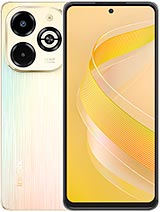
Smart 8 Plus
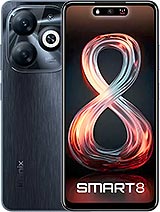
Smart 8 (India)
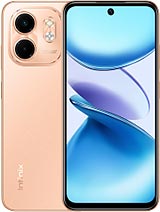
Smart 8 HD
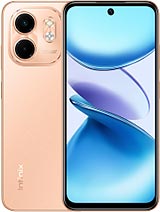
Smart 9 HD
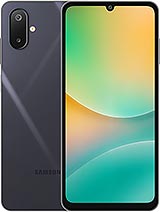
Galaxy M06 5G