Infinix Xpad 30E review
The Xpad 30E suits budget-conscious buyers who prioritize screen size and battery life over speed and image quality, and who will use it mainly for streaming and casual reading. Anyone who multitasks regularly, wants a future-proof device, or relies on good cameras should look elsewhere—even within Infinix's own range.
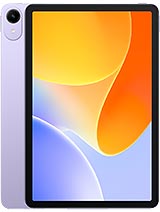
This review is based on Infinix’s published specifications and public benchmark data for the Infinix Xpad 30E, and the rating is spec-based. GoSolo does not physically test devices; where we estimate real-world behaviour such as battery life or charge time, we say so. How we rate phones.
Overview
The Xpad 30E is a no-frills 11-inch tablet aimed at casual use and media consumption on a tight budget. It delivers a large screen and long battery life for under €250, but the aging processor and weak cameras make it feel more like a budget holdover than a real value play in 2026.
Design & Build
The Xpad 30E is remarkably thin and light for its 11-inch footprint—7.9 mm thick and 498 g means it sits between a slim laptop and a large phone in hand feel. The trade-off is obvious: a chassis this svelte usually means plastic body and minimal structural rigidity, typical of Infinix's budget playbook. For couch browsing and Netflix binges, it works fine. Drop it or squeeze it hard and you'll know it is not built for rough use. The curved edges help grip; the nano-SIM and dedicated microSD slot show someone thought about practical expandability, even if it is the baseline expectation now.
Display
An 11-inch IPS LCD is large enough to justify calling this a tablet rather than an oversized phone, and at 440 nits it is bright enough for typical indoor viewing. The 1200 x 1920 resolution on an 11-inch canvas works out to 206 ppi—low enough that you will spot individual pixels if you look close, and text can appear slightly fuzzy compared to modern mid-range tablets at 250+ ppi. Colors are flat and contrast is muted, as IPS LCD's always are, and it lacks the vibrancy or black depth rivals now offer with OLED even at under €300. It is fit for purpose—watching video and reading, mostly—but feels dated next to what others deliver at the same entry-level price.
Performance
The Helio G80 is a 2019-era mainstream midrange chipset that Infinix has leaned on for years. In 2026, it is frankly behind. You will feel it in app load times, scrolling through dense feeds, and multitasking—there is noticeable lag and stutter compared to what €300 rivals offer. Gaming is pointless beyond simple 2D titles. For basic web browsing, email, and video playback, it scrapes by, but not smoothly. The Mali-G52 GPU is weak, and 4–8 GB of RAM cannot fully paper over an aging core. This is the tablet you buy when budget is the only lever you can pull, not because the chip is actually good.
Software
Android 15 is current and welcome, though on this hardware it often feels like the OS is working harder than the processor can keep up. Infinix's overlay is minimal, which is a small mercy—you get a mostly stock experience without heavy bloatware. Expect two years of security updates at best, if history is any guide; long-term software support is not Infinix's strength. For a device you plan to use for three to five years, that is a real limitation.
Camera
The 8 MP rear and 5 MP front cameras are functional in good light and nothing more. Photos lack detail, color accuracy is off, and low-light shots are grainy and soft. Video maxes out at 1080p@30fps, which is fine for calls, but the framerate and bitrate make it feel choppy. Rivals at this price point now use 13 MP sensors with better image processing. This is where Infinix cut costs most obviously, and it shows. Do not buy this tablet expecting to take photos worth keeping.
Battery & Charging
The 7200 mAh battery is the real highlight. On a low-power Helio G80 and a modest LCD screen, you should see two to three days of light to moderate use—browsing, email, video—without needing a charge. That endurance is one of the few reasons to buy a tablet this size instead of using your phone. The spec sheet does not mention charging wattage, which is telling: expect a slow charger, likely 5W or 10W, so you will need patience if the battery does run flat. This is not a fast-charging device.
Value & Verdict Context
At €250, the Xpad 30E occupies awkward middle ground. It is cheaper than a proper iPad or Samsung Galaxy Tab, but not so much cheaper that it justifies the slower chip and lower screen quality. The appeal is straightforward: you want a large screen for media consumption and are willing to accept rough performance and weak cameras to keep the cost low. For that specific need—streaming, books, light browsing—it works. Anyone who does anything more demanding, or who expects a device to last beyond two years with reasonable responsiveness, should save a bit more or buy a used flagship tablet instead.
Verdict
The Xpad 30E suits budget-conscious buyers who prioritize screen size and battery life over speed and image quality, and who will use it mainly for streaming and casual reading. Anyone who multitasks regularly, wants a future-proof device, or relies on good cameras should look elsewhere—even within Infinix's own range.
- Large 11-inch display at a price most tablets cost €400+ for; reasonable at 80.5% screen-to-body ratio and 440 nits brightness for indoor use
- 7200 mAh battery should stretch well beyond a full day of browsing and streaming, the main draw for a device this size
- Thin at 7.9 mm and light enough at 498 g to hold one-handed without fatigue, rare for an 11-inch slate
- Dedicated microSD slot and 256 GB storage option allow practical expansion for media without eating into the OS allocation
- Helio G80 was already dated in 2024; by 2026 it feels behind even budget-tier rivals and will struggle with heavier apps and multitasking
- 8 MP rear and 5 MP front cameras are purely functional—poor low-light performance, soft detail, and video that looks flat; not worth relying on for anything beyond quick stills
- IPS LCD at 206 ppi on an 11-inch tablet is visibly pixelated up close; rivals now push OLED or higher-res panels even at this price
Infinix Xpad 30E Key Specifications
The essentials at a glance. See the full spec sheet.
| Released | 2026, February 19 |
|---|---|
| Display | 11.0 inches, 350.9 cm2 (~80.5% screen-to-body ratio), IPS LCD, 440 nits |
| Resolution | 1200 x 1920 pixels, 16:10 ratio (~206 ppi density) |
| Chipset | Mediatek Helio G80 (12 nm) |
| RAM & storage | 128GB 4GB RAM, 128GB 6GB RAM, 128GB 8GB RAM, 256GB 8GB RAM |
| Main camera | 8 MP |
| Selfie camera | 5 MP |
| Battery | 7200 mAh |
| Software | Android 15 |
| Dimensions | 257.7 x 169.2 x 7.9 mm (10.15 x 6.66 x 0.31 in) |
| Weight | 498 g (1.10 lb) |
| Network | GSM / HSPA / LTE |
| NFC | No |
| USB | USB Type-C 2.0, OTG |
Infinix Xpad 30E FAQ
Common questions, answered from the spec sheet.
Does the Xpad 30E support 5G?
No. The Xpad 30E tops out at GSM / HSPA / LTE, without 5G.
What chipset does the Xpad 30E use?
The Xpad 30E runs on the Mediatek Helio G80 (12 nm).
What display does the Xpad 30E have?
A 11.0 inches, 350.9 cm2 (~80.5% screen-to-body ratio) IPS LCD, 440 nits, 1200 x 1920 pixels, 16:10 ratio (~206 ppi density).
How big is the Xpad 30E battery?
The Xpad 30E has a 7200 mAh battery.
Does the Xpad 30E have NFC?
No, the Xpad 30E does not list NFC support.
Does the Xpad 30E support a microSD card?
Yes, the Xpad 30E supports expandable storage (microSDXC (dedicated slot)).
Alternatives to consider
If the Xpad 30E isn’t quite right, these are the closest calls.
Xpad 30 Pro
Smart 20e

Smart 20
Xpad 20

Play20A