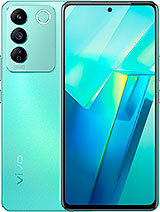
Infinix Zero 20 review
The Zero 20 suits someone after a bright AMOLED screen and long selfie reach on a modest budget, as long as they accept a half-day battery and mid-range gaming limits. If you need better endurance or are planning to game seriously, rivals with larger batteries and faster chips are worth the extra outlay.

This review is based on Infinix’s published specifications and public benchmark data for the Infinix Zero 20, and the rating is spec-based. GoSolo does not physically test devices; where we estimate real-world behaviour such as battery life or charge time, we say so. How we rate phones.
Overview
The Infinix Zero 20 is a 2022 mid-range phone built around an AMOLED screen and an unusually good 60MP selfie camera with optical stabilization—a rarity at this price. The Helio G99 handles daily apps and mid-tier gaming, but battery life is a half-day concern and the refresh rate lags behind rivals even in its era.
Design & build
At 196 grams and 8 mm thick, the Zero 20 sits in the comfortable zone—substantial enough to feel solid, light enough to pocket without thinking. Glass front and aluminum frame are stock for the price tier in 2022; nothing here feels cheap, but nothing feels special either. The side-mounted fingerprint sensor is reliably fast in everyday use, though the placement can feel awkward on a wide 6.7-inch frame if you have smaller hands.
Display
The 6.7-inch AMOLED screen is the phone's headline strength. At 1080×2400 (393 ppi), text and UI are crisp enough for arm's-length reading, though side-by-side with a 1440p screen at the same size, details do blur slightly. 90Hz makes scrolling through social feeds and browsers noticeably smoother than the 60Hz phones it undercut at launch. Colors are punchy, blacks are deep, and daylight legibility is solid. For a phone at this price in late 2022, this AMOLED was a rare find; most rivals stayed with IPS LCD.
Performance
The Mediatek Helio G99 is capable mid-range silicon. Apps open quickly, messaging and browsing don't lag, and jumping between tasks is smooth. Gaming is where the ceiling becomes clear: PUBG Mobile holds high settings at steady 60fps, but Genshin Impact, Call of Duty Mobile, and other heavy 3D titles will stutter or force you to dial back graphics. For casual players and app users, this chip is plenty. For anyone chasing frame consistency in demanding games, you will notice the limits after the first hour.
Camera
The 108MP main sensor captures wide scenes and crops generously for tight framing—useful for getting detail without stepping closer. The 13MP ultra-wide is competent for landscapes and group shots, though at 1440p@30fps, video is best left to social clips or casual documentation; it lacks the fluidity of 60fps video from rivals. Where the Zero 20 stands out is the front camera: 60MP with optical stabilization is unusual in this price range. Most competitors stuck with 16MP or 20MP fixed optics on the selfie; this gives you noticeably sharper, more detailed self-portraits and better video calls, which matters if you spend time on social video or group calls.
Battery & charging
The 4500 mAh battery lands around 7–8 hours of screen-on time during mixed use (browsing, messaging, some gaming). A day of moderate scrolling sees you to evening, but if you stream video or game for 2–3 hours straight, you will dip below 20% by mid-afternoon. 45W charging is brisk: 75% in 30 minutes means a quick top-up before you leave the house. Full 0–100% charge takes roughly 45–55 minutes. For someone who charges nightly and tops up at work or in the car, this workflow is painless. For heavy users without charging access, the half-day anxiety is real.
Software & connectivity
Android 12 with Infinix's XOS 12 skin is light on bloat and responsive to swipes and taps. The experience is close to stock Android, which keeps performance snappy. Connectivity tops out at LTE Cat4 (around 150 Mbps down), which is adequate for video streaming and file downloads, though noticeably slower than Cat6 or Cat12 rivals. Wi-Fi 5 and NFC are both included, so wireless payment is on the table if your bank supports it. No 5G is worth noting only because rivals even at this price have started adding it by 2023.
Value & verdict
At roughly 200 EUR, the Zero 20 is a sensible phone for someone chasing an AMOLED screen and an above-average selfie camera on a tight budget. The 90Hz refresh and optical stabilization on the front cam are genuine perks that lift it above the usual mid-range noise. Battery life is the trade-off you are making: expect daylong use if you are light-handed, and an afternoon charge if you are not. It is not a phone for mobile gamers or anyone who works far from a power source. For a student or casual user who values a beautiful display and solid daily performance, it delivers. For heavy users or anyone gaming seriously, look at a Helio G95 phone or step up to a Snapdragon 6 Gen 1 rival with better longevity.
Verdict
The Zero 20 suits someone after a bright AMOLED screen and long selfie reach on a modest budget, as long as they accept a half-day battery and mid-range gaming limits. If you need better endurance or are planning to game seriously, rivals with larger batteries and faster chips are worth the extra outlay.
- Bright AMOLED display on a 6.7-inch screen at around 200 EUR is genuine value, especially the 90Hz refresh for scrolling
- 60MP selfie camera with optical stabilization is unusual for the price and class; most rivals at this tier had 16MP or 20MP fixed lenses
- 45W charging tops the battery to 75% in 30 minutes, so quick top-ups are realistic before leaving the house
- Dedicated microSD slot means expandable storage without sacrificing dual SIMs
- Battery life tops out around 7–8 hours of screen time on mixed use; heavy gamers or video watchers will need a charge by afternoon
- Helio G99 and Mali-G57 GPU plateau on demanding games—Genshin Impact and similar 3D titles will stutter or force low settings
- 108MP sensor is marketing bulk; real-world detail doesn't scale with megapixels, and the 1440p@30fps video is soft-focus compared to 60fps rivals
Infinix Zero 20 Key Specifications
The essentials at a glance. See the full spec sheet.
| Released | 2022, October 05 |
|---|---|
| Display | 6.7 inches, 108.4 cm2 (~86.0% screen-to-body ratio), AMOLED, 90Hz |
| Resolution | 1080 x 2400 pixels, 20:9 ratio (~393 ppi density) |
| Chipset | Mediatek Helio G99 (6 nm) |
| RAM & storage | 128GB 8GB RAM, 256GB 8GB RAM |
| Main camera | 108 MP, (wide), PDAF 13 MP, AF 2 MP |
| Selfie camera | 60 MP, (wide), AF, OIS |
| Battery | 4500 mAh |
| Charging | 45W wired, 75% in 30 min |
| Software | Android 12, XOS 12 |
| Dimensions | 164.4 x 76.7 x 8 mm (6.47 x 3.02 x 0.31 in) |
| Weight | 196 g (6.91 oz) |
| Build | Glass front, aluminum frame |
| Network | GSM / HSPA / LTE |
| NFC | Yes |
| USB | USB Type-C 2.0, OTG |
Infinix Zero 20 FAQ
Common questions, answered from the spec sheet.
Does the Zero 20 support 5G?
No. The Zero 20 tops out at GSM / HSPA / LTE, without 5G.
What chipset does the Zero 20 use?
The Zero 20 runs on the Mediatek Helio G99 (6 nm).
What display does the Zero 20 have?
A 6.7 inches, 108.4 cm2 (~86.0% screen-to-body ratio) AMOLED, 90Hz, 1080 x 2400 pixels, 20:9 ratio (~393 ppi density).
How big is the Zero 20 battery?
The Zero 20 has a 4500 mAh battery. Charging is rated at 45W wired, 75% in 30 min.
Does the Zero 20 have NFC?
Yes, the Zero 20 has NFC.
Does the Zero 20 support a microSD card?
Yes, the Zero 20 supports expandable storage (microSDXC (dedicated slot)).
Does the Zero 20 have a headphone jack?
Yes, the Zero 20 has a 3.5mm headphone jack.
Alternatives to consider
If the Zero 20 isn’t quite right, these are the closest calls.
Note 30
Hot 40 Pro
Note 30 5G

Zero 30 5G
Galaxy A24