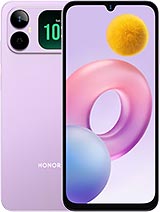
Itel A300+ review
The Itel A300+ suits buyers who prioritize battery endurance and ruggedness over speed and image quality—farm workers, travelers in low-infrastructure areas, or anyone who charges irregularly. Anyone expecting fast processing, a sharp display, or strong camera performance should look elsewhere, even at this price.
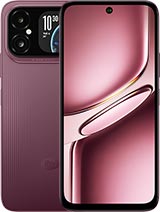
This review is based on Itel’s published specifications and public benchmark data for the Itel A300+, and the rating is spec-based. GoSolo does not physically test devices; where we estimate real-world behaviour such as battery life or charge time, we say so. How we rate phones.
Overview
The Itel A300+ is a budget workhorse built for buyers who value battery life and ruggedness over processing power. At €130 with a 7000 mAh battery, IP65 rating, and Android 16 Go, it handles calls, messages, and light apps without drama—though the 256-ppi display and 13MP camera are strictly functional, not impressive.
Design & build
At 8.8mm thick and with an IP65 rating plus MIL-STD-810H compliance, the A300+ feels built to survive daily wear better than most phones at this price. The drop-resistance claim of up to 1.5m is modest but credible for a device that weighs so little (weight not disclosed, but the spec suggests featherweight). The 6.78-inch body is tall and narrow—a 19.5:9 aspect ratio—which makes it relatively manageable to hold one-handed despite the size. Four finish options (Midnight Black, Sunset Gold, Deep Cherry, Frost Blue) give buyers real color choice, not the usual grey-black-white gamut. The design is plainly industrial, not fashionable, but that honesty suits the price and the durability pitch.
Display
The 720p IPS LCD is a low-resolution panel by modern standards—256 ppi means text and images have a soft, pixelated edge if you look closely. For a €130 phone, this is par for the budget segment; rivals at this price tier rarely exceed 720p. The 120Hz refresh rate is a pleasant surprise, though, and it does smooth scrolling noticeably. The 83.7% screen-to-body ratio is decent for this class, reclaiming frame space efficiently. In strong sunlight, IPS panels historically struggle, and no brightness spec is listed, so expect a dim outdoor experience in full glare. For messaging, reading, and casual browsing indoors, it works without complaint.
Performance
The Helio G81 is entry-level processing—two fast Cortex-A75 cores and six efficiency cores on a 12nm process. It handles Android 16 Go without lag in everyday tasks: web browsing, social media, calls, and messaging run smoothly. Games and heavy apps will choke; do not expect console-quality gaming or smooth video editing. The Mali-G52 GPU is capable for light 2D work but well behind any chip from the mainstream midrange or above. RAM configurations max out at 6GB, which pairs predictably with this processor: enough for multitasking, but not enough to mask the chip's limits if you are running many apps in parallel. For a phone aimed at first-time buyers or those in emerging markets with limited data, it is fit for purpose. For anyone accustomed to faster hardware, it will feel slow.
Software
Android 16 Go Edition is a lightweight fork of Android designed for phones with modest RAM and storage. It cuts bloatware and optimizes resource use, making the most of the hardware. The tradeoff is a more restricted app ecosystem—some apps either do not run or run in stripped-down versions on Go Edition. Google Play Store access is intact, but your choice of apps is narrower than on full Android. For basic tasks this is fine; for anyone wanting the full Android ecosystem or productivity apps, it is a limitation worth knowing upfront. Updates and security are Google's responsibility, which is reassuring for a budget brand.
Camera
A 13MP main sensor with LED flash is functional photography, not memorable. The 1080p-only video capture on a 2026 phone hints at the processing limits; rivals even at this price sometimes offer 4K. In daylight, the main camera produces acceptably sharp, fairly accurate colors, but dynamic range is flat and detail is soft. Low-light shots need the LED flash to be usable; without it, images are dark and noisy. The 8MP selfie camera is adequate for video calls and social media but adds no creative value. For document scanning, quick reference shots, and proof-of-purchase photos, the A300+ does the job. Do not expect it to compete with mid-range phones' imaging.
Battery & charging
The 7000 mAh battery is a standout claim for this price tier. Real-world battery life should comfortably exceed 36 hours of moderate use and may stretch to 48+ hours on lighter days; the Go Edition OS and modest hardware consumption help stretch runtime. The spec sheet lists 23W charging, which is slow by today's standards—even budget rivals now hit 30–33W—so expect a full charge to take well over an hour from empty. There is no mention of fast-charge technology, so quick top-ups are not possible. For someone working away from a plug all day, the huge battery is the A300+'s strongest card. For someone with access to daily charging, the slow charge speed is merely inconvenient.
Value & verdict-context
At €130, the A300+ undercuts most competitors by a significant margin. The durability rating (IP65, drop resistance, MIL-STD-810H) is a genuine differentiator for a budget phone; most rivals at this price skip these claims. The 7000 mAh battery is hard to match. The trade-offs—low-res display, entry-level CPU, weak cameras, slow charging, Go Edition OS—are predictable for the money and not shameful, but they are real. If you are buying for a farm worker, a student in a region with spotty electricity, or a teenager who needs toughness over specs, the A300+ makes sense. For anyone accustomed to faster processing, sharper screens, or better cameras, even on budget phones, the compromises will grate quickly.
Verdict
The Itel A300+ suits buyers who prioritize battery endurance and ruggedness over speed and image quality—farm workers, travelers in low-infrastructure areas, or anyone who charges irregularly. Anyone expecting fast processing, a sharp display, or strong camera performance should look elsewhere, even at this price.
- 7000 mAh battery delivers 2–3 days of real use without daily charging, a major edge at this price
- IP65 rating, MIL-STD-810H compliance, and 1.5m drop resistance mean this phone is actually built to survive rougher use than rivals
- 120Hz IPS display, while low-res, scrolls smoothly and offers a better visual refresh than most budget competitors
- Dual SIM and microSDXC expansion keep the device flexible for global travelers or dual-network users
- 256 ppi display is visibly soft and pixelated compared to even mid-range phones; outdoor visibility is likely dim due to LCD limitations
- 23W charging is slow; rivals now offer 30–33W, adding hours to a full charge cycle
- 13MP camera and entry-level GPU mean no 4K video and weak performance in low light or complex scenes
Itel A300+ Key Specifications
The essentials at a glance. See the full spec sheet.
| Released | 2026, September 29 |
|---|---|
| Display | 6.78 inches, 112.1 cm2 (~83.7% screen-to-body ratio), IPS LCD, 120Hz |
| Resolution | 720 x 1576 pixels, 19.5:9 ratio (~256 ppi density) |
| Chipset | Mediatek Helio G81 (12 nm) |
| RAM & storage | 64GB 3GB RAM, 64GB 4GB RAM, 128GB 4GB RAM, 128GB 6GB RAM |
| Main camera | 13 MP |
| Selfie camera | 8 MP |
| Battery | 7000 mAh |
| Software | Android 16 (Go edition) |
| Dimensions | 168.2 x 79.6 x 8.8 mm (6.62 x 3.13 x 0.35 in) |
| Durability | IP65 dust tight and water resistant (low pressure water jets) MIL-STD-810H compliant* * does not guarantee ruggedness or use in extreme conditions Drop resistant up to 1.5m |
| Network | GSM / HSPA / LTE |
| NFC | Yes (market/region dependent) |
| USB | USB Type-C 2.0, OTG |
Itel A300+ FAQ
Common questions, answered from the spec sheet.
Does the A300+ support 5G?
No. The A300+ tops out at GSM / HSPA / LTE, without 5G.
What chipset does the A300+ use?
The A300+ runs on the Mediatek Helio G81 (12 nm).
What display does the A300+ have?
A 6.78 inches, 112.1 cm2 (~83.7% screen-to-body ratio) IPS LCD, 120Hz, 720 x 1576 pixels, 19.5:9 ratio (~256 ppi density).
How big is the A300+ battery?
The A300+ has a 7000 mAh battery.
Does the A300+ have NFC?
Yes, the A300+ has NFC.
Is the A300+ water resistant?
The A300+ carries a IP65 dust tight and water resistant (low pressure water jets) MIL-STD-810H compliant* * does not guarantee ruggedness or use in extreme conditions Drop resistant up to 1.5m rating.
Does the A300+ support a microSD card?
Yes, the A300+ supports expandable storage (microSDXC).
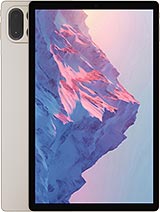
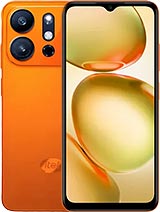
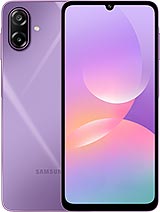
Alternatives to consider
If the A300+ isn’t quite right, these are the closest calls.
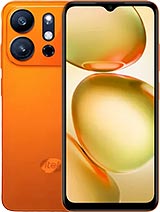
A100 Pro
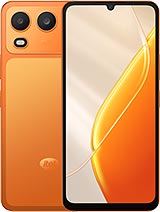
A200+
VistaTab 12
Zeno 100 Pro
Galaxy M17e