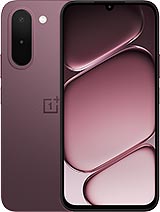
Itel A300C review
The A300C is a no-frills survival phone for people in resource-limited regions who value battery life and build durability over speed or screen sharpness. If you're shopping for anything approaching a modern experience—smooth performance, crisp visuals, decent photos—you should look elsewhere, even in this price range."
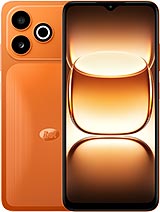
This review is written with AI assistance from Itel’s published specifications and public benchmark data for the Itel A300C, and the rating is spec-based. GoSolo does not physically test devices; where we estimate real-world behaviour such as battery life or charge time, we say so. How we rate phones.
Overview
The Itel A300C is a straightforward entry-level Android phone built for basic tasks, messaging, and light media on a tight budget—the 6000 mAh battery and large screen are its main appeals. At around 100 EUR, it does the essentials without pretense, though the 267 ppi screen and dated Unisoc chipset mean don't expect smooth performance or sharp visuals beyond functional.
Design & build
At 8.5 mm, the A300C is genuinely slim and feels light in hand—pleasant for all-day carry. Itel has slapped on MIL-STD-810H compliance and 1.8m drop resistance, which means the frame can survive typical fumbles and bumps without drama. That durability label is real and matters when you're spending 100 EUR; too many budget phones shatter on the first fall. The four colors (Comet Orange, Lavender Purple, Classic Black, Silver Mist) are inoffensive, and the Nano-SIM plus Nano-SIM setup is sensible for dual-network markets. No headweight in the hand, no sharp edges, no surprises.
Display
The 6.6-inch screen is a refreshing size for a 100 EUR phone—more real estate than rivals cramming a 6-inch panel into the same frame. 90Hz refresh is a nice touch and does smooth scrolling lists visibly compared to 60Hz. But 720 x 1612 resolution at 267 ppi means text isn't crisp; zoom in on a web page or ebook and you'll see jaggedness. 480 nits brightness is adequate for indoors and overcast skies but doesn't shine in direct sun. The IPS panel has decent viewing angles and colors are stable, not oversaturated. It's a screen that works for messaging and video, not one that impresses.
Performance
The Unisoc T7100 is entry-level silicon designed for basic phones in emerging markets—think WhatsApp, YouTube, and light browsing. With 3GB RAM as the base, expect app reloads and stutters when switching between multiple tabs or running anything demanding. The 4GB RAM option helps but doesn't transform it into a snappy machine. Gaming is a no-go beyond simple puzzle titles. Android 16 (Go edition) keeps overhead down, which is wise: the full OS would make this phone crawl. For someone who texts, calls, and streams TikTok occasionally, it's tolerable. Anyone else will feel the slowdown within a week.
Software
Android 16 (Go edition) is the right OS choice for weak hardware; it strips out heavy bloat and runs on 3GB RAM without constant cache-clearing. Updates should be straightforward, and Google's native apps are optimized for this tier. Itel's skin is not mentioned, suggesting it's minimal, which is refreshing. You won't get the latest features or fancy animations, but you also won't fight a laggy interface. It's honest software for honest hardware.
Camera
The 8MP main camera is functional in bright daylight but nothing more. Shots are soft, detail is sparse, and dynamic range is narrow—backlit scenes turn to blown-out blobs. The 5MP selfie is adequate for video calls and quick snaps. LED flash helps indoors but creates harsh shadows. 1080p video at 30fps and no optical image stabilization mean video is jittery on anything but a tripod. This is the weakest link on the phone; it's the reason to temper expectations before buying. If photography matters at all to you, this is not your phone.
Battery & charging
The 6000 mAh battery is the A300C's strongest asset. Real-world use—messaging, light streaming, occasional calls—should stretch easily to two days, sometimes three. For a 100 EUR phone in markets where charging infrastructure is sparse, that's a genuine comfort. Charging speed is listed as 18W, which is modest by today's standards but not painfully slow; expect a full charge in roughly two to two and a half hours. No wireless charging, no surprises. The large capacity compensates for the weak hardware's electricity draw, and that matters for the people buying this.
Value & verdict-context
At around 100 EUR, the A300C occupies a crowded space—ultra-cheap phones that survive on specs and durability rather than experience. It competes against other Unisoc-powered devices and older-generation phones dropped in price, not against anything approaching modern mid-range. The dual-SIM setup, microSDXC slot, and large battery address real needs in emerging markets where users rely on their phone as a primary device and can't afford to replace it often. The weak screen density and slow performance are frustrating, but at this price, they're expected compromises. The durability claims and battery endurance push it slightly above the baseline for its tier. It's a phone for someone who needs calls, texts, and basic apps to work reliably, not someone chasing performance or image quality.
Verdict
The A300C is a no-frills survival phone for people in resource-limited regions who value battery life and build durability over speed or screen sharpness. If you're shopping for anything approaching a modern experience—smooth performance, crisp visuals, decent photos—you should look elsewhere, even in this price range."
- 6000 mAh battery should deliver two days of casual use, a real advantage for users who hate charging daily
- Large 6.6-inch 90Hz IPS display with decent brightness (480 nits) makes it feel less cramped than typical budget phones, even if pixel density is low
- MIL-STD-810H compliance and 1.8m drop resistance offer genuine durability reassurance at this price point
- Android 16 (Go edition) keeps bloat minimal and runs lighter on weak hardware than the full OS would
- Unisoc T7100 and 3GB RAM make stuttering a daily fact; don't expect fluid app-switching or gaming beyond simple titles
- 267 ppi density on a 6.6-inch screen leaves text and icons noticeably grainy compared to any mid-range phone from the past three years
- 8MP main camera produces flat, detail-poor shots in anything but bright daylight; 1080p video at 30fps feels dated even for this tier
Itel A300C Key Specifications
The essentials at a glance. See the full spec sheet.
| Released | 2026, September 18 |
|---|---|
| Display | 6.6 inches, 104.6 cm2, IPS LCD, 90Hz, 480 nits |
| Resolution | 720 x 1612 pixels, 20:9 ratio (~267 ppi density) |
| Chipset | Unisoc T7100 |
| RAM & storage | 64GB 3GB RAM, 64GB 4GB RAM, 128GB 3GB RAM, 128GB 4GB RAM |
| Main camera | 8 MP |
| Selfie camera | 5 MP |
| Battery | 6000 mAh |
| Software | Android 16 (Go edition) |
| Dimensions | 8.5 mm thickness |
| Durability | MIL-STD-810H compliant* * does not guarantee ruggedness or use in extreme conditions Drop resistant up to 1.8m |
| Network | GSM / HSPA / LTE |
| NFC | No |
| USB | USB Type-C |
Itel A300C FAQ
Common questions, answered from the spec sheet.
Does the A300C support 5G?
No. The A300C tops out at GSM / HSPA / LTE, without 5G.
What chipset does the A300C use?
The A300C runs on the Unisoc T7100.
What display does the A300C have?
A 6.6 inches, 104.6 cm2 IPS LCD, 90Hz, 480 nits, 720 x 1612 pixels, 20:9 ratio (~267 ppi density).
How big is the A300C battery?
The A300C has a 6000 mAh battery.
Does the A300C have NFC?
No, the A300C does not list NFC support.
Is the A300C water resistant?
The A300C carries a MIL-STD-810H compliant* * does not guarantee ruggedness or use in extreme conditions Drop resistant up to 1.8m rating.
Does the A300C support a microSD card?
Yes, the A300C supports expandable storage (microSDXC).
Alternatives to consider
If the A300C isn’t quite right, these are the closest calls.
Zeno 100
A100 Pro
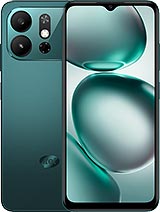
A100Cs
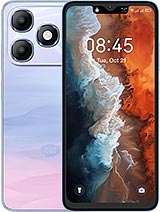
Zeno 20 Max
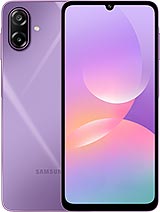
Galaxy M17e