Itel City 100 review
This suits someone who needs a durable, practical Android phone that handles calls, messaging, and casual apps without premium expectations or a premium bill. Anyone who spends hours gaming, reading, or scrolling should budget a bit more for better performance and screen clarity.
This review is based on Itel’s published specifications and public benchmark data for the Itel City 100, and the rating is spec-based. GoSolo does not physically test devices; where we estimate real-world behaviour such as battery life or charge time, we say so. How we rate phones.
Overview
The Itel City 100 is a no-frills Android phone that prioritizes durability, battery stamina, and affordability over performance or camera prowess. It's built for calls, messaging, and casual apps in markets where toughness and long battery life matter more than raw power.
Design & build
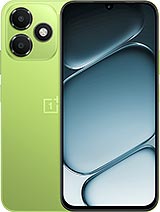
The City 100 sits at 185g and 7.7mm thin, which is comfortable to hold without feeling insubstantial. The IP64 rating and 1.5-meter drop protection are genuine selling points for a phone at this price, not checkbox marketing: splashes, dust, and the occasional fall from waist height won't wreck it. Dual nano-SIM slots and a side-mounted fingerprint sensor are practical touches. The titanium and purple colorways are understated enough, though the Navy Blue is the safer choice if you're buying something meant to last a few years.
Display
The 6.75-inch IPS LCD feels big in the hand and the 90Hz refresh does smooth out scrolling in everyday apps. Brightness hits 700 nits in high brightness mode, which is enough to read outdoors without squinting in most light. The real pinch is the 720 x 1600 resolution at this screen size—260 pixels per inch means text, app icons, and fine details show visible grain if you hold it at a normal reading distance. It's not unwatchable, but it sits well below the clarity most people expect in 2025. Streaming video and casual browsing are fine; spending hours reading text-heavy apps will remind you this is a budget panel.
Performance
The Unisoc T7250 is an entry-level chipset that handles calls, messaging, social media, and light web browsing without lag. Everyday apps open quickly and don't stutter. Once you venture into demanding mobile games or heavy multitasking, the Mali-G57 GPU shows its limits: frame rates drop and the phone asks you to lower graphical settings. It's a clear step below even mid-range Snapdragons, but also a realistic match for someone who uses their phone for practical tasks rather than as a gaming device. If you need consistent performance across demanding apps, look elsewhere.
Software
Android 14 with Itel's Pure 14.5 skin runs lean and doesn't pile on bloatware, which helps keep the underpowered hardware from choking. The near-stock approach is a plus at this price point—you get what Google intended without a manufacturer's addon overhead. Updates and security patches remain a question mark for Itel's lower tiers, so expect less frequent support than Samsung or Motorola would offer.
Camera
The 13MP main camera and 8MP selfie are straightforward sensors with no computational tricks. In daylight and even indoor office lighting, they record acceptable detail and color for social media or casual keepsakes. The LED flash handles evening shots without wildly blowing out faces. Once light drops below dinner-table level or you want to frame a distant subject, the lack of a telephoto or dedicated night mode becomes obvious. Zoom is digital and loses quality fast. The selfie camera is adequate for video calls and casual pictures; it won't wow anyone but it won't disappoint for basic use.
Battery & charging
The 5200mAh cell paired with a 720p screen should deliver around a full day of moderate use—calls, messaging, social media scrolling, light gaming. Heavy users will see evening drain; light users may stretch to a second day. The 18W charger takes about 90 minutes from empty to full, which is respectable at this price point. You can grab a meaningful charge in 30 to 40 minutes if you're in a hurry. Reverse wired charging is listed but practically irrelevant at this tier.
Value & verdict-context
At roughly €80, the City 100 occupies a slot where durability, battery endurance, and basic utility outweigh performance or screen clarity. It's cheaper and tougher than most rivals at this price, and the microSD slot plus headphone jack are genuine conveniences Itel has kept while others killed them for cost. If your priority is a phone that survives drops, lasts all day, and doesn't demand much from the network, this delivers. You're trading screen sharpness, gaming capability, and camera finesse to get there, which is a fair swap if those aren't your priorities. For anyone needing responsive performance or a clear display for extended reading, the savings evaporate the moment you realize you're frustrated daily. The Unisoc chipset is the real limiting factor: it's not broken, but it will nag you in moments where a €120 Snapdragon 4-series phone would feel effortless.
Verdict
This suits someone who needs a durable, practical Android phone that handles calls, messaging, and casual apps without premium expectations or a premium bill. Anyone who spends hours gaming, reading, or scrolling should budget a bit more for better performance and screen clarity.
- 5200mAh battery with low-power 720p display should deliver a full day of moderate use without drama
- IP64 rating and 1.5m drop resistance make it genuinely tough for daily knocks and splashes
- Micro-SD expansion and 3.5mm headphone jack preserve practical flexibility Itel competitors have abandoned
- 18W charging is brisk enough for a quick 90-minute top-up between errands
- Unisoc T7250 chipset trails even entry-level Snapdragons, so demanding apps and games stutter without lowered settings
- 260 ppi density at 6.75 inches leaves text and icons noticeably grainy; not ideal if you spend hours reading or squinting at small UI elements
- 13MP main camera and 8MP selfie lack zoom, night mode, or any specialization—serviceable in daylight, pedestrian beyond
Itel City 100 Key Specifications
The essentials at a glance. See the full spec sheet.
| Released | 2025, April 27 |
|---|---|
| Display | 6.75 inches, 110.0 cm2 (~84.6% screen-to-body ratio), IPS LCD, 90Hz, 700 nits (HBM) |
| Resolution | 720 x 1600 pixels, 20:9 ratio (~260 ppi density) |
| Chipset | Unisoc T7250 (12 nm) |
| RAM & storage | 128GB 4GB RAM, 128GB 6GB RAM, 128GB 8GB RAM, 256GB 4GB RAM |
| Main camera | 13 MP |
| Selfie camera | 8 MP |
| Battery | 5200 mAh |
| Charging | 18W wiredReverse wired |
| Software | Android 14, Pure 14.5 OS |
| Dimensions | 167.7 x 77.5 x 7.7 mm (6.60 x 3.05 x 0.30 in) |
| Weight | 185 g (6.53 oz) |
| Durability | IP64 dust tight and water resistant (water splashes) Drop resistant up to 1.5m |
| Network | GSM / HSPA / LTE |
| NFC | No |
| USB | USB Type-C, OTG |
Itel City 100 FAQ
Common questions, answered from the spec sheet.
Does the City 100 support 5G?
No. The City 100 tops out at GSM / HSPA / LTE, without 5G.
What chipset does the City 100 use?
The City 100 runs on the Unisoc T7250 (12 nm).
What display does the City 100 have?
A 6.75 inches, 110.0 cm2 (~84.6% screen-to-body ratio) IPS LCD, 90Hz, 700 nits (HBM), 720 x 1600 pixels, 20:9 ratio (~260 ppi density).
How big is the City 100 battery?
The City 100 has a 5200 mAh battery. Charging is rated at 18W wiredReverse wired.
Does the City 100 have NFC?
No, the City 100 does not list NFC support.
Is the City 100 water resistant?
The City 100 carries a IP64 dust tight and water resistant (water splashes) Drop resistant up to 1.5m rating.
Does the City 100 support a microSD card?
Yes, the City 100 supports expandable storage (microSDXC).
Does the City 100 have a headphone jack?
Yes, the City 100 has a 3.5mm headphone jack.
Alternatives to consider
If the City 100 isn’t quite right, these are the closest calls.
City 200
City 200s
Zeno 100
A100C
Galaxy M17e