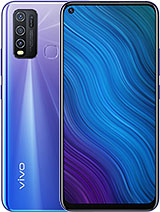
Itel P65 review
The P65 suits buyers who prioritize battery life and low cost over sharp visuals and speed, and who spend most of their time on messaging, browsing, and video. Skip it if you game, do heavy work on your phone, or want a crisp display—for a bit more money, the mid-range competition offers clearer screens and faster chips.
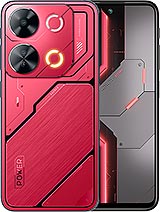
This review is based on Itel’s published specifications and public benchmark data for the Itel P65, and the rating is spec-based. GoSolo does not physically test devices; where we estimate real-world behaviour such as battery life or charge time, we say so. How we rate phones.
Overview
The Itel P65 is a budget 6.7-inch phone with a large battery and soft 720p screen, pitched at buyers who need endurance over sharpness. It is honest value for under €110, but the entry-level chip and low-res display are clear limits on what you get.
Design & build
At 192.4 grams and 7.9 mm thick, the P65 is reasonably compact for its 6.7-inch footprint. The chassis feels light in hand, which works for battery life but suggests plastic construction throughout. An LED notification ring on the back is a small touch that adds a bit of visual character, and dual nano-SIM slots mean you can juggle two numbers. The phone lacks any water resistance rating, so moisture is a real concern in humid or rainy regions. For the price, build quality is adequate but unremarkable—this is a phone you hold because it works, not because it feels good.
Display
The 6.7-inch IPS LCD screen is the first real compromise. At 262 ppi density, it is visibly softer than phones at this price with sharper panels. That 720 by 1600 pixel resolution stretched across such a large area means text, app icons, and fine details look fuzzy. The 120 Hz refresh rate smooths scrolling and animations, which is welcome, but the low resolution undermines that benefit. If you mostly browse social media and watch video, the pixel density matters less; if you spend time reading text or use productivity apps, this screen will feel less pleasant than rivals offering 1080p or better at similar money.
Performance
The Unisoc T615 is an entry-level chip and makes no apologies for it. Everyday tasks—messages, calls, email, light browsing—work without lag, and video playback is smooth. Demanding games like PUBG or Fortnite will run at low settings with noticeable frame drops. Heavy multitasking or running many apps at once creates visible stutter. For the money, this is not a performance phone, and buyers should know that. You are paying for battery and screen size, not speed or graphical grunt.
Software
Android 14 with Itel OS 14 on top means you get Google's base plus Itel's skin. Itel's overlay tends toward bloat, with pre-installed apps and extra services that eat into the base 128 GB storage. The 8 GB RAM variant (paired with 256 GB) offers more breathing room, but the 4 GB base model will feel cramped after a few months of app downloads. Security updates are another question—Itel's track record on timely patches is mixed, so do not count on monthly updates. For a budget phone, the software support story is typical: functional but not a strength.
Camera
The 50 MP main sensor with f/1.6 aperture sounds impressive on paper but delivers ordinary results in practice. In daylight, shots are clear and detailed enough for social media, and the wide aperture helps in medium-low light. Once the sun sets, the lack of optical stabilization and relatively small sensor size show their limits—night photos lose sharpness and gain noise. Video is capped at 1080p 30 fps, which is the absolute floor for modern phones; rivals at this price often offer 1080p 60 fps or 4K. The 8 MP selfie camera is adequate for video calls and casual selfies but unsurprising. Overall, the camera does not hold back the phone, but it does not lift it either.
Battery & charging
The 5000 mAh battery is the genuine highlight. On mixed use—messages, browsing, some video, light gaming—you will comfortably go a full day without charging, and light users may stretch to 1.5 days. That endurance is real and valuable for someone without regular access to a charger. However, 18 W charging is sluggish by 2024 standards. A 30-minute session tops out at about 40 percent; reaching full charge takes roughly 80 to 100 minutes. Budget phones at this price now often push 60 W or higher, so the P65's slow charge speed is a notable step behind. For buyers who charge overnight, this is a non-issue; for those who rely on quick top-ups, it is a weakness.
Value & verdict
At around €110, the P65 is genuinely cheap. You get a large screen, excellent battery life, and all-day usability without breaking the bank. The catch is a soft display, slow charging, and an entry-level chip that will not impress anyone who values performance. This phone makes sense for older users, students on a tight budget, or anyone who simply needs reliable messaging, calls, and video playback without frills. Anyone expecting gaming, snappy multitasking, or a sharp display should spend a little more and look elsewhere in the budget space, where 1080p screens and faster processors are becoming standard.
Verdict
The P65 suits buyers who prioritize battery life and low cost over sharp visuals and speed, and who spend most of their time on messaging, browsing, and video. Skip it if you game, do heavy work on your phone, or want a crisp display—for a bit more money, the mid-range competition offers clearer screens and faster chips.
- 5000 mAh battery delivers a full day or more on mixed use, which is the phone's real strength at this price
- 6.7-inch 120Hz display feels smooth to scroll despite the low pixel density
- Includes a 3.5mm headphone jack and FM radio—rare at this price point now
- 50 MP main camera with f/1.6 aperture handles daylight photography reasonably
- 720p resolution on a 6.7-inch screen results in noticeably soft text and icons compared to sharper rivals in the same bracket
- Unisoc T615 chipset is entry-level; expect lag in demanding apps and heavy multitasking
- 18W charging takes roughly 80–100 minutes to full, which is slow by 2024 budget standards
Itel P65 Key Specifications
The essentials at a glance. See the full spec sheet.
| Released | 2024, August 08 |
|---|---|
| Display | 6.7 inches, 108.4 cm2 (~84.5% screen-to-body ratio), IPS LCD, 120Hz |
| Resolution | 720 x 1600 pixels, 20:9 ratio (~262 ppi density) |
| Chipset | Unisoc T615 (12 nm) |
| RAM & storage | 128GB 4GB RAM, 128GB 8GB RAM, 256GB 6GB RAM |
| Main camera | 50 MP, f/1.6, (wide) Auxiliary lens |
| Selfie camera | 8 MP, f/2.0, 26mm (wide) |
| Battery | 5000 mAh |
| Charging | 18W wired, 40% in 30 min |
| Software | Android 14, itel OS 14 |
| Dimensions | 165.9 x 77.3 x 7.9 mm (6.53 x 3.04 x 0.31 in) |
| Weight | 192.4 g (6.81 oz) |
| Durability | LED notification ring on the back |
| Network | GSM / HSPA / LTE |
| NFC | Yes (256/6GB model only) |
| USB | USB Type-C, OTG |
Itel P65 FAQ
Common questions, answered from the spec sheet.
Does the P65 support 5G?
No. The P65 tops out at GSM / HSPA / LTE, without 5G.
What chipset does the P65 use?
The P65 runs on the Unisoc T615 (12 nm).
What display does the P65 have?
A 6.7 inches, 108.4 cm2 (~84.5% screen-to-body ratio) IPS LCD, 120Hz, 720 x 1600 pixels, 20:9 ratio (~262 ppi density).
How big is the P65 battery?
The P65 has a 5000 mAh battery. Charging is rated at 18W wired, 40% in 30 min.
Does the P65 have NFC?
Yes, the P65 has NFC.
Is the P65 water resistant?
The P65 carries a LED notification ring on the back rating.
Does the P65 support a microSD card?
Yes, the P65 supports expandable storage (microSDXC).
Does the P65 have a headphone jack?
Yes, the P65 has a 3.5mm headphone jack.
Alternatives to consider
If the P65 isn’t quite right, these are the closest calls.
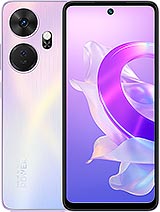
P55+
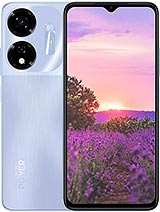
Color Pro 5G
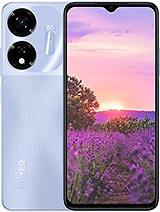
Color Pro
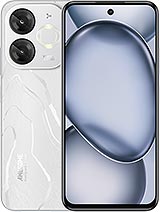
A80
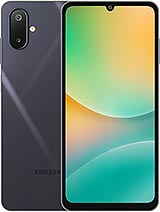
Galaxy M06 5G