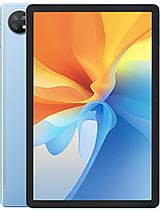
Itel Pad One review
The Itel Pad One suits buyers in cost-conscious markets who need a secondary tablet for reading, video, and light browsing and do not mind an older chipset or soft screen. Anyone expecting a crisp display, fast charging, or sustained software support should look at a more recent budget tablet or stretch to a mid-range option.
This review is based on Itel’s published specifications and public benchmark data for the Itel Pad One, and the rating is spec-based. GoSolo does not physically test devices; where we estimate real-world behaviour such as battery life or charge time, we say so. How we rate phones.
Overview
The Itel Pad One is a 10.1-inch budget tablet aimed squarely at reading, media, and light browsing—and it does that job without unnecessary cost. The soft 800×1280 display and 10W charging are real friction points, but the 6000 mAh battery stretches across a full day, and the price keeps it honest for a secondary device.
Design & build
At 241 × 160 × 8.2 mm, this is a trim tablet for its 10.1-inch screen. The glass front and aluminum chassis feel solid enough for a budget device, and the narrow bezels mean more screen per millimeter of frame. There is no weight listed in the spec sheet, which leaves a gap, but the flat sides and thin profile suggest it should be reasonably portable for a tablet. Dual speakers and a 3.5 mm jack are present, which is thoughtful for a device meant for video and audio. It is not elegant, but the materials and proportions are fit for the price.
Display
The 10.1-inch IPS screen delivers 800 × 1280 pixels at about 149 ppi—a resolution that lands squarely in the budget tablet tier. Text and photos look softer than on a modern phone held at an arm's length, and scaling up a 1280-pixel height across a 10-inch diagonal means images lack the crispness you find on tablets running 1920×1200 or higher. For reading, casual browsing, and video playback from YouTube or streaming apps, it is functional and inoffensive. Fine detail in photos or documents will look murky, and anyone accustomed to sharper tablets will notice the difference. The 76.5% screen-to-body ratio is respectable for this class.
Performance
The Unisoc SC9863A1 is a entry-level chipset from 2020, paired with 4 GB RAM. It handles Android 12 Go—a stripped-down version of Android meant for modest hardware—and carries you through basic tasks: email, messaging, light browsing, and streaming video without visible lag. Open too many browser tabs, switch between apps rapidly, or run a demanding game, and the machine will stall noticeably. Heavy multitasking is not in this tablet's wheelhouse. By 2023 standards, this pairing was already dated, and by 2026 it feels well behind. It is honest work for the money, not a compromise tablet, just a limited one.
Software
Android 12 Go is a lean operating system designed for devices with modest RAM and storage. It strips out some background services and heavy features to keep things snappy, but it also means fewer customization options and a more controlled app ecosystem. Updates will likely be sparse at this price; Itel is not known for rapid OS support. The phone launched with Go in 2023, so security patches beyond the first year or two are not guaranteed. For a tablet used mainly for casual media and reading, this is acceptable, but do not expect long-term software longevity.
Camera
The rear 5 MP camera is purely functional—a backup for capturing the occasional document, whiteboard, or snapshot in good light. Low-light photos will be grainy, and the autofocus works but is not fast. The 8 MP front camera is adequate for video calls, though images will lack sharpness and color accuracy. Neither camera is a reason to buy this tablet, and both should be treated as emergency tools rather than daily shooters. A tablet is rarely the right tool for photography anyway, so weakness here is not a fatal flaw.
Battery & charging
The 6000 mAh battery delivers about one full day of mixed use—reading, light browsing, video, and the occasional call—and stretches closer to two days with lighter use. That is solid endurance for a 10-inch tablet, enough to make it a reliable second device for trips or bedside reading. Charging, however, is slow: the 10W adapter takes roughly 2 to 3 hours to reach full, a pace that has become sluggish by 2023 standards. Rivals in the budget tablet space often hit 20W or higher. You cannot grab a quick 30-minute top-up before leaving; plan to tether it to power for an afternoon. For a device meant to last a full day, the slow charging is a real trade-off.
Value & verdict context
The Pad One is marketed as a tablet for essential tasks: reading books via e-readers, consuming video, light office work on a single charge. It succeeds at those. The display will not impress anyone coming from a sharper iPad or Galaxy Tab, but it is not painful for most people at typical reading distance. The weak point is not the hardware alone but the combination of soft display and glacial charging. If you need a second device for casual media and reading without breaking your budget, and you can live with an older interface and slow refueling, this tablet delivers utility. However, if you value a crisp screen or quick recharging, or if you expect years of software updates, look elsewhere. In its specific niche—a disposable secondary tablet for households in cost-conscious markets—the Pad One is honest and unpretentious.
Verdict
The Itel Pad One suits buyers in cost-conscious markets who need a secondary tablet for reading, video, and light browsing and do not mind an older chipset or soft screen. Anyone expecting a crisp display, fast charging, or sustained software support should look at a more recent budget tablet or stretch to a mid-range option.
- Full-day battery on mixed use; light use stretches to two days
- Trim, aluminum-and-glass chassis at 8.2 mm; compact for a 10.1-inch screen
- Dual speakers and 3.5 mm jack included; thoughtful for video and audio
- Expandable storage via microSDXC; 128 GB base is enough for media and apps
- Display is soft at 149 ppi; text and photos lack sharpness compared to modern tablets
- 10W charging takes 2–3 hours; rivals at this price now hit 20W or faster
- Unisoc SC9863A from 2020; multitasking and heavy apps stall noticeably
Itel Pad One Key Specifications
The essentials at a glance. See the full spec sheet.
| Released | 2023 |
|---|---|
| Display | 10.1 inches, 295.8 cm2 (~76.5% screen-to-body ratio), IPS |
| Resolution | 800 x 1280 pixels, 16:10 ratio (~149 ppi density) |
| Chipset | Unisoc SC9863A1 (22 nm) |
| RAM & storage | 128GB 4GB RAM |
| Main camera | 5 MP, (wide), AF |
| Selfie camera | 8 MP, (wide) |
| Battery | 6000 mAh |
| Charging | 10W wired |
| Software | Android 12 (Go edition) |
| Dimensions | 241.4 x 160.2 x 8.2 mm (9.50 x 6.31 x 0.32 in) |
| Build | Glass front, aluminum back, aluminum frame |
| Network | HSPA / LTE |
| NFC | No |
| USB | USB Type-C 2.0, OTG |
Itel Pad One FAQ
Common questions, answered from the spec sheet.
Does the Pad One support 5G?
No. The Pad One tops out at HSPA / LTE, without 5G.
What chipset does the Pad One use?
The Pad One runs on the Unisoc SC9863A1 (22 nm).
What display does the Pad One have?
A 10.1 inches, 295.8 cm2 (~76.5% screen-to-body ratio) IPS, 800 x 1280 pixels, 16:10 ratio (~149 ppi density).
How big is the Pad One battery?
The Pad One has a 6000 mAh battery. Charging is rated at 10W wired.
Does the Pad One have NFC?
No, the Pad One does not list NFC support.
Does the Pad One support a microSD card?
Yes, the Pad One supports expandable storage (microSDXC).
Does the Pad One have a headphone jack?
Yes, the Pad One has a 3.5mm headphone jack.
Alternatives to consider
If the Pad One isn’t quite right, these are the closest calls.
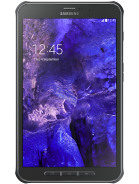
Galaxy Tab Active 5
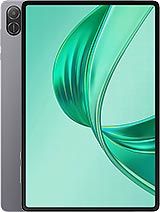
Pad X8a LTE
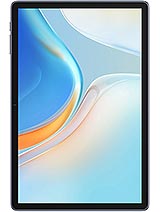
Tab W10
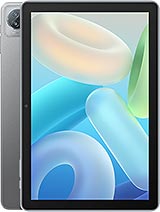
Tab 9 WiFi
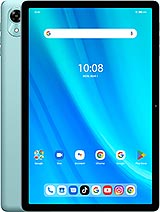
G9 Tab