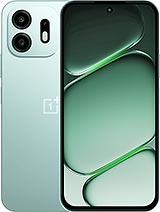
Itel Power 70 review
The Power 70 suits buyers who prioritize battery life and screen space for reading and browsing and can tolerate mid-range gaming and soft text rendering. It is less ideal for anyone who wants a sharp display, quick charging, or gaming beyond casual mobile titles.
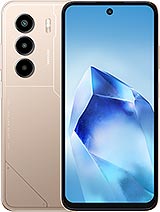
This review is based on Itel’s published specifications and public benchmark data for the Itel Power 70, and the rating is spec-based. GoSolo does not physically test devices; where we estimate real-world behaviour such as battery life or charge time, we say so. How we rate phones.
Overview
The Itel Power 70 is a budget phone built around a 6000 mAh battery and a large 6.67-inch screen—perfect if you need endurance and workspace on a shoestring. The Helio G50 chipset and 720p display are entry-level, so gaming and sharpness take a back seat, but for messaging, video, and reading, it delivers on what it promises.
Design & build
The Power 70 weighs 192.4 grams and sits at 7.9 mm thick, making it unremarkable—not particularly light or thin, but not a brick either. The 83.8% screen-to-body ratio means the bezels are modest for a budget phone. IP54 protection guards against dust and water splashes, so a light rain won't kill it, but don't expect it to survive a dunking. The side-mounted fingerprint scanner is fast and responsive. Nano-SIM dual support is standard here. Overall, build feels utilitarian; there is no premium material work, but nothing feels cheap or fragile either.
Display
The 6.67-inch IPS LCD is the headline feature. The 120Hz refresh rate keeps scrolling buttery and responsive, a nice touch at this price, and 700 nits of peak brightness handles sunlight reasonably well. The problem is resolution: 720 x 1600 pixels on a 6.67-inch panel yields only 263 ppi, and that softness shows in text rendering and fine detail. Rivals in this tier have moved to 1080p, and the difference is noticeable when reading small fonts or viewing photos. For casual browsing and video, it is adequate; for reading-heavy use, you will wish for sharper text.
Performance
The Helio G50 Ultimate pairs an octa-core 2.2 GHz Cortex-A53 and PowerVR GE8320 GPU—entry-level silicon that handles everyday tasks and video smoothly. PUBG Mobile and Fortnite will run on low-to-medium settings without major lag, adequate for a casual player. Demanding 3D games and heavy productivity tasks expose its limits quickly; multi-tasking with many apps open will feel sluggish. For messaging, social media, and streaming, it is competent. It is not a phone for a mobile gamer or someone who runs demanding apps regularly.
Camera
The rear 13 MP sensor with LED flash and HDR captures decent daytime snapshots and group shots, but does not zoom and struggles with distant subjects. Night mode is absent, so low-light photography is weak. The 8 MP selfie camera is basic—fine for video calls but uninspiring for portraits. There is no ultra-wide, telephoto, or macro module. The camera system is purely functional; do not expect the detail or color accuracy that phones with larger sensors or multiple lenses provide. For quick memory captures and social sharing, it suffices.
Battery & charging
The 6000 mAh cell is the standout. With a 720p display and modest chipset, expect about 14 to 16 hours of screen-on time per charge, or roughly two full days with moderate use—a real win if you travel or spend long hours away from an outlet. The battery case bundled in the box is rare at this price and adds another full charge without carrying a separate brick. The trade-off is 18W charging, which takes about 2.5 hours to fill the cell. That is slow by 2025 standards, where budget rivals often hit 30W or 33W. If you charge overnight, it is not a problem; if you need a quick top-up, plan ahead.
Software
Android 14 with itel OS 14 runs smoothly on the Helio G50 and does not feel bloated. The experience is stock-adjacent, with minimal heavy customization, and updates should roll out regularly. There is no mention of NFC, so wireless payments are out. The presence of a 3.5 mm jack and microSDXC support means you can expand storage and use wired peripherals without adapters—useful gestures at the budget end.
Value & verdict
At around €80, the Power 70 competes in a crowded segment. The 6000 mAh battery and bundled case are genuine value-adds; the 6.67-inch screen is spacious; the 120Hz refresh is a bonus. The drawbacks are real too: 720p on a large panel, slow charging, and entry-level gaming performance. If you live in a region where charging points are sparse or unreliable, the multi-day battery life is a serious selling point that justifies choosing this phone over alternatives. If you prioritize a sharp display or fast charging, look elsewhere. This is not a do-everything phone; it excels at endurance and screen real estate, and fails gracefully everywhere else.
Verdict
The Power 70 suits buyers who prioritize battery life and screen space for reading and browsing and can tolerate mid-range gaming and soft text rendering. It is less ideal for anyone who wants a sharp display, quick charging, or gaming beyond casual mobile titles.
- 6000 mAh battery with 18W charging—stretches to about two full days on moderate use, a genuine advantage in a sub-€100 phone
- Large 6.67-inch screen with 120Hz refresh rate and 700-nit brightness, giving you real estate for reading and web browsing without strain
- Includes a battery case in the box, rare at this price and genuinely useful for buyers who live far from a charger
- Headphone jack and expandable storage via microSDXC, removing barriers if you have older wired headphones or need to add space
- 720p resolution on a 6.67-inch panel means 263 ppi—text edges and small details look soft; rivals at this price often hit 1080p
- Helio G50 Ultimate is strictly casual gaming territory—PUBG Mobile runs on low settings, demanding 3D games will stutter or demand low graphics
- 18W charging takes roughly 2.5 hours to fill the 6000 mAh cell, slow by modern budget standards where 30W is now common
Itel Power 70 Key Specifications
The essentials at a glance. See the full spec sheet.
| Released | 2025, March 02 |
|---|---|
| Display | 6.67 inches, 107.4 cm2 (~83.8% screen-to-body ratio), IPS LCD, 120Hz, 700 nits |
| Resolution | 720 x 1600 pixels, 20:9 ratio (~263 ppi density) |
| Chipset | Mediatek Helio G50 Ultimate |
| RAM & storage | 128GB 4GB RAM, 128GB 8GB RAM, 256GB 6GB RAM, 256GB 8GB RAM |
| Main camera | 13 MP |
| Selfie camera | 8 MP |
| Battery | 6000 mAh |
| Charging | 18W wiredReverse wired |
| Software | Android 14, itel OS 14 |
| Dimensions | 7.9 mm thickness |
| Weight | 192.4 g (6.81 oz) |
| Durability | IP54 dust protected and water resistant (water splashes) |
| Network | GSM / HSPA / LTE |
| NFC | No |
| USB | USB Type-C, OTG |
Itel Power 70 FAQ
Common questions, answered from the spec sheet.
Does the Power 70 support 5G?
No. The Power 70 tops out at GSM / HSPA / LTE, without 5G.
What chipset does the Power 70 use?
The Power 70 runs on the Mediatek Helio G50 Ultimate.
What display does the Power 70 have?
A 6.67 inches, 107.4 cm2 (~83.8% screen-to-body ratio) IPS LCD, 120Hz, 700 nits, 720 x 1600 pixels, 20:9 ratio (~263 ppi density).
How big is the Power 70 battery?
The Power 70 has a 6000 mAh battery. Charging is rated at 18W wiredReverse wired.
Does the Power 70 have NFC?
No, the Power 70 does not list NFC support.
Is the Power 70 water resistant?
The Power 70 carries a IP54 dust protected and water resistant (water splashes) rating.
Does the Power 70 support a microSD card?
Yes, the Power 70 supports expandable storage (microSDXC).
Does the Power 70 have a headphone jack?
Yes, the Power 70 has a 3.5mm headphone jack.
Alternatives to consider
If the Power 70 isn’t quite right, these are the closest calls.
A100C
Zeno 5G+
Power 80
Super 26 Ultra
Galaxy M17e