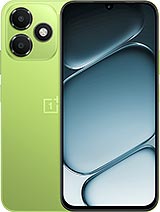
Itel Power 80 review
This phone is built for users who prioritize toughness and all-day battery life over snappy performance and crisp displays. If you work outside, travel remote areas with spotty charging, or are simply accident-prone, the ruggedness and 7000 mAh stamina are rare value at this price. Anyone wanting a sharper screen or faster response should look at rivals that skip the durability cert but invest in display quality and a mid-range chip instead.
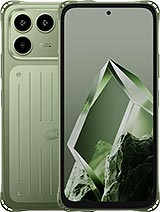
This review is written with AI assistance from Itel’s published specifications and public benchmark data for the Itel Power 80, and the rating is spec-based. GoSolo does not physically test devices; where we estimate real-world behaviour such as battery life or charge time, we say so. How we rate phones.
Overview
The Itel Power 80 is a large, rugged budget phone with a 7000 mAh battery and 120Hz display, but held back by an entry-level chip and bargain-basement screen density that makes text and UI fuzzy at arm's length. It's built to survive drops and water, not to impress on performance or visual clarity.
Design & Build
Itel has leaned fully into durability here. IP68/IP69 water resistance (immersible to 1.5m for 30 minutes) and 2m drop resistance, backed by MIL-STD-810H compliance, put this phone in far sturdier territory than typical budget fare. The ruggedness is not theater—it is a genuine daily asset for work in rough environments or simply a user who is hard on their phone. That said, the lack of published dimensions and weight data is frustrating; the 6.78-inch frame suggests it is likely large and possibly heavy, which suits durability but may make one-handed use awkward. Dual nano-SIM slots add practical flexibility for work/personal or regional roaming, a feature budget makers usually kill to cut costs.
Display
The 6.78-inch IPS LCD with 120Hz refresh sounds generous, and the high refresh does translate to noticeably smoother scrolling and swiping in daily use. But the 256 ppi density is the weak point. On a phone this large, 256 ppi falls short of the typical 269–290 ppi standard for budget rivals, and it shows: text looks slightly soft, icons lack edge definition, and fine UI details blur at normal viewing distance. This is not catastrophic for casual browsing or messaging, but it is a step down from what buyers see on similarly priced phones with sharper screens. The 720p resolution itself is the culprit; a 1440p panel here would be overkill, but 720p at 6.78 inches is a pragmatic compromise for battery life that comes with a visual cost.
Performance
The Unisoc T7250 is entry-level silicon even by 2026 standards, and it shows in real use. Basic tasks—calling, texting, social media, web browsing—run without drama. Switch to a heavier game, open five apps at once, or try editing a large photo, and you will feel the limits: frame drops, app loading delays, and occasional stutters are normal. The Mali-G57 MP1 GPU is modest; do not expect smooth high-end gaming. For an everyday user who sticks to light work, messaging, and video watching, it is adequate. For anyone regularly juggling apps or running demanding tasks, this phone will frustrate. Android 16 and Itel OS 16 bring a current software baseline, but no amount of software polish can mask a chipset this modest.
Software
Android 16 with Itel's custom overlay arrives fresh out of the box, a small plus for security and feature currency. There is no data on how long Itel supports this model, which is a typical weakness for budget makers in this region—do not expect more than two years of updates. The interface is clean without unnecessary bloat, which helps the modest hardware breathe a little, but there is a trade-off: fewer customization options than stock Android. For a phone focused on rugged durability and battery life over processing power, the software keeps to the essentials without getting in the way.
Camera
A 50 MP main sensor with LED flash and a basic 8 MP selfie are typical for this price and generation. In good daylight, the main sensor captures acceptable detail, though the modest processing power limits computational tricks. Low-light shots will be noisy and soft compared to phones with larger sensors or better Night Mode; the LED flash helps but is harsh at close range. Video is capped at 1080p@30fps, standard for budget phones but unexciting next to rivals that now ship 1080p@60fps or 4K@30fps. The camera is serviceable for quick snaps and social media but not a reason to buy this phone.
Battery & Charging
The 7000 mAh battery is this phone's strongest card. In real use, expect 2 to 3 days of casual to moderate use—messaging, browsing, some video—before needing a charge. For a 6.78-inch phone with an entry-level chip, that is excellent and rare at this price point. The downside is charging: 18W is slow by 2026 standards, where rivals at similar prices ship 30–33W or higher. Expect a full recharge to take close to two hours, which blunts the battery advantage if you charge daily on a tight schedule. For users with time to spare or access to a charger overnight, the large battery shines.
Value & Verdict
The Itel Power 80 occupies a specific niche: a phone for users who value durability, battery stamina, and a large screen over performance and visual crispness. At its likely price point in the global South, it competes against budget rivals that offer sharper screens or snappier chips but lack the ruggedness and multi-day battery life. The 256 ppi display density and entry-level processor are legitimate drawbacks for everyday usability, while 18W charging feels dated. Still, the combo of IP68/IP69 durability, 7000 mAh endurance, and dual-SIM practical flexibility makes it worth serious consideration for buyers who work outdoors, travel frequently, or simply live with cracked screens and dead batteries as a fact of life. For office workers or anyone who values visual clarity and responsive performance, look elsewhere.
Verdict
This phone is built for users who prioritize toughness and all-day battery life over snappy performance and crisp displays. If you work outside, travel remote areas with spotty charging, or are simply accident-prone, the ruggedness and 7000 mAh stamina are rare value at this price. Anyone wanting a sharper screen or faster response should look at rivals that skip the durability cert but invest in display quality and a mid-range chip instead.
- 7000 mAh battery offers genuinely strong endurance—likely 2 to 3 days of casual use, rare for this price tier
- IP68/IP69 certification and MIL-STD-810H compliance deliver real drop and splash resistance that most budget rivals skip
- 120Hz refresh on a large 6.78-inch screen keeps scrolling smooth despite the modest hardware underneath
- Dual nano-SIM and microSD expansion out of the box, with no storage filler
- 256 ppi pixel density is visibly soft—text, icons, and small UI elements lack crispness compared to rivals with 269+ ppi at the same size
- Unisoc T7250 is entry-level for 2026; everyday tasks run, but multitasking and heavier apps will stutter
- 18W charging speed is sluggish—rivals at this price now ship 30-33W, so a full recharge takes noticeably longer
Itel Power 80 Key Specifications
The essentials at a glance. See the full spec sheet.
| Released | 2026, June 09 |
|---|---|
| Display | 6.78 inches, 112.1 cm2, IPS LCD, 120Hz |
| Resolution | 720 x 1576 pixels, 19.5:9 ratio (~256 ppi density) |
| Chipset | Unisoc T7250 (12 nm) |
| RAM & storage | 64GB 4GB RAM, 128GB 6GB RAM |
| Main camera | 50 MP |
| Selfie camera | 8 MP |
| Battery | 7000 mAh |
| Software | Android 16, itel OS 16 |
| Durability | IP68/IP69 dust tight and water resistant (high pressure water jets; immersible up to 1.5m for 30 min) Drop resistant up to 2m MIL-STD-810H compliant* * does not guarantee ruggedness or use in extreme conditions |
| Network | GSM / HSPA / LTE |
| NFC | No |
| USB | USB Type-C, OTG |
Itel Power 80 FAQ
Common questions, answered from the spec sheet.
Does the Power 80 support 5G?
No. The Power 80 tops out at GSM / HSPA / LTE, without 5G.
What chipset does the Power 80 use?
The Power 80 runs on the Unisoc T7250 (12 nm).
What display does the Power 80 have?
A 6.78 inches, 112.1 cm2 IPS LCD, 120Hz, 720 x 1576 pixels, 19.5:9 ratio (~256 ppi density).
How big is the Power 80 battery?
The Power 80 has a 7000 mAh battery.
Does the Power 80 have NFC?
No, the Power 80 does not list NFC support.
Is the Power 80 water resistant?
The Power 80 carries a IP68/IP69 dust tight and water resistant (high pressure water jets; immersible up to 1.5m for 30 min) Drop resistant up to 2m MIL-STD-810H compliant* * does not guarantee ruggedness or use in extreme conditions rating.
Does the Power 80 support a microSD card?
Yes, the Power 80 supports expandable storage (microSDXC).
Alternatives to consider
If the Power 80 isn’t quite right, these are the closest calls.
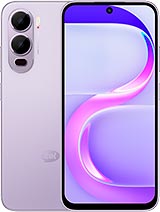
City 200
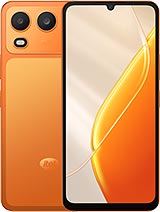
A200+
City 200s
Zeno 20 Max
Galaxy M17e