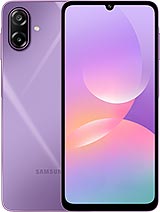
Itel Zeno 100 review
The Zeno 100 suits buyers in emerging markets who need a rugged, long-lasting second phone or a backup for calls and basic data without spending more. Anyone expecting smooth multitasking, sharp media, or quick charging should look elsewhere, even in the budget tier where the bar has clearly moved higher."
This review is written with AI assistance from Itel’s published specifications and public benchmark data for the Itel Zeno 100, and the rating is spec-based. GoSolo does not physically test devices; where we estimate real-world behaviour such as battery life or charge time, we say so. How we rate phones.
Overview
The Itel Zeno 100 is a bare-bones budget phone that does the essentials—calls, messages, light browsing—without pretense. At 60 EUR it is aggressively cheap, but the entry-level chip and 267ppi screen demand acceptance of real compromises in speed and clarity.
Design & build
The Zeno 100 is a thin phone at 8.5 mm, which is welcome on a budget device where thickness often goes unchecked. The trade is that there is no weight figure given, so it is unclear whether this thinness comes with lightness or a heavy glass back; either way, the design language is forgettable plastic. Where it earns practical marks is the MIL-STD-810H compliance and 1.2 m drop resistance, which matter far more than styling to buyers in regions where phones take abuse and second chances are expensive. Dual Nano-SIM support and a dedicated microSD slot are table stakes at this price and market position, not a plus, but their presence confirms Itel understands its audience.
Display
The 6.6-inch IPS LCD with 90Hz refresh sits in an awkward place. The 90Hz makes a real difference day-to-day—scrolling through feeds and lists feels noticeably smoother than the 60Hz baseline—and 480 nits is adequate for outdoor use without being bright. The problem is resolution. At 720 x 1612 pixels and 267 ppi density, text reads slightly soft and icons lack the sharpness buyers have come to expect even in the 50–80 EUR tier. Rivals now routinely pack 1600 x 720 at similar sizes; the Zeno 100 falls short. Android 15 Go edition helps by scaling the interface and text larger, but it does not change what the screen can render.
Performance
The Unisoc T7100 octa-core at 1.8 GHz is an entry-level chipset designed to run Android Go efficiently, and it does that job. For basic tasks—dialling, messaging, light browsing, YouTube at lower quality—it performs adequately. The moment you layer in multitasking or open heavier apps, the phone becomes noticeably slow. Switching between apps causes visible pauses. Playing games at any meaningful frame rate is not happening. This is not a surprise at the price, but it is worth knowing: you are not buying a phone that will grow into your needs. You are buying a phone for tasks that fit its capabilities from day one.
Software
Android 15 Go edition with Itel OS 15 on top is a straightforward budget skin. Go edition strips out the heaviest features and runs lean, which helps the processor breathe. Itel's overlay is minimal and does not add bloat, which is respect-worthy compared to competitors. Updates are unlikely to be timely, so assume what you buy is what you get for software support. The experience is basic but functional; there are no surprises, for better or worse.
Camera
The 8 MP main sensor with LED flash is not just low spec; it is genuinely limiting in practice. Stills lack detail and colour saturation, even in good light. Indoors or in shade, the LED flash is too harsh and does not spread evenly, leaving images with flat or blown-out patches. Video maxes at 1080p 30fps, which is fine for messaging and social clips at low bitrate but looks soft on any larger screen. The 5 MP selfie is serviceable for video calls and the occasional snap, nothing more. Budget phones in 2026 have raised the bar here; the Zeno 100 lags.
Battery & charging
The 5000 mAh battery is the phone's strongest point for real-world use. Paired with the lean Go edition and modest screen resolution, it will comfortably push two full days of normal use—calls, messages, browsing, social media—without reaching for a charger. The spec sheet lists 10W charging, which is slow by modern standards even at this price, but it is a trade-off for capacity. Expect around two hours for a full charge from empty, which is acceptable for a phone positioned as a travel and backup device.
Value & verdict
At 60 EUR, the Zeno 100 is aggressively cheap, and that price anchors every judgment. You are not getting a phone that multitasks smoothly, takes sharp photos, or screens text with clarity. You are getting a durable, long-lasting device for calling, messaging, and basic browsing in markets where a second line, a travel phone, or a work device separate from personal use makes sense. The 5000 mAh battery and practical build (dual SIM, microSD, drop resistance) solve real problems for its intended buyer. But buyers with any flexibility at 70–80 EUR would find phones with better chipsets, sharper screens, and faster charging. The Zeno 100 is a tool, not a delight.
Verdict
The Zeno 100 suits buyers in emerging markets who need a rugged, long-lasting second phone or a backup for calls and basic data without spending more. Anyone expecting smooth multitasking, sharp media, or quick charging should look elsewhere, even in the budget tier where the bar has clearly moved higher."
- 5000 mAh battery and slim 8.5 mm body are a genuine pairing—enough capacity in a phone that fits pockets without the bulk rivals force at this price
- Dual SIM, microSD slot, and drop resistance to 1.2m cover the practical needs of buyers in emerging markets who switch networks often or need storage expansion
- 90Hz IPS LCD display on a 6.6-inch frame means scrolling feels cleaner than the 60Hz you might expect at this price point
- Unisoc T7100 at 1.8 GHz struggles visibly with multitasking and heavier apps—not just slow, but stuttering when multiple windows or background tasks pile up
- 267ppi density on a 6.6-inch screen leaves text and icons noticeably blurry next to rivals; the Go edition OS helps, but the screen itself is a step below what most sub-100 EUR phones now manage
- 8 MP camera with LED flash is dated even for budget class; produces soft, colour-washed stills in anything but bright daylight
Itel Zeno 100 Key Specifications
The essentials at a glance. See the full spec sheet.
| Released | 2026, March 06 |
|---|---|
| Display | 6.6 inches, 104.6 cm2, IPS LCD, 90Hz, 480 nits |
| Resolution | 720 x 1612 pixels, 20:9 ratio (~267 ppi density) |
| Chipset | Unisoc T7100 |
| RAM & storage | 64GB 3GB RAM, 64GB 4GB RAM |
| Main camera | 8 MP |
| Selfie camera | 5 MP |
| Battery | 5000 mAh |
| Software | Android 15 (Go edition), itel OS 15 |
| Dimensions | 8.5 mm thickness |
| Durability | MIL-STD-810H compliant* * does not guarantee ruggedness or use in extreme conditions Drop resistant up to 1.2m |
| Network | GSM / HSPA / LTE |
| NFC | No |
| USB | USB Type-C |
Itel Zeno 100 FAQ
Common questions, answered from the spec sheet.
Does the Zeno 100 support 5G?
No. The Zeno 100 tops out at GSM / HSPA / LTE, without 5G.
What chipset does the Zeno 100 use?
The Zeno 100 runs on the Unisoc T7100.
What display does the Zeno 100 have?
A 6.6 inches, 104.6 cm2 IPS LCD, 90Hz, 480 nits, 720 x 1612 pixels, 20:9 ratio (~267 ppi density).
How big is the Zeno 100 battery?
The Zeno 100 has a 5000 mAh battery.
Does the Zeno 100 have NFC?
No, the Zeno 100 does not list NFC support.
Is the Zeno 100 water resistant?
The Zeno 100 carries a MIL-STD-810H compliant* * does not guarantee ruggedness or use in extreme conditions Drop resistant up to 1.2m rating.
Does the Zeno 100 support a microSD card?
Yes, the Zeno 100 supports expandable storage (microSDXC (dedicated slot)).
Alternatives to consider
If the Zeno 100 isn’t quite right, these are the closest calls.
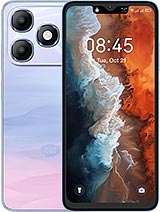
Zeno 20 Max
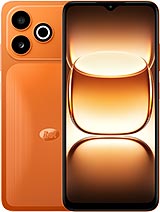
A300C
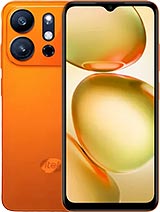
A100 Pro
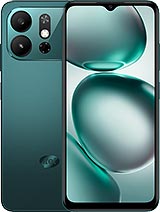
A100Cs
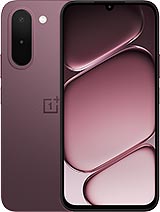
N6x