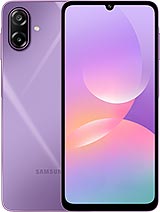
Itel Zeno 100 Pro review
Suited to first-time smartphone users in emerging markets who prioritize battery life and large screen over speed and image quality, or to anyone who needs a second line with zero frills. Anyone with any history of using a smartphone will find the performance and camera limits frustrating within weeks.
This review is based on Itel’s published specifications and public benchmark data for the Itel Zeno 100 Pro, and the rating is spec-based. GoSolo does not physically test devices; where we estimate real-world behaviour such as battery life or charge time, we say so. How we rate phones.
Overview
The Itel Zeno 100 Pro is a bare-bones entry-level phone aimed at first-time buyers in emerging markets. For 80 EUR it delivers acceptable basics—LTE, a large battery, and enough screen real estate—but the weak processor and camera will frustrate anyone with modest multitasking demands.
Design & build
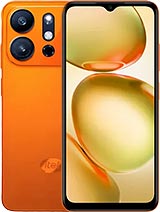
At 8.5 mm thick with a 5000 mAh battery inside, this is a chunky phone by 2026 standards, but the thickness is functional rather than careless. The MIL-STD-810H compliance is largely marketing—it gives you some confidence the phone can survive a drop and dust, but Itel's own disclaimer makes clear it is not a rugged device. Dual Nano-SIM support is handy for users juggling two numbers or carriers. The color palette—orange, black, white—is safe and unlikely to appeal or offend. You are not buying this for design; you are buying it because it is cheap and available.
Display
The 6.56-inch IPS LCD is genuinely large, and the 90Hz refresh rate does make scrolling and swiping feel noticeably more fluid than the 60Hz panels itel used before. But the 720p resolution at 269 ppi density is not forgiving. Text looks soft and pixelated under close inspection, and photos lack crispness. 400 nits of brightness is functional indoors and in dappled shade but will struggle in direct sunlight. For someone moving up from a 5-inch 60Hz phone, this will feel like a step forward; for anyone comparing it to a 1000+ ppi 1080p budget rival, the graininess is hard to ignore.
Performance
The Unisoc T7100 is an entry-level chipset that struggles with sustained load. Expect noticeable lag when switching between apps, stuttering in heavier games, and visible pauses when editing photos or web browsing with many tabs open. Android 15 Go helps by being resource-light—the OS itself rarely feels sluggish—but the hardware is the bottleneck. Browsing, messaging, calling, and streaming video will work, but anything demanding will remind you of the price. Do not buy this phone expecting smooth performance; buy it for battery life and a large screen if you are okay with compromise elsewhere.
Software
Android 15 Go edition is a sensible choice for a phone with only 3 or 4 GB of RAM. It strips out heavy features, prioritizes storage space, and keeps the system responsive despite weak silicon. itel OS 15 on top adds a few interface tweaks and—itel claims—improved battery management. In practice, it is a lightweight layer that does not feel intrusive. You will get timely security updates and bug fixes, though major Android versions will likely stop coming after one or two years. For light users, this will be fine; power users will feel the limitations quickly.
Camera
The 8MP rear camera with LED flash is frankly dated for 2026. While it will capture recognizable images in daylight, noise creeps in quickly when light drops, and detail is soft even in good conditions. The 5MP front camera is adequate for video calls but grainy for selfies. 1080p video at 30fps is basic; rivals at this price now shoot 1080p at 60fps and offer stabilization. If photography is any part of your reason to buy, this phone will disappoint. It works as a documentation tool, nothing more.
Battery & charging
The 5000 mAh battery is the star. On light to moderate use—calls, messages, browsing, social media—you should see two full days before needing a charge. Heavy users will get one full day comfortably. The spec sheet lists 10W charging, which is slow by 2026 standards but typical for this price tier. A full charge from empty will take well over two hours. The trade-off is clear: endurance in exchange for slow top-ups.
Value & verdict-context
At 80 EUR, the Zeno 100 Pro sits at the price floor for a functioning smartphone with LTE and a decent-sized screen. You are not paying for speed or imaging; you are paying for basics that work. The 5000 mAh battery and dedicated microSD slot are genuine conveniences, and the 90Hz screen is a nice touch above what rock-bottom phones offer. However, the weak chipset, soft camera, and low-resolution display are real drawbacks that rival 80 EUR phones have already solved with a year of market movement. This is the phone for someone who needs a phone, not someone who wants one.
Verdict
Suited to first-time smartphone users in emerging markets who prioritize battery life and large screen over speed and image quality, or to anyone who needs a second line with zero frills. Anyone with any history of using a smartphone will find the performance and camera limits frustrating within weeks.
- 5000 mAh battery should easily last a full day of light use and justifies the thickness
- Dedicated microSD slot lets you expand storage without sacrificing a SIM, uncommon at this price
- 6.56-inch screen with 90Hz refresh gives a noticeably smoother scroll than cheaper phones with 60Hz, even if the resolution is modest
- Genuinely light on resources thanks to Android 15 Go, meaning the OS won't feel sluggish despite the weak chipset
- Unisoc T7100 is too slow for casual gaming or heavy multitasking; even basic apps will stutter and load sluggishly
- 8MP camera is outdated for 2026 and produces soft, low-light imagery that rivals at this price have already moved past
- 720p display density at 269 ppi reads grainy and flat compared to the 1080p+ displays now standard even in budget tiers
Itel Zeno 100 Pro Key Specifications
The essentials at a glance. See the full spec sheet.
| Released | 2026, September |
|---|---|
| Display | 6.56 inches, 103.4 cm2, IPS LCD, 90Hz, 400 nits |
| Resolution | 720 x 1612 pixels, 20:9 ratio (~269 ppi density) |
| Chipset | Unisoc T7100 |
| RAM & storage | 64GB 3GB RAM, 64GB 4GB RAM |
| Main camera | 8 MP |
| Selfie camera | 5 MP |
| Battery | 5000 mAh |
| Software | Android 15 (Go edition), itel OS 15 |
| Dimensions | 8.5 mm thickness |
| Durability | MIL-STD-810H compliant* * does not guarantee ruggedness or use in extreme conditions |
| Network | GSM / HSPA / LTE |
| NFC | No |
| USB | USB Type-C |
Itel Zeno 100 Pro FAQ
Common questions, answered from the spec sheet.
Does the Zeno 100 Pro support 5G?
No. The Zeno 100 Pro tops out at GSM / HSPA / LTE, without 5G.
What chipset does the Zeno 100 Pro use?
The Zeno 100 Pro runs on the Unisoc T7100.
What display does the Zeno 100 Pro have?
A 6.56 inches, 103.4 cm2 IPS LCD, 90Hz, 400 nits, 720 x 1612 pixels, 20:9 ratio (~269 ppi density).
How big is the Zeno 100 Pro battery?
The Zeno 100 Pro has a 5000 mAh battery.
Does the Zeno 100 Pro have NFC?
No, the Zeno 100 Pro does not list NFC support.
Is the Zeno 100 Pro water resistant?
The Zeno 100 Pro carries a MIL-STD-810H compliant* * does not guarantee ruggedness or use in extreme conditions rating.
Does the Zeno 100 Pro support a microSD card?
Yes, the Zeno 100 Pro supports expandable storage (microSDXC (dedicated slot)).
Alternatives to consider
If the Zeno 100 Pro isn’t quite right, these are the closest calls.
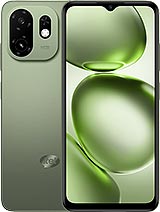
Zeno 100
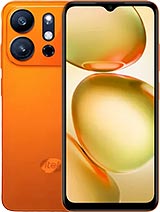
A100 Pro
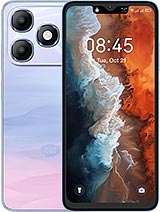
Zeno 20 Max
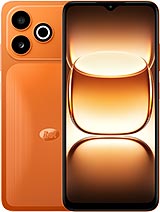
A300C
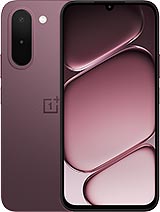
N6x