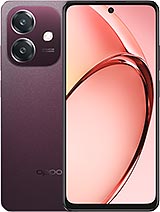
Kyocera DuraForce Pro 3 review
The DuraForce Pro 3 is for field teams who need a phone that survives rough conditions and integrate with work-site radio systems; anyone else should not spend 450 EUR on 2016 internals and unpatched software. It is a specialized tool, not a general smartphone."
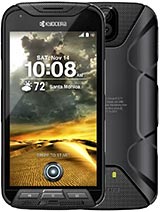
This review is based on Kyocera’s published specifications and public benchmark data for the Kyocera DuraForce Pro 3, and the rating is spec-based. GoSolo does not physically test devices; where we estimate real-world behaviour such as battery life or charge time, we say so. How we rate phones.
Overview
The DuraForce Pro 3 is a rugged workhorse built for field conditions, with IP68 sealing, MIL-STD-810G durability, and a rare push-to-talk button—but it's dragged down by a 2016 Snapdragon 617, Android 6.0, and slow 8W charging that feel ancient by 2024 standards. For workers who need a phone that survives drops and dust over all-day performance, it delivers; everyone else should look elsewhere.
Design & Build
At 230 grams and 12.9 mm thick, the DuraForce Pro 3 feels industrial—which is the whole point. The IP68 rating guarantees it survives dust and immersion to 1.5 meters for 30 minutes, while MIL-STD-810G certification means it has endured the kind of drop and shock tests actual construction sites demand. A dedicated push-to-talk button hints at its DNA in work radios and two-way comms. For a phone meant to live in tool belts and work vests, the heft and thickness are honest trade-offs; they house the reinforced chassis and seals. Outside that niche, though, it's a brick compared to what modern phones weigh and feel like.
Display
The 5.0-inch IPS LCD runs 1080 by 1920 pixels—441 ppi—which was fine in 2016 and is still readable today. Colors are muted compared to OLED, brightness is ordinary, and the 16:9 aspect ratio feels narrow by 2024 standards. For checking blueprints, messages, or maps in sunlight, it does the job. For anyone else, it's a relic.
Performance
The Snapdragon 617 paired with 3 GB RAM was midrange when it launched in 2016 and is obsolete now. Expect slow app opens, stutter in older games, and lag switching between tasks. Android 6.0 (Marshmallow, from 2015) compounds the problem—it's eight years old and doesn't receive security patches anymore. For a phone costing around 450 EUR and aimed at durability, the hardware is a liability. A field worker checking email, photos, or running single lightweight apps will get through a shift; anyone who multitasks or runs modern apps will feel the strain.
Camera
The 13 MP main sensor with LED flash and the 5 MP front camera were unremarkable in 2016. Neither takes good photos in low light, detail is soft, and the 2 MP secondary lens (macro) is too weak for real close-up work. Video maxes out at 1080p at 30fps. For site documentation in daylight it functions; for anything else, your smartphone is better.
Battery & Charging
The 3240 mAh battery paired with the efficiency demands of that old Snapdragon yields about one full day of mixed use—perhaps longer if you barely touch it. The real problem is charging: 8W wired and 8W wireless mean roughly 3 to 4 hours to full from zero. For a phone marketed at field workers, slow charging is a genuine friction point. Plan charging around breaks or overnight; you cannot top up quickly during a job.
Connectivity
Despite its age, the phone supports LTE bands 2, 4, 5, 12, 25, 26, and 41, covering most carrier deployments. Wi-Fi 802.11 a/b/g/n/ac and Bluetooth 4.2 work fine for basic tasks. The push-to-talk button is the hidden strength here—it bridges to two-way radio systems and dispatch networks common on work sites, something most modern phones cannot do. NFC rounds out the connectivity suite. For a rugged device, the radio integration is purposeful.
Value & Verdict Context
At 450 EUR, this phone costs roughly what a mid-range modern phone costs today, yet it offers performance from a decade ago and software that is no longer updated. The only justification is durability and niche features—the push-to-talk button, IP68 sealing, and military-grade build—for teams that work in genuinely harsh environments and need those exact tools. If your job requires a phone that survives drops, dust, and sweat without flinching, and you already use two-way radios, it has a place. If you are shopping for a general-purpose smartphone, spending this much on 2016 internals is poor value any way you slice it.
Verdict
The DuraForce Pro 3 is for field teams who need a phone that survives rough conditions and integrate with work-site radio systems; anyone else should not spend 450 EUR on 2016 internals and unpatched software. It is a specialized tool, not a general smartphone."
- IP68 sealing and MIL-STD-810G durability means it survives drops, dust, and immersion—genuine durability for field work
- Push-to-talk button integrates with two-way radio and dispatch networks, a feature almost no smartphone has
- Dedicated microSDXC slot for expandable storage up to 1 TB (or higher)
- Snapdragon 617 and 3 GB RAM are obsolete by 2024; app performance is sluggish and games stutter
- Android 6.0 is eight years old and no longer receives security updates, a real risk for a work device
- 8W charging (wired and wireless) is painfully slow, taking 3-4 hours to fully charge
Kyocera DuraForce Pro 3 Key Specifications
The essentials at a glance. See the full spec sheet.
| Released | 2016, August. Released 2016, October |
|---|---|
| Display | 5.0 inches, 68.9 cm2 (~63.3% screen-to-body ratio), IPS LCD |
| Resolution | 1080 x 1920 pixels, 16:9 ratio (~441 ppi density) |
| Chipset | Qualcomm MSM8952 Snapdragon 617 (28 nm) |
| RAM & storage | 32GB 3GB RAM |
| Main camera | 13 MP, AF 2 MP |
| Selfie camera | 5 MP |
| Battery | 3240 mAh |
| Charging | Wired8W wireless (Qi) |
| Software | Android 6.0 (Marshmallow) |
| Dimensions | 148.4 x 73.4 x 12.9 mm (5.84 x 2.89 x 0.51 in) |
| Weight | 230 g (8.11 oz) |
| Durability | IP68 dust tight and water resistant (immersible up to 1.5m for 30 min) MIL-STD-810G compliant Push-to-talk button |
| Network | GSM / HSPA / LTE |
| NFC | Yes |
| USB | microUSB 2.0 |
Kyocera DuraForce Pro 3 FAQ
Common questions, answered from the spec sheet.
Does the DuraForce Pro 3 support 5G?
Yes. The DuraForce Pro 3 supports 5G networks.
What chipset does the DuraForce Pro 3 use?
The DuraForce Pro 3 runs on the Qualcomm MSM8952 Snapdragon 617 (28 nm).
What display does the DuraForce Pro 3 have?
A 5.0 inches, 68.9 cm2 (~63.3% screen-to-body ratio) IPS LCD, 1080 x 1920 pixels, 16:9 ratio (~441 ppi density).
How big is the DuraForce Pro 3 battery?
The DuraForce Pro 3 has a 3240 mAh battery. Charging is rated at Wired8W wireless (Qi).
Does the DuraForce Pro 3 have NFC?
Yes, the DuraForce Pro 3 has NFC.
Is the DuraForce Pro 3 water resistant?
The DuraForce Pro 3 carries a IP68 dust tight and water resistant (immersible up to 1.5m for 30 min) MIL-STD-810G compliant Push-to-talk button rating.
Does the DuraForce Pro 3 support a microSD card?
Yes, the DuraForce Pro 3 supports expandable storage (microSDXC (dedicated slot)).
Does the DuraForce Pro 3 have a headphone jack?
No, the DuraForce Pro 3 does not have a 3.5mm headphone jack.
Alternatives to consider
If the DuraForce Pro 3 isn’t quite right, these are the closest calls.
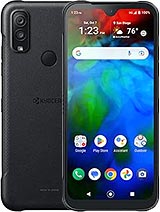
DuraSport UW

DuraForce EX WiFi
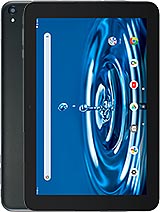
DuraSlate

DuraForce Ultra 5G UW
Galaxy XCover7