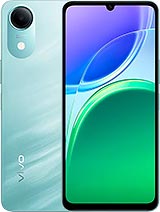
Lava Bold N2 Lite review
The Bold N2 Lite suits users who prioritize battery life and screen size over clarity and speed, and who live in markets where Lava has service and retail reach. Anyone else shopping this price bracket should compare it directly against Xiaomi Redmi Go or ZTE equivalents before committing; you may find a sharper display or a faster chip for the same outlay."
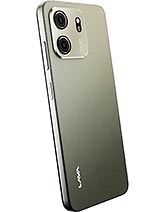
This review is written with AI assistance from Lava’s published specifications and public benchmark data for the Lava Bold N2 Lite, and the rating is spec-based. GoSolo does not physically test devices; where we estimate real-world behaviour such as battery life or charge time, we say so. How we rate phones.
Overview
The Bold N2 Lite is a bare-bones 6.75-inch Android Go phone aimed at first-time users and ultra-budget buyers in emerging markets. At €70, it delivers the essentials—a big display, a 5000 mAh battery, and enough RAM to avoid constant crashes—but the 720p screen and entry-level Unisoc chip mean you're trading responsiveness and clarity for size and price.
Design & Build
The Bold N2 Lite is 8.5 mm thick, which is reasonably trim for a 5000 mAh phone in this class. The actual weight and precise dimensions are not published, but at this price point, build is likely plastic throughout. What matters is that it exists, feels coherent, and won't fall apart after six months of pocket carry. The side-mounted fingerprint sensor is practical, and dual Nano-SIM slots mean you can actually use two networks without compromises. The color options (Kolar Gold and Nilgiri Blue) are inoffensive but generic.
Display
The 6.75-inch screen is the phone's loudest pitch: size over substance. At 720 × 1600 pixels and 260 ppi, this is genuinely soft. Text in messaging apps and browsers has visible pixelation, and photos lack the sharpness you'd expect even at an arm's length. The 87.6% screen-to-body ratio is decent for the frame, and 90 Hz refresh makes scrolling through feeds less stuttery than a flat 60 Hz, which does help the user experience feel less ancient. For a phone this cheap, a large display is a real draw—it's just not a sharp one.
Performance
The Unisoc SC9863A (28 nm, octa-core) is an entry-level chip designed for phones at this price tier and below. It will not impress. Apps open with a delay, multitasking is sluggish, and heavy tasks like video editing or demanding games are entirely off the table. For calling, messaging, web browsing at a moderate pace, and video playback, it holds up adequately. The pairing with 3 GB of RAM and Android 15 Go Edition (a stripped-down variant designed for low-resource devices) keeps the phone from constant crashes, but there is no getting around the fact that you are using a 2026 device with 2020-era responsiveness. If you need reliability over speed, it is serviceable; if you value fluidity, look elsewhere.
Software
Android 15 Go Edition is purpose-built for phones with modest specs. It removes bloat and optimizes memory, which means the 3 GB of RAM actually stretches further than it would under vanilla Android. You get the core Google apps, Play Store access, and the usual Android customization, but without the weight of a full-fat OS. The trade-off is that some apps will be unavailable (Google optimizes Play Store recommendations for Go devices), and certain heavy apps will either not install or demand concessions. For a buyer in a market where bandwidth and storage matter, this leaner approach is sensible.
Camera
The rear 13 MP sensor is functional but unremarkable. It shoots 1080p video at 30 fps, which is passable for social media clips but noticeably lower frame rate than rivals at this price offer. The LED flash, HDR mode, and panorama are present but basic. Low-light performance is likely weak given the small sensor and lack of computational photography. The 5 MP selfie camera handles basic video calls and casual shots. There is no ultrawide or macro mode, so framing options are minimal. For a €70 phone, the camera does its job, but it does not shine—expect soft details, blown highlights in bright sunlight, and muddy shadows indoors.
Battery & Charging
The 5000 mAh battery is one of the phone's genuine strengths. With light to moderate use (calling, messaging, browsing), you should reach a full day comfortably. The spec sheet lists 10W charging, which is slow by any modern standard but realistic for a phone at this price. A full charge will take roughly 2.5 to 3 hours, which is not ideal for users who need a quick top-up, but acceptable if you charge overnight. The large capacity compensates somewhat for the modest charging speed.
Value & Verdict
At €70, the Bold N2 Lite occupies a niche: it is a phone for people who need a large screen, all-day battery, and basic connectivity without paying a euro more than necessary. For first-time smartphone users, students on a tight budget, or anyone buying a secondary device for work travel, it is defensible. The downside is that rivals from ZTE, Xiaomi, and others at a similar price increasingly offer sharper displays, faster chips, and better cameras. The Lava name carries weight in India and parts of Africa, which may matter locally; elsewhere, it is a minor brand banking on size and price alone. This is not a phone that excels at anything; it is a phone that exists at an extreme price point and does the bare minimum competently.
Verdict
The Bold N2 Lite suits users who prioritize battery life and screen size over clarity and speed, and who live in markets where Lava has service and retail reach. Anyone else shopping this price bracket should compare it directly against Xiaomi Redmi Go or ZTE equivalents before committing; you may find a sharper display or a faster chip for the same outlay."
- 5000 mAh battery should handle a full day of light use without reaching for a charger
- 90Hz refresh on a 6.75-inch display makes scrolling feel less janky than a static 60Hz would
- Dual SIM and microSD expansion let you juggle networks and storage without leaving yourself boxed in
- Android 15 Go Edition keeps the footprint light; less bloat means the 3GB of RAM goes further
- 720p resolution on a 6.75-inch display yields 260 ppi—text and images look soft and pixelated compared to even mid-range rivals
- Unisoc SC9863A is slow; basic tasks like opening apps or switching between tabs will stutter visibly
- Only 13 MP main camera with no ultrawide or depth sensor, and 1080p video at 30fps falls behind what competitors offer at this price
Lava Bold N2 Lite Key Specifications
The essentials at a glance. See the full spec sheet.
| Released | 2026, April 01 |
|---|---|
| Display | 6.75 inches, 110.0 cm2 (~87.6% screen-to-body ratio), IPS LCD, 90Hz |
| Resolution | 720 x 1600 pixels, 20:9 ratio (~260 ppi density) |
| Chipset | Unisoc SC9863A (28 nm) |
| RAM & storage | 64GB 3GB RAM |
| Main camera | 13 MP |
| Selfie camera | 5 MP |
| Battery | 5000 mAh |
| Software | Android 15 (Go edition) |
| Network | GSM / HSPA / LTE |
| NFC | No |
| USB | USB Type-C 2.0, OTG |
Lava Bold N2 Lite FAQ
Common questions, answered from the spec sheet.
Does the Bold N2 Lite support 5G?
No. The Bold N2 Lite tops out at GSM / HSPA / LTE, without 5G.
What chipset does the Bold N2 Lite use?
The Bold N2 Lite runs on the Unisoc SC9863A (28 nm).
What display does the Bold N2 Lite have?
A 6.75 inches, 110.0 cm2 (~87.6% screen-to-body ratio) IPS LCD, 90Hz, 720 x 1600 pixels, 20:9 ratio (~260 ppi density).
How big is the Bold N2 Lite battery?
The Bold N2 Lite has a 5000 mAh battery.
Does the Bold N2 Lite have NFC?
No, the Bold N2 Lite does not list NFC support.
Does the Bold N2 Lite support a microSD card?
Yes, the Bold N2 Lite supports expandable storage (microSDXC).
Alternatives to consider
If the Bold N2 Lite isn’t quite right, these are the closest calls.
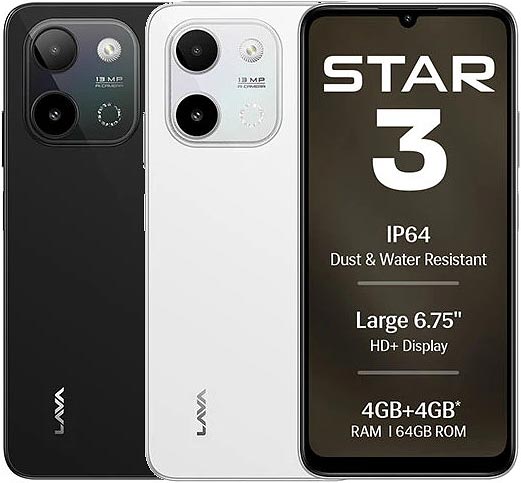
Bold N2
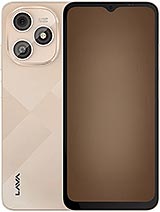
Smart 4
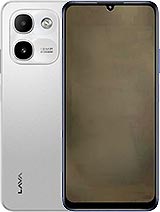
Smart 4 Plus
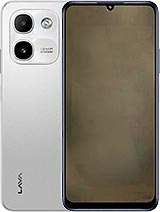
Virat V1 4G
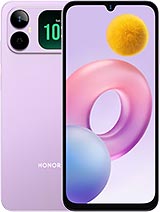
Play20A