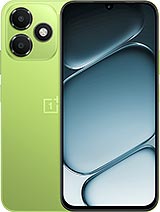
Lava Bold N2 Pro review
The Bold N2 Pro suits buyers in cost-conscious markets who value battery life and storage flexibility over responsiveness and display sharpness, and who are happy to wait for apps to open. Anyone with faster internet or higher expectations should stretch for a better chipset—the performance ceiling here will frustrate within months."
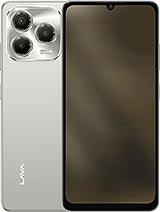
This review is written with AI assistance from Lava’s published specifications and public benchmark data for the Lava Bold N2 Pro, and the rating is spec-based. GoSolo does not physically test devices; where we estimate real-world behaviour such as battery life or charge time, we say so. How we rate phones.
Overview
The Lava Bold N2 Pro is a dead-simple 70-euro phone aimed at buyers who need calls, texts, and basic apps without frills. It's honest about what it is: the weak Unisoc chipset and 260ppi display make heavy lifting painful, but the 5000mAh battery and microSD slot mean you get real value for the money if your expectations match the price tag.
Design & build
At 201 grams, the Bold N2 Pro is a bit chunky, but not unwieldy for the era. IP54 dust and splash protection is respectable for the price—it will shrug off rain and a brief dunking, though it is not submersible. The side-mounted fingerprint sensor is a pragmatic choice, faster in practice than on-screen on a cheap LCD. The design is flat, modern in outline, and unremarkable in every sense that matters: it feels like a phone, not a flagship, but it does not pretend to be one.
Display
A 6.75-inch 720p IPS LCD at 260ppi is behind what you might want for everyday use, even at this price. Text and icons blur slightly when you lean in, and scrolling web pages feels less crisp than a 1080p panel would. The 120Hz refresh is a nice touch and does smooth out the experience a little, but it cannot hide the resolution shortfall. For video playback or games, it is adequate; for reading or detailed work, you will notice the softness. Rivals at this price have started pushing toward 1080p, making this feel like a step back.
Performance
The Unisoc T7250 is an entry-level chip that does the job for calling, messaging, and basic browsing, but falters as soon as you ask for more. Opening apps takes a visible second or two, scrolling stutters on busy feeds, and switching between tasks feels sluggish. Light gaming is playable at reduced settings; anything demanding will struggle. This is the phone's biggest weakness: you are not paying for speed, and you do not get any. For a global-south audience where internet may be patchy and a phone might last years, that trade-off can sting. If your daily life is WhatsApp, Gmail, and YouTube, you will adapt. If you want a smooth scroll, look elsewhere.
Software
Android 15 on a 70-euro device is a small win. The OS is clean and bloat-free enough, and the side-mounted fingerprint sensor works without fuss. Battery management is straightforward: with a 5000mAh pack and entry-level hardware, the phone prioritizes endurance over speed, which suits the price bracket. Updates are always a gamble on budget phones from smaller makers; Lava's track record varies by region, so expect security patches to lag flagship timelines.
Camera
The 50MP main sensor is a spec sheet number that matters less than the processing behind it. In bright light, shots are passable—colors are flat but acceptable, detail is soft, and there is no optical zoom to speak of. Indoors or in low light, the phone struggles visibly: noise creeps in fast, and the single LED flash is blunt. The 8MP selfie camera is functional for video calls. Video maxes out at 1080p@30fps, which is fine but not fluid. Compared to rivals, the camera is not a strength; it will capture the moment, but do not expect polish.
Battery & charging
The 5000mAh battery is the phone's headline strength. With the power-sipping Unisoc chip and modest display, you can realistically expect three to four days of light use, maybe two days if you are a heavier user. The spec sheet lists 10W charging, which is slow by any standard—a full charge will take well over two hours. For a phone aimed at users who do not need to race through their day, the charging speed is not a dealbreaker, but it is worth knowing. Fast charging at this price is rare, and Lava has chosen battery life over quick top-ups.
Value & verdict
At 70 euros, the Lava Bold N2 Pro sits in the space where expectations matter most. It does not chase flagships, and it does not pretend to be a gaming phone or a photography tool. What it delivers is a reliable, long-lasting phone for basic communication and light apps. The microSD slot and dual SIM mean you can tailor it to your needs without paying extra. The main question is whether you can tolerate a slow chip and a soft display for the sake of battery life and price. In markets where replacing a phone every two years is not an option, that trade-off can make sense. In regions where you have better options at similar prices, the performance and display hold it back.
Verdict
The Bold N2 Pro suits buyers in cost-conscious markets who value battery life and storage flexibility over responsiveness and display sharpness, and who are happy to wait for apps to open. Anyone with faster internet or higher expectations should stretch for a better chipset—the performance ceiling here will frustrate within months."
- 5000mAh battery with modest power draw means three to four days of light use without charging
- microSD slot up to 1TB removes the storage squeeze budget phones usually impose
- Dual SIM and IP54 splash resistance for the money
- Android 15 out of the box on a 70-euro device
- Unisoc T7250 is visibly slow even for routine tasks—scrolling and app switching stutter
- 260ppi display on a 6.75-inch screen makes text noticeably soft, especially reading small fonts
- 4GB RAM with 128GB base storage leaves little headroom once the OS takes its cut
Lava Bold N2 Pro Key Specifications
The essentials at a glance. See the full spec sheet.
| Released | 2026, March 31 |
|---|---|
| Display | 6.75 inches, 110.0 cm2, IPS LCD, 120Hz |
| Resolution | 720 x 1600 pixels, 20:9 ratio (~260 ppi density) |
| Chipset | Unisoc T7250 (12 nm) |
| RAM & storage | 128GB 4GB RAM |
| Main camera | 50 MP, (wide) |
| Selfie camera | 8 MP |
| Battery | 5000 mAh |
| Software | Android 15 |
| Weight | 201 g (7.09 oz) |
| Durability | IP54 dust protected and water resistant (water splashes) |
| Network | GSM / HSPA / LTE |
| NFC | No |
| USB | USB Type-C, OTG |
Lava Bold N2 Pro FAQ
Common questions, answered from the spec sheet.
Does the Bold N2 Pro support 5G?
No. The Bold N2 Pro tops out at GSM / HSPA / LTE, without 5G.
What chipset does the Bold N2 Pro use?
The Bold N2 Pro runs on the Unisoc T7250 (12 nm).
What display does the Bold N2 Pro have?
A 6.75 inches, 110.0 cm2 IPS LCD, 120Hz, 720 x 1600 pixels, 20:9 ratio (~260 ppi density).
How big is the Bold N2 Pro battery?
The Bold N2 Pro has a 5000 mAh battery.
Does the Bold N2 Pro have NFC?
No, the Bold N2 Pro does not list NFC support.
Is the Bold N2 Pro water resistant?
The Bold N2 Pro carries a IP54 dust protected and water resistant (water splashes) rating.
Does the Bold N2 Pro support a microSD card?
Yes, the Bold N2 Pro supports expandable storage (microSDXC).
Alternatives to consider
If the Bold N2 Pro isn’t quite right, these are the closest calls.
Virat V1 Pro
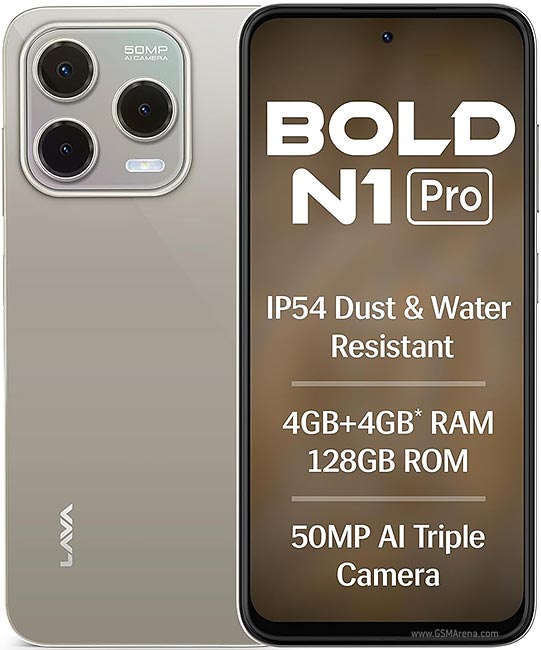
Bold N1 Pro
Shark 2
Virat V1
Galaxy M17e