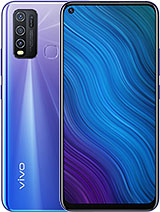
Lava O2 review
The Lava O2 suits someone in a strong LTE area who prioritizes battery endurance and screen size over speed or charging convenience, and who avoids gaming and heavy multitasking. Anyone expecting to game, work across many apps, or charge fast should look at rivals with Helio G or Snapdragon 6 chips instead.
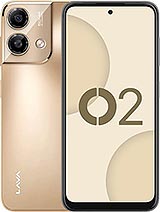
This review is based on Lava’s published specifications and public benchmark data for the Lava O2, and the rating is spec-based. GoSolo does not physically test devices; where we estimate real-world behaviour such as battery life or charge time, we say so. How we rate phones.
Overview
The Lava O2 is a 100-euro large-screen phone built for all-day battery life and basic tasks, not performance. It undercuts rivals with a simpler chipset and lower resolution, which matters less on a 6.5-inch display than its endurance does in a market where fast charging is rare at this price.
Design & build
At 200g and 8.7mm thick, the O2 feels solid and comfortable in hand for a phone this large. The weight is well-balanced rather than heavy, and the form factor avoids the top-heavy slab feeling that plagues some budget devices. Dual nano-SIM slots and a dedicated microSD tray are practical choices that suggest someone thought about real use rather than aesthetic minimalism. Fingerprint sensor sits on the spine where it belongs at this price. No IP rating or gorilla glass mentioned, so durability is a gamble.
Display
The 6.5-inch IPS panel runs at 720 x 1600 pixels, which sounds skinny on paper but lands at 270 ppi—low enough to spot individual pixels at reading distance, yet the large physical size compensates for text legibility in normal use. The 90Hz refresh rate is the real strength here; scrolling through apps and web pages feels noticeably smoother than 60Hz, a meaningful upgrade at 100 EUR. No peak brightness spec is listed, so sunlight visibility remains untested, and the 20:9 aspect ratio, while trendy, means streaming video brings substantial black bars. For video or photo consumption, the screen's breadth is an asset; for color accuracy or deep blacks, you are not getting them at this price.
Performance
The Unisoc Tiger T616 is a modest octa-core designed for messaging, browsing, and lightweight apps. It handles social media and everyday tasks without stuttering in bursts, but sustained heavy use—opening many apps in sequence, running video calls alongside downloads—will introduce lag. Gaming is not realistic; PUBG or Genshin Impact will run at low settings with frame drops, if at all, and many 3D games simply will not launch. For someone who switches between a few apps at a time and avoids demanding tasks, it is fine. For anyone who multitasks aggressively or plays modern games, the T616 is a hard wall. Compared to budget rivals with Helio G or Snapdragon 6-series chips, this is a step down in sustained performance.
Software
Android 13 ships here, which is two years behind the latest but remains solidly supported and familiar. No custom overlay mentioned, so you get stock Android without the bloat some budget brands impose. Security and feature updates are uncertain; Lava's track record on long-term support is thin. A year or two of updates is the realistic expectation, after which you are on your own for patches.
Camera
The 50MP main sensor with autofocus and LED flash is respectable on paper. In daylight, the camera captures reasonable detail and colors are warm but acceptable. Low-light shots benefit from the flash, but without optical zoom or an ultrawide lens, you are locked to one field of view. The 8MP front camera is basic; selfies are functional, not flattering. Video caps at 1080p 30fps, adequate for casual clips but noticeably jittery compared to 60fps rivals. The auxiliary lens mentioned in the spec is unclear; it likely aids focus or depth, not zoom. For a 100-EUR phone, the camera is ordinary—it does not fail, but it does not excel.
Battery & charging
The 5000mAh battery is the O2's strongest feature. In mixed use—browsing, messaging, video, some gaming—expect 8 to 10 hours of screen-on time, easily reaching a full day without rationing. Lighter use stretches into a second day. The trade-off is 18W charging, which takes 90 to 120 minutes from zero to full. That is slower than 30W or 65W chargers now common at this price, meaning you plan charging around your schedule rather than top up casually. For someone accustomed to overnight charging or who uses a phone cyclically (work, home, sleep), it is not painful. For always-on users or frequent travelers, it is annoying.
Value & verdict
At 100 EUR, the O2 competes against phones with faster chips, quicker charging, and sharper screens, yet undercuts most on battery endurance and build quality. It is aimed at buyers in regions with reliable LTE coverage who value a large screen and all-day battery over gaming or speed, and who are willing to swap the latest processor for a week without a charger. The microSD slot and FM radio are unexpected niceties at this tier. However, the slow charging and weak performance in demanding apps mean it is not a blank-check recommendation; it suits a specific buyer profile—someone who browses, messages, and streams video without gaming or heavy multitasking—and struggles elsewhere.
Verdict
The Lava O2 suits someone in a strong LTE area who prioritizes battery endurance and screen size over speed or charging convenience, and who avoids gaming and heavy multitasking. Anyone expecting to game, work across many apps, or charge fast should look at rivals with Helio G or Snapdragon 6 chips instead.
- 5000mAh battery easily clears a full day of moderate use, outlasting most rivals in this price tier
- 6.5-inch 90Hz display keeps scrolling smooth despite modest 720p resolution, better suited to viewing distance than spec-sheet comparisons suggest
- 18W charging is slow but predictable—1.5 to 2 hours full, no overnight anxiety about degradation from aggressive charging
- Dedicated microSD slot for expandable storage, uncommon at 100 EUR in 2024
- Unisoc T616 chipset stumbles with any 3D gaming or demanding apps; real-world multitasking lag is noticeable after a few months of use
- 18W charging is significantly slower than 30–65W alternatives increasingly available at the same price point
- 270 ppi density and 720p resolution mean visible pixelation up close and weak detail in photos shot in mixed light
Lava O2 Key Specifications
The essentials at a glance. See the full spec sheet.
| Released | 2024, March 22 |
|---|---|
| Display | 6.5 inches, 102.0 cm2 (~81.2% screen-to-body ratio), IPS LCD, 90Hz |
| Resolution | 720 x 1600 pixels, 20:9 ratio (~270 ppi density) |
| Chipset | Unisoc Tiger T616 (12 nm) |
| RAM & storage | 128GB 8GB RAM |
| Main camera | 50 MP, (wide), AF Auxiliary lens |
| Selfie camera | 8 MP |
| Battery | 5000 mAh |
| Charging | 18W wired |
| Software | Android 13 |
| Dimensions | 165 x 76.1 x 8.7 mm (6.50 x 3.00 x 0.34 in) |
| Weight | 200 g (7.05 oz) |
| Network | GSM / HSPA / LTE |
| NFC | No |
| USB | USB Type-C 2.0, OTG |
Lava O2 FAQ
Common questions, answered from the spec sheet.
Does the O2 support 5G?
No. The O2 tops out at GSM / HSPA / LTE, without 5G.
What chipset does the O2 use?
The O2 runs on the Unisoc Tiger T616 (12 nm).
What display does the O2 have?
A 6.5 inches, 102.0 cm2 (~81.2% screen-to-body ratio) IPS LCD, 90Hz, 720 x 1600 pixels, 20:9 ratio (~270 ppi density).
How big is the O2 battery?
The O2 has a 5000 mAh battery. Charging is rated at 18W wired.
Does the O2 have NFC?
No, the O2 does not list NFC support.
Does the O2 support a microSD card?
Yes, the O2 supports expandable storage (microSDXC (dedicated slot)).
Does the O2 have a headphone jack?
Yes, the O2 has a 3.5mm headphone jack.
Alternatives to consider
If the O2 isn’t quite right, these are the closest calls.

Lava O3 Pro

O3
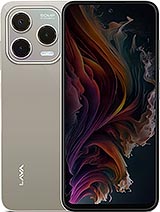
Shark 4G
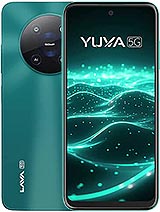
Yuva 2 5G
Galaxy M06 5G