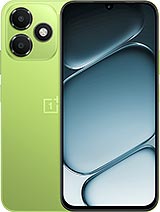
Lava Shark 2 review
The Shark 2 is a phone for battery endurance and dual-SIM flexibility in emerging markets, not a well-rounded device. If a long-lasting battery and large screen are your priority and budget is tight, it delivers. If sharpness, speed, or camera quality matter, look elsewhere in the 130–160 EUR bracket.
This review is written with AI assistance from Lava’s published specifications and public benchmark data for the Lava Shark 2, and the rating is spec-based. GoSolo does not physically test devices; where we estimate real-world behaviour such as battery life or charge time, we say so. How we rate phones.
Overview
The Shark 2 is a budget phone with a large 6.75-inch display and a spacious 6000 mAh battery, pitched at buyers who prioritize endurance and screen real estate over processing power or camera quality. At 110 EUR, it delivers decent fundamentals for a secondary or emerging-market device, but the entry-level chipset and modest 720p camera limit its appeal beyond basic everyday use.
Design & build
At 210g and 8.8mm thick, the Shark 2 is pleasantly compact and light for its 6.75-inch footprint, making it easier to hold one-handed than a similarly sized rival. The frame design and material choices are not detailed, but IP64 dust and splash resistance is a sensible inclusion at this price—not waterproof, but good enough for everyday spills. The side-mounted fingerprint sensor is tactile and responsive. Dual Nano-SIM with a dedicated microSD slot is the right call for emerging markets where users often need multiple carriers and cheap storage.
Display
The 6.75-inch IPS LCD is genuinely large and the 120Hz refresh rate keeps scrolling smooth and responsive. However, the 720 x 1612 pixel resolution is the real issue: 262 ppi on a screen this size leaves text noticeably soft and fine details blurry. For reading, web browsing, or detailed work, this is a step below the comfort zone. A rival at the same price will often push 1080p on a smaller screen or offer 1280 x 720 as a minimum on a 6.5-incher. The IPS panel itself is fine—no color shift at angles—but sharpness matters more than size alone, and the Shark 2 makes that trade-off in the wrong direction.
Performance
The Unisoc T8200 is entry-level silicon, and performance reflects that. App launches are slow by modern standards, and switching between multiple apps or light gaming will feel sluggish. The Mali-G57 GPU handles basic 2D and light 3D, but do not expect smooth 60 fps in demanding games. For messaging, social media, calls, and video playback, the chip is adequate; for anything beyond, you will notice the limits. 4GB RAM compounds the issue—most phones at 110 EUR now ship with 6GB or 8GB. Expect occasional app reloads and stutters in memory-heavy apps. The Unisoc platform also has a track record of slower Android updates and weaker optimization than Qualcomm or MediaTek tiers above it.
Software
Android 16 is current and a positive. Lava has not specified how many years of major updates or security patches the Shark 2 will receive, which is a concern on budget hardware from smaller OEMs. Day-to-day usage should be clean, but longevity past 2 years is uncertain. The lack of NFC rules out contactless payment, a minor loss in markets where that is becoming common.
Camera
The 13MP main camera is a weak link. Daylight shots are flat with limited dynamic range, and low-light performance is noticeably noisy. The 5MP selfie is merely functional. 1080p video at 30fps is well below modern baselines; rivals at this price increasingly capture 4K at 30fps or 1080p at 60fps. If any photography matters to you, this phone will disappoint.
Battery & charging
The 6000 mAh battery is the Shark 2's strongest feature. With moderate use—calls, messaging, light browsing—expect two full days easily, and three days if you are minimalist. Standby drain is low. The catch: charging is capped at 18W, which means a full charge from empty takes about 2.5 to 3 hours. For comparison, rivals at this price now routinely offer 33W or 65W. If you have a charger nearby daily, this is fine; if you are relying on overnight charging, the slow trickle is acceptable but not fast.
Value & verdict-context
At 110 EUR, the Shark 2 is a competent second phone or a basic daily for someone in an emerging market who prioritizes battery life and screen size over processing power and camera quality. The 5G modem is a future-proofing bonus. But the 720p display is a compromise that hurts usability, the entry-level chipset will frustrate anyone accustomed to faster phones, and the camera is genuinely poor. For 20-30 EUR more, a rival with a Snapdragon 6-series chip, 1080p display, and 50MP camera is often available and will age better. The Shark 2 suits someone in a cost-conscious market who will use it for basic calls, messaging, and video playback and does not mind slow app performance; it is less suitable if you browse the web regularly, take photos, or play games.
Verdict
The Shark 2 is a phone for battery endurance and dual-SIM flexibility in emerging markets, not a well-rounded device. If a long-lasting battery and large screen are your priority and budget is tight, it delivers. If sharpness, speed, or camera quality matter, look elsewhere in the 130–160 EUR bracket.
- 6000 mAh battery offers genuine all-day endurance and multi-day standby in a light-use scenario
- 6.75-inch display on a body that weighs 210g feels spacious without being unwieldy; 120Hz refresh adds fluidity to scrolling
- 5G modem included at this price point, future-proofing the connectivity for eventual rollouts in emerging markets
- Dedicated microSD slot allows cheap expansion without sacrificing dual SIM flexibility
- 720p resolution on a 6.75-inch screen yields 262 ppi—noticeably soft text and fine details compared to modern norms at any price
- Unisoc T8200 is entry-level; app launch, multitasking, and gaming performance lag rivals with Helio G or Snapdragon 6-series chips
- 13MP camera captures dim, flat images with minimal dynamic range; 1080p video at 30fps is basic
Lava Shark 2 Key Specifications
The essentials at a glance. See the full spec sheet.
| Released | 2026, May 26 |
|---|---|
| Display | 6.75 inches, 109.5 cm2 (~85.9% screen-to-body ratio), IPS LCD, 120Hz |
| Resolution | 720 x 1612 pixels, 20:9 ratio (~262 ppi density) |
| Chipset | Unisoc T8200 (6 nm) |
| RAM & storage | 64GB 4GB RAM |
| Main camera | 13 MP |
| Selfie camera | 5 MP |
| Battery | 6000 mAh |
| Software | Android 16 |
| Dimensions | 165.9 x 76.8 x 8.8 mm (6.53 x 3.02 x 0.35 in) |
| Weight | 210 g (7.41 oz) |
| Durability | IP64 dust tight and water resistant (water splashes) |
| Network | GSM / HSPA / LTE / 5G |
| NFC | No |
| USB | USB Type-C 2.0, OTG |
Lava Shark 2 FAQ
Common questions, answered from the spec sheet.
Does the Shark 2 support 5G?
Yes. The Shark 2 supports 5G networks.
What chipset does the Shark 2 use?
The Shark 2 runs on the Unisoc T8200 (6 nm).
What display does the Shark 2 have?
A 6.75 inches, 109.5 cm2 (~85.9% screen-to-body ratio) IPS LCD, 120Hz, 720 x 1612 pixels, 20:9 ratio (~262 ppi density).
How big is the Shark 2 battery?
The Shark 2 has a 6000 mAh battery.
Does the Shark 2 have NFC?
No, the Shark 2 does not list NFC support.
Is the Shark 2 water resistant?
The Shark 2 carries a IP64 dust tight and water resistant (water splashes) rating.
Does the Shark 2 support a microSD card?
Yes, the Shark 2 supports expandable storage (microSDXC (dedicated slot)).
Alternatives to consider
If the Shark 2 isn’t quite right, these are the closest calls.
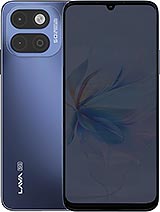
Virat V1 Pro
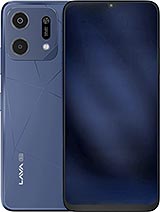
Virat V1
Bold N2 Pro
Virat Curve
Galaxy M17e