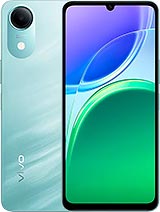
Lava Smart 4 review
The Smart 4 suits someone who needs a simple dual-SIM phone with a big battery and doesn't demand responsiveness or camera quality. Anyone expecting a phone that won't stutter, take decent photos, or feel modern should spend a little more and pick a competitor from a mainstream brand.
This review is written with AI assistance from Lava’s published specifications and public benchmark data for the Lava Smart 4, and the rating is spec-based. GoSolo does not physically test devices; where we estimate real-world behaviour such as battery life or charge time, we say so. How we rate phones.
Overview
The Lava Smart 4 is a budget Android phone built for emerging markets where 4G, a big screen, and long battery life matter more than performance. At 80 EUR with a 5000 mAh battery and dual SIM, it ticks essential boxes for cost-conscious users, but the Unisoc chipset and 202 ppi display mean it will feel sluggish and dated compared to phones from larger brands even in its price range.
Design & build
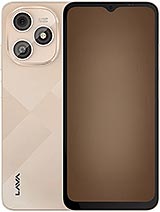
The Smart 4 is slim at 8.8 mm and light enough at 197 g, making it comfortable to grip. The all-plastic chassis feels hollow but typical for this price; the fingerprint sensor on the side is a genuine convenience, even if the sensor itself is probably slow. Nano-SIM and microSDXC slots are both present and separate, which means you don't have to choose between expansion and a second line—a small win for users in markets where dual SIM is standard. Ajanta Grey and Konark Gold are understated color options that won't offend anyone. Build quality is basic but serviceable; it will not survive a meaningful drop without scuffs or cracks.
Display
The 6.56-inch TFT panel is a large canvas, and the 81.9 percent screen-to-body ratio is respectable for a phone this cheap. That said, the 540 x 1210 resolution yields only 202 pixels per inch—low enough that individual pixels are visible if you look close, and text edges appear jagged. Colors are washed out, blacks lack depth, and brightness is not quoted but is almost certainly dim outdoors. For scrolling through messaging apps or reading plain text, it will do. Anything more—photos, videos, maps—will feel noticeably cruder than what rivals offer even at similar prices. The 20:9 aspect ratio is deep and narrow, which suits video viewing but makes the phone taller.
Performance
The Unisoc SC9863A is a budget octa-core from 2024, and it shows its age within days. Apps take noticeably longer to open than they should, scrolling stutters, and multitasking is a chore if you have more than two apps in memory. Gaming is not a realistic option; even casual puzzle games will lag. The 3 GB of RAM compounds the problem—fine for basic calls and messaging, insufficient if you have many apps installed or switch between them often. For a first smartphone or a backup device in a low-coverage area where calls and SMS matter most, the performance is adequate in a gritted-teeth way. For anything that requires responsiveness, it falls behind competitors from Samsung, Motorola, or even Realme at the same price point.
Software
Android 16 (Go edition) is optimized for low-end hardware and will run lighter and longer than the full version. Lava will almost certainly ship minimal bloat—no bloated OEM apps or skins—which is a rare advantage for an Indian brand. Updates are unlikely to arrive quickly or last long; budget phone makers often abandon support after one or two years. The Go edition also means some apps from the Play Store will be unavailable or install a lite version, a friction point if you rely on specific social media or banking apps. Security patches are more important than OS upgrades at this price, and there's no guarantee Lava will prioritize them.
Camera
The 8 MP main camera with LED flash and panorama mode is functional but uninspiring. In bright daylight it will record recognizable photos, but fine detail is lost, and color accuracy is mediocre. Low light or backlit scenes are a struggle; the LED flash helps but does not compensate for the small sensor and basic processing. The 5 MP selfie camera is below average even for a budget phone and will produce soft, washed-out self-portraits. Video recording exists but at what resolution and quality is not specified; assume it is 480p or 720p at best. If photos and video are important to your use case, this is not the phone to buy, even if you are stretching your budget.
Battery & charging
The 5000 mAh battery is genuinely large and will carry you through a full day of light to moderate use comfortably. At this capacity and with the low-power Unisoc chip, a day of standby or messaging use could stretch to two. Charging speed is nowhere to be found on the spec sheet, but USB Type-C and a 5V charger are almost certain, meaning you are looking at 5 to 10 watts—so expect a full recharge in two to three hours. That is slow by today's standard, but a bigger issue is whether Lava supplies a charger at all; budget brands often omit it, adding cost and frustration at the point of sale.
Value & verdict context
At 80 EUR, the Smart 4 is priced aggressively and hits a real need in emerging markets where a large screen, dual SIM, and all-day battery matter more than raw speed. The inclusion of FM radio, a side fingerprint sensor, and full Android 16 (Go) without heavy skins are genuine differentiators in its category. However, 80 EUR is now low enough that Motorola, Samsung, and Realme are all shipping materially better performers with brighter displays and faster cameras at the same or only slightly higher prices. The Unisoc chip is a real drag, not a clever cost trade-off but a corner cut that makes the phone feel noticeably slower than it should. If 80 EUR is your absolute maximum and you are in a region where Lava has distribution and support, it is a defensible choice. If you can stretch to 100–120 EUR, almost any other brand will give you more usable performance and a less frustrating day-to-day experience.
Verdict
The Smart 4 suits someone who needs a simple dual-SIM phone with a big battery and doesn't demand responsiveness or camera quality. Anyone expecting a phone that won't stutter, take decent photos, or feel modern should spend a little more and pick a competitor from a mainstream brand.
- 5000 mAh battery will easily last a full day of moderate use
- Dual SIM with a dedicated microSD slot for expansion without compromise
- Runs full Android 16 (Go edition), not a custom skin stripped of features
- FM radio, side-mounted fingerprint sensor, and USB-C are practical touches for the price
- Unisoc SC9863A is noticeably slow; expect stuttering in everyday apps and no meaningful gaming or multitasking
- 202 ppi TFT display is dull and pixelated by modern standards, even for a budget phone
- 8 MP main camera struggles with detail and dynamic range in anything but perfect daylight
Lava Smart 4 Key Specifications
The essentials at a glance. See the full spec sheet.
| Released | 2026, August 10 |
|---|---|
| Display | 6.56 inches, 103.3 cm2 (~81.9% screen-to-body ratio), TFT |
| Resolution | 540 x 1210 pixels, 20:9 ratio (~202 ppi density) |
| Chipset | Unisoc SC9863A (28 nm) |
| RAM & storage | 32GB 3GB RAM |
| Main camera | 8 MP |
| Selfie camera | 5 MP |
| Battery | 5000 mAh |
| Software | Android 16 (Go edition) |
| Dimensions | 165 x 76.5 x 8.8 mm (6.50 x 3.01 x 0.35 in) |
| Weight | 197 g (6.95 oz) |
| Network | GSM / HSPA / LTE |
| NFC | No |
| USB | USB Type-C, OTG |
Lava Smart 4 FAQ
Common questions, answered from the spec sheet.
Does the Smart 4 support 5G?
No. The Smart 4 tops out at GSM / HSPA / LTE, without 5G.
What chipset does the Smart 4 use?
The Smart 4 runs on the Unisoc SC9863A (28 nm).
What display does the Smart 4 have?
A 6.56 inches, 103.3 cm2 (~81.9% screen-to-body ratio) TFT, 540 x 1210 pixels, 20:9 ratio (~202 ppi density).
How big is the Smart 4 battery?
The Smart 4 has a 5000 mAh battery.
Does the Smart 4 have NFC?
No, the Smart 4 does not list NFC support.
Does the Smart 4 support a microSD card?
Yes, the Smart 4 supports expandable storage (microSDXC (dedicated slot)).
Alternatives to consider
If the Smart 4 isn’t quite right, these are the closest calls.
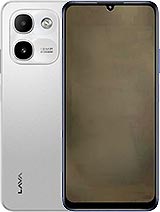
Smart 4 Plus
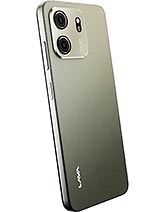
Bold N2 Lite
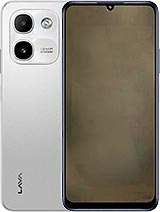
Virat V1 4G
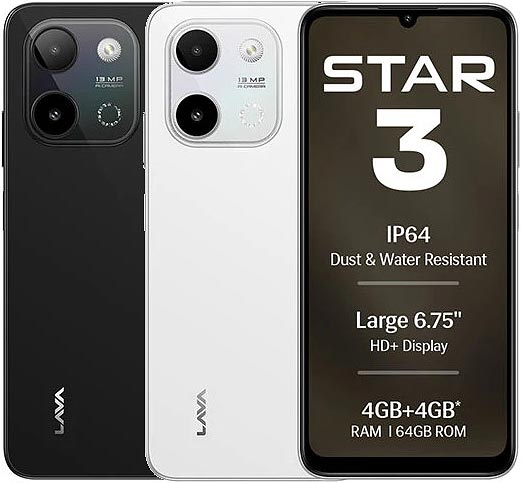
Yuva Star 3
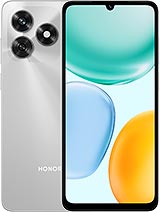
Play 70C