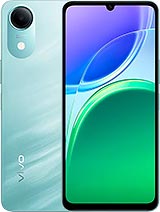
Lava Smart 4 Plus review
The Smart 4 Plus suits buyers in emerging markets who value battery endurance, expandable storage, and offline features over screen quality and processing power. Anyone expecting flagship-lite performance or modern app fluidity should look elsewhere.
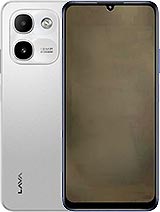
This review is written with AI assistance from Lava’s published specifications and public benchmark data for the Lava Smart 4 Plus, and the rating is spec-based. GoSolo does not physically test devices; where we estimate real-world behaviour such as battery life or charge time, we say so. How we rate phones.
Overview
The Lava Smart 4 Plus is an ultra-budget Android 15 Go phone built for offline-first users in emerging markets—its large 6.75-inch display, microSD slot, and FM radio are geared toward people with spotty connectivity and limited data. At €90, it is uncompromised in its intended lane, though its low-resolution screen and ageing Unisoc processor mean performance and visuals lag rivals and older flagships by several tiers.
Design & build
At 165 × 76.1 × 8.5mm, the Smart 4 Plus is a large-framed phone—the 6.75-inch screen dominates a 20:9 aspect ratio that makes it tall rather than wide, which suits single-hand navigation in a crowd. The 8.5mm thickness is slim for its class and feels compact for a phone with this much battery capacity. IP64 rating means dust-tight resistance and splash-proofing for splashes and light rain, a meaningful addition at this price where water ingress is a real risk. The dual Nano-SIM setup and dedicated microSD slot acknowledge users who run multiple carriers or need offline maps and media storage without sacrificing one or the other. The side-mounted fingerprint sensor is a practical choice here, avoiding the display scanner complexity that would drain battery.
Display
The 6.75-inch IPS LCD is bright enough indoors and in moderate sunlight, but the 720 × 1600 pixel resolution (260 ppi) is a compromise that shows itself immediately. Text on web pages and in messaging apps has visible pixel edges, and photos lack sharpness even in gallery view. The 90Hz refresh rate is present but the low pixel density undercuts the smoothness gain—scrolling feels faster, but you notice the softness. At this price and screen size, 720p is common in ultra-budget tiers, yet rivals have begun pushing toward 1080p at even lower cost. The 87.6% screen-to-body ratio is good for the format, and the IPS panel's wide viewing angles matter when multiple people look at the screen.
Performance
The Unisoc SC9863A is an entry-level 28nm chipset designed for light tasks and offline operation, not performance. App launches take noticeably longer than you might expect—opening a camera or messaging app has a 1 to 2 second lag. Web browsing is slow on heavier sites, and any form of multitasking (switching between maps and messaging, for instance) causes visible stutter. The octa-core setup with mixed clock speeds (4x1.6 GHz and 4x1.2 GHz Cortex-A55) trades peak speed for efficiency, keeping power draw low. Gaming is off the table; even light 3D apps stutter. For offline tasks—reading ebooks, listening to music, using FM radio—the chipset is fit. For anything network-heavy or app-rich, it shows its limits within days.
Software
Android 15 Go edition is tailored for low-RAM, entry-level hardware. The 4GB RAM pairing is minimal but workable; the OS offloads background services and runs lightweight versions of Google apps (Gmail Go, Maps Go, YouTube Go), which means lower memory footprint and slower refresh but reliable stability. You won't see the forced closure and reload cycles that plague older budget Androids with 2GB RAM. The tradeoff is that full-fat apps perform worse, and some newer apps won't install due to RAM limits. Updates are likely to arrive late if at all—Lava's track record on Indian budget phones is mixed. For users accustomed to vanilla Android and offline-first use cases, this is a straightforward experience; for power users or social media addicts, it will feel restrictive.
Camera
The 13MP main camera is a base-level sensor with an LED flash and 1080p video recording at 30fps. In bright daylight, shots are usable—colors are natural, and there is enough detail for small screens and messaging. Indoors or in shade, the sensor struggles; noise rises, detail dissolves, and the LED flash is too harsh at close range. The 5MP selfie camera is portrait-mode adequate but soft even in good light. Video tops out at 1080p and 30fps, with no stabilization mentioned; footage will be jerky in hand. This is a camera for essential documentation, not a tool for visual storytelling. Compared to rivals at this price, it is standard, not weak—but it is not a reason to choose this phone.
Battery & charging
The 5000 mAh battery is the phone's strongest suit. In light use—messaging, calls, FM radio, and offline browsing—it easily clears two days. Heavy use on the 4G network will drain it in a single day, but even then, it lasts longer than competitors with smaller cells. Charging speed is not mentioned in the spec sheet; at this price, expect 5W to 10W charging, which means 4 to 6 hours to full. The lack of a high-watt charger is typical for ultra-budget devices and reflects the low power draw of the chipset—aggressive charging would be mismatched to the hardware. USB Type-C is standard now, even at €90.
Value & verdict
At €90, the Smart 4 Plus is a phone without aspirations beyond basic connectivity and offline operation. It is purpose-built for emerging markets where connectivity is patchy, data is expensive, and durability matters. The microSD slot, FM radio, dual SIM, and battery endurance address real needs in those regions. The low-resolution display and entry-level chipset are conscious compromises, not oversights. It is not a stepping stone to a better phone; it is a tool for a specific user in a specific context. Someone running this for calls, texts, offline maps, music, and radio will find it reliable. Someone expecting a cheap flagship or hoping for decent performance on modern apps will be disappointed within weeks.
Verdict
The Smart 4 Plus suits buyers in emerging markets who value battery endurance, expandable storage, and offline features over screen quality and processing power. Anyone expecting flagship-lite performance or modern app fluidity should look elsewhere.
- 5000 mAh battery outlasts typical entry-level competitors by a full day of casual use
- Dedicated microSD slot without trade-offs—no SIM-slot juggling for storage expansion
- Android 15 Go edition and IP64 dust/splash resistance give genuine utility at €90
- FM radio, side fingerprint sensor, and dual SIM appeal directly to offline-heavy markets
- 720p screen at 6.75 inches is aggressively low-res—text and images feel soft even for basic tasks
- Unisoc SC9863A is entry-level by design; app load times and multitasking show it immediately
- 13MP camera lacks detail and struggles in poor light, making it adequate only for snaps in daylight
Lava Smart 4 Plus Key Specifications
The essentials at a glance. See the full spec sheet.
| Released | 2026, June 25 |
|---|---|
| Display | 6.75 inches, 110.0 cm2 (~87.6% screen-to-body ratio), IPS LCD, 90Hz |
| Resolution | 720 x 1600 pixels, 20:9 ratio (~260 ppi density) |
| Chipset | Unisoc SC9863A (28 nm) |
| RAM & storage | 64GB 4GB RAM |
| Main camera | 13 MP |
| Selfie camera | 5 MP |
| Battery | 5000 mAh |
| Software | Android 15 (Go edition) |
| Dimensions | 165 x 76.1 x 8.5 mm (6.50 x 3.00 x 0.33 in) |
| Durability | IP64 dust tight and water resistant (water splashes) |
| Network | GSM / HSPA / LTE |
| NFC | No |
| USB | USB Type-C 2.0, OTG |
Lava Smart 4 Plus FAQ
Common questions, answered from the spec sheet.
Does the Smart 4 Plus support 5G?
No. The Smart 4 Plus tops out at GSM / HSPA / LTE, without 5G.
What chipset does the Smart 4 Plus use?
The Smart 4 Plus runs on the Unisoc SC9863A (28 nm).
What display does the Smart 4 Plus have?
A 6.75 inches, 110.0 cm2 (~87.6% screen-to-body ratio) IPS LCD, 90Hz, 720 x 1600 pixels, 20:9 ratio (~260 ppi density).
How big is the Smart 4 Plus battery?
The Smart 4 Plus has a 5000 mAh battery.
Does the Smart 4 Plus have NFC?
No, the Smart 4 Plus does not list NFC support.
Is the Smart 4 Plus water resistant?
The Smart 4 Plus carries a IP64 dust tight and water resistant (water splashes) rating.
Does the Smart 4 Plus support a microSD card?
Yes, the Smart 4 Plus supports expandable storage (microSDXC (dedicated slot)).
Alternatives to consider
If the Smart 4 Plus isn’t quite right, these are the closest calls.
Smart 4
Bold N2 Lite
Virat V1 4G
Yuva Star 3
Play20A