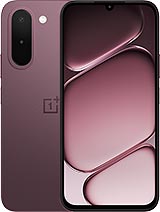
Lava Smart 4 Pro review
The Lava Smart 4 Pro suits users in emerging markets who prioritize battery life, dual-SIM functionality, and storage expansion over responsiveness and display clarity—think a secondary phone for field work or a first smartphone for someone on a tight budget. Anyone in a developed market or someone accustomed to snappier, sharper phones should look elsewhere; the performance gap and blurry display will frustrate quickly."
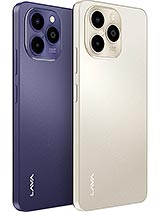
This review is based on Lava’s published specifications and public benchmark data for the Lava Smart 4 Pro, and the rating is spec-based. GoSolo does not physically test devices; where we estimate real-world behaviour such as battery life or charge time, we say so. How we rate phones.
Overview
The Lava Smart 4 Pro is a budget entry-level phone that hits the basics—large screen, big battery, dual SIM—but the 260 ppi display and weak Unisoc T610 chipset mean it's strictly for light users who value battery life and long-term durability over snappy performance or camera quality.
Design & build
Specs list dimensions and weight as unavailable, so there's little to go on beyond the 6.75-inch form factor, which suggests a sizable phone. At this price, build quality is likely plastic and straightforward; the side-mounted fingerprint sensor is a reasonable practical choice for a phone this large. Dual nano-SIM and a dedicated microSDXC slot show that Lava prioritized user choice over internal thinness, which is sensible in emerging markets where SIM swapping and expandable storage still matter.
Display
The 6.75-inch IPS LCD is big enough for comfortable one-handed web browsing and video, and the 90Hz refresh rate keeps scrolling fluid. However, 260 ppi pixel density is a real step back for 2026. Modern budget phones consistently hit 300+ ppi even at this price; at 260, text and icons show visible pixelation and the display looks notably softer than rivals, especially in portrait orientation where individual pixels become apparent. The 20:9 aspect ratio is typical of large-screen phones and works well for video content, but the resolution bottleneck is the display's main weakness.
Performance
The Unisoc T610 is an entry-level chipset, plain and simple. Its 12 nm process and octa-core layout (two Cortex-A75 cores, six A55) deliver enough grunt for messaging, calls, light web browsing, and social media scrolling, but expect noticeable delays launching heavier apps, stuttering in multitasking, and no gaming capability beyond basic titles. By current 2026 standards, even budget competitors typically use MediaTek Helio or Snapdragon 4-series chips, which are noticeably snappier. The 4GB RAM pairs with 64GB storage (expandable via microSD), which is baseline for this tier; the modest RAM will contribute to app reload stuttering if you juggle multiple apps.
Software
Android 16 Go Edition is purpose-built for low-spec hardware, with optimized memory and storage footprint. The commitment to two major OS updates is valuable for a phone at this price, suggesting cover through 2027 or 2028. That said, Go Edition trades some convenience features for efficiency—app selection is leaner, and some Google apps run in stripped-down form. For a user who only needs core functions, it works; for anyone wanting tighter app integration, it's a step down from standard Android.
Camera
The 13MP rear sensor with LED flash and 1080p@30fps video recording is functional but dated by 2026 standards. No autofocus, no ultrawide, no night mode, no computational photography tricks—just a fixed-focus LED experience that works adequately in daylight but falls apart indoors or at dusk. The 5MP front camera handles basic selfies and video calls. For this price, rivals often offer dual rear cameras or at least a wider aperture and better low-light performance. This is a camera phone in the most basic sense.
Battery & charging
The 7000 mAh battery is a genuine strength. At this capacity, light users should expect two to three days between charges, which is rare and valuable. The spec sheet lists 18W charging, which is modest by modern standards; this implies a full charge from empty will take 60 to 90 minutes, slow by flagship measures but acceptable for a phone designed to run for days. The tradeoff is deliberate: big battery over fast charging makes sense for a user who charges overnight and values longevity.
Value & verdict-context
At roughly 110 EUR, the Lava Smart 4 Pro sits in the extreme budget tier. The value proposition is simple: maximum battery life, dual SIM flexibility, and long software support for someone who needs a workhorse secondary phone or a first smartphone in a cost-conscious market. The 260 ppi display and entry-level chipset are compromises that reflect the price, but they're significant enough that this phone is explicitly not for anyone who expects responsive performance or crisp visuals. It is built for durability and long runtime, not modern smartphone convenience.
Verdict
The Lava Smart 4 Pro suits users in emerging markets who prioritize battery life, dual-SIM functionality, and storage expansion over responsiveness and display clarity—think a secondary phone for field work or a first smartphone for someone on a tight budget. Anyone in a developed market or someone accustomed to snappier, sharper phones should look elsewhere; the performance gap and blurry display will frustrate quickly."
- 7000 mAh battery should give two or three days of casual use, rare at this price point
- 90Hz IPS LCD display is smooth and responsive despite low 260 ppi pixel density
- Dual nano-SIM and dedicated microSDXC slot for practical multiSIM and storage expansion without trade-offs
- Runs Android 16 Go Edition with promise of two major OS updates, covering security patches through 2027 or 2028
- Display is large but blurry: 260 ppi is noticeably soft, more akin to mid-2010s smartphones than current budget norms
- Unisoc T610 is an entry-level chipset that will stutter opening apps and lag in multitasking; not suitable for any gaming
- 13MP camera and 5MP front shooter lack the zoom, night mode, and computational features that define even competitive budget phones today
Lava Smart 4 Pro Key Specifications
The essentials at a glance. See the full spec sheet.
| Released | 2026, November 20 |
|---|---|
| Display | 6.75 inches, 110.0 cm2, IPS LCD, 90Hz |
| Resolution | 720 x 1600 pixels, 20:9 ratio (~260 ppi density) |
| Chipset | Unisoc T610 (12 nm) |
| RAM & storage | 64GB 4GB RAM |
| Main camera | 13 MP |
| Selfie camera | 5 MP |
| Battery | 7000 mAh |
| Software | Android 16 (Go edition), up to 2 major OS updates |
| Network | GSM / HSPA / LTE |
| NFC | No |
| USB | USB Type-C 2.0, OTG |
Lava Smart 4 Pro FAQ
Common questions, answered from the spec sheet.
Does the Smart 4 Pro support 5G?
No. The Smart 4 Pro tops out at GSM / HSPA / LTE, without 5G.
What chipset does the Smart 4 Pro use?
The Smart 4 Pro runs on the Unisoc T610 (12 nm).
What display does the Smart 4 Pro have?
A 6.75 inches, 110.0 cm2 IPS LCD, 90Hz, 720 x 1600 pixels, 20:9 ratio (~260 ppi density).
How big is the Smart 4 Pro battery?
The Smart 4 Pro has a 7000 mAh battery.
Does the Smart 4 Pro have NFC?
No, the Smart 4 Pro does not list NFC support.
Does the Smart 4 Pro support a microSD card?
Yes, the Smart 4 Pro supports expandable storage (microSDXC (dedicated slot)).
Alternatives to consider
If the Smart 4 Pro isn’t quite right, these are the closest calls.
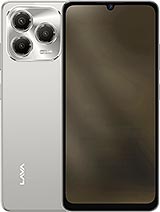
Bold N2 Pro
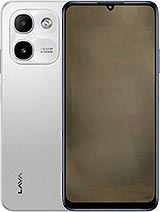
Smart 4 Plus
Smart 4
Virat V1 Pro
X5d s