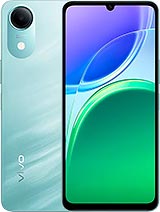
Lava Virat V1 4G review
This phone suits someone who prioritizes battery endurance, storage expansion, and offline capability over performance and display sharpness—essentially, workers, older users, and backup phone buyers in cost-constrained regions. Anyone else should stretch the budget; even €20 more unlocks a visibly better chip and screen."
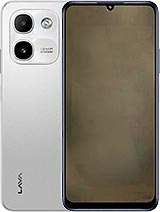
This review is written with AI assistance from Lava’s published specifications and public benchmark data for the Lava Virat V1 4G, and the rating is spec-based. GoSolo does not physically test devices; where we estimate real-world behaviour such as battery life or charge time, we say so. How we rate phones.
Overview
The Virat V1 is a straightforward budget 4G phone built around a 6.75-inch screen and 5000 mAh battery, aimed squarely at users who need basic calling, messaging, and light web browsing without spending much. It delivers the essentials for €80, but the 260 ppi display and entry-level Unisoc chipset mean it will feel sluggish next to phones at twice the price.
Design & build
At 165 x 76.1 x 8.5 mm, the Virat V1 is tall but reassuringly slim and light enough to pocket. The 87.6% screen-to-body ratio makes reasonable use of the frame, though the 6.75-inch diagonal is aggressive for a phone that does not justify its size with high pixel density or visual flair. IP64 dust and splash resistance is a solid foundation for a budget device in regions where phones encounter dust storms or accidental water splashes. The nano-SIM + nano-SIM dual-sim setup gives flexibility for work-and-personal use in markets where that matters. Build quality is not specified, but at this price point expect plastic and glass, not metal, so durability will hinge on how you treat it.
Display
A 6.75-inch IPS LCD at 720 x 1600 (260 ppi) is where the Virat V1 makes the biggest visual compromise. At this density and size, individual pixels are visible to the naked eye, and text, icons, and web pages read as noticeably soft. The 90 Hz refresh rate helps scrolling feel a touch smoother, but it cannot disguise the low sharpness. Against rivals in the €80-120 range, many now push 1080p or higher on similar screens, so this is a step behind. Brightness and colour accuracy are typical for budget IPS, meaning outdoor readability will be hampered and colours will lack punch. For reading e-books, casual web browsing, and video calls, it works; for any detail-heavy task, you will notice the shortfall.
Performance
The Unisoc SC9863A is a 2023-era entry-level chip aimed at very low-cost phones and Go edition devices. Its octa-core configuration (4x1.6 GHz + 4x1.2 GHz Cortex-A55 cores) looks decent on paper but lacks the sustained performance of even mid-range chips from the same era. In daily use, expect noticeable lag when switching between apps, opening social media, or handling multi-tab browsing. Gaming is largely off the table; even light casual titles will stutter. Android 15 (Go edition) is the right choice here—a stripped-down OS that consumes less RAM and storage—but 4GB of RAM is the bare minimum, and you will see stutters if you keep many apps loaded. The 28 nm manufacturing process is dated, which is why even modest workloads will drain battery faster than a modern chip would. This is a phone for calls, texts, WhatsApp, light web browsing, and offline media; anything beyond that will teach you patience.
Camera
The 13 MP rear camera with LED flash and 1080p@30fps video is basic by any standard, but adequate for casual snapshots. Lack of an ultrawide means all photography is locked to a standard field of view, limiting versatility. In good light, a 13 MP sensor can produce acceptable detail, but dynamic range will be narrow and shadows will crush to black. Low-light performance will be poor—expect noise and loss of colour fidelity. The 5 MP front camera handles video calls and selfies but nothing more; detail will be soft. Video is capped at 1080p@30fps, which is acceptable but not smooth on any fast-moving scene. If photography is any part of your purchase logic, this is a compromised choice; if you simply need to document moments or video call relatives, it will do.
Battery & charging
The 5000 mAh cell is the phone's strongest feature. Paired with the power-efficient Unisoc chipset and modest screen density, it should deliver two days of light use or a full day of regular texting, calling, and web browsing. Exact charging speed is not specified (the spec sheet notes 10W), which is slow by modern standards—rivals at this price now often include 30W or higher—so charging will take roughly 2 to 2.5 hours from empty on a compatible charger. That slow charge speed is a genuine friction point if you are in a region with spotty power infrastructure; you cannot top up quickly in a rush. FM radio and GPS/GLONASS help when offline, mitigating some reliance on constant power.
Software
Android 15 (Go edition) is the right fit for this hardware. Go edition cuts bloatware, reduces memory overhead, and scales the OS for devices with low RAM. Out of the box you get the essentials: Gmail, Maps (lite), YouTube (lite), and a pared-down Play Store that prioritizes lightweight apps. Updates and security patches will depend on Lava's track record; budget phone makers in this space often leave devices unpatched after launch, so assume at least 1–2 years of updates and not more. The side-mounted fingerprint sensor works for unlocking but is not fast; virtual proximity sensing compensates for the missing hardware sensor. USB Type-C is standard now, so no complaints there.
Value & verdict-context
At €80, the Virat V1 sits at the intersection of desperation and pragmatism. It is not a good phone by any measure—the display is soft, the chip is sluggish, the camera is basic, charging is slow. But for someone in a market where connectivity matters more than processing power, and who needs a reliable voice device with enough battery to survive low-power days, it fills a gap. The 5000 mAh battery and IP64 rating make it practical for outdoor work or fieldwork. Dual SIM, FM radio, GPS, and a microSDXC slot suggest this is built for utility, not aspiration. If your budget stretches to €100–150, a phone with a modern entry-level chip, sharper display, and faster charging would serve you far better. But if €80 is the absolute limit and you care more about uptime than speed, and if you already own a better phone for everything else, this can work as a backup or work-dedicated device.
Verdict
This phone suits someone who prioritizes battery endurance, storage expansion, and offline capability over performance and display sharpness—essentially, workers, older users, and backup phone buyers in cost-constrained regions. Anyone else should stretch the budget; even €20 more unlocks a visibly better chip and screen."
- 5000 mAh battery with modest chipset efficiency suggests all-day stamina even on sparse charging infrastructure
- Dedicated microSDXC slot lets users expand storage without sim compromise, practical for offline media in markets with limited cloud access
- IP64 splash resistance and FM radio make this useful in outdoor or connectivity-limited settings
- 8.5 mm thickness keeps it pocketable despite the large 6.75-inch frame
- 260 ppi display on a 6.75-inch screen is noticeably pixelated; text and icons lack clarity you'd get from rivals at the same price
- Unisoc SC9863A is a 2023-era entry chip that will lag visibly in everyday multitasking, app switching, and any load beyond light web browsing
- 13 MP camera with no ultrawide and only 1080p video is functional but unremarkable, and low-light performance will suffer on a budget sensor
Lava Virat V1 4G Key Specifications
The essentials at a glance. See the full spec sheet.
| Released | 2026, July 24 |
|---|---|
| Display | 6.75 inches, 110.0 cm2 (~87.6% screen-to-body ratio), IPS LCD, 90Hz |
| Resolution | 720 x 1600 pixels, 20:9 ratio (~260 ppi density) |
| Chipset | Unisoc SC9863A (28 nm) |
| RAM & storage | 64GB 4GB RAM |
| Main camera | 13 MP |
| Selfie camera | 5 MP |
| Battery | 5000 mAh |
| Software | Android 15 (Go edition) |
| Dimensions | 165 x 76.1 x 8.5 mm (6.50 x 3.00 x 0.33 in) |
| Durability | IP64 dust tight and water resistant (water splashes) |
| Network | GSM / HSPA / LTE |
| NFC | No |
| USB | USB Type-C 2.0, OTG |
Lava Virat V1 4G FAQ
Common questions, answered from the spec sheet.
Does the Virat V1 4G support 5G?
No. The Virat V1 4G tops out at GSM / HSPA / LTE, without 5G.
What chipset does the Virat V1 4G use?
The Virat V1 4G runs on the Unisoc SC9863A (28 nm).
What display does the Virat V1 4G have?
A 6.75 inches, 110.0 cm2 (~87.6% screen-to-body ratio) IPS LCD, 90Hz, 720 x 1600 pixels, 20:9 ratio (~260 ppi density).
How big is the Virat V1 4G battery?
The Virat V1 4G has a 5000 mAh battery.
Does the Virat V1 4G have NFC?
No, the Virat V1 4G does not list NFC support.
Is the Virat V1 4G water resistant?
The Virat V1 4G carries a IP64 dust tight and water resistant (water splashes) rating.
Does the Virat V1 4G support a microSD card?
Yes, the Virat V1 4G supports expandable storage (microSDXC (dedicated slot)).
Alternatives to consider
If the Virat V1 4G isn’t quite right, these are the closest calls.
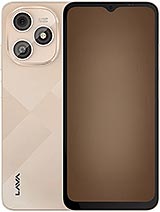
Smart 4
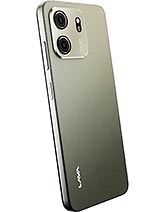
Bold N2 Lite
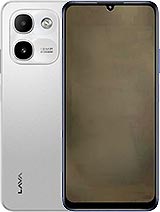
Smart 4 Plus
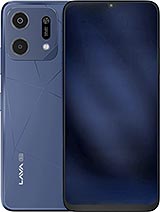
Virat V1

Play20A