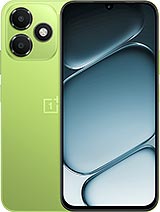
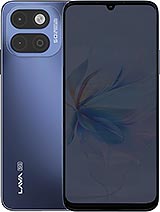
Lava Virat V1 Pro review
The Virat V1 Pro is best suited to buyers in emerging 5G markets who prioritize battery life and screen size over smooth performance and display sharpness, and who do not need the phone to feel fast. Anyone who spends hours multitasking, gaming, or reading fine text should look elsewhere."
This review is written with AI assistance from Lava’s published specifications and public benchmark data for the Lava Virat V1 Pro, and the rating is spec-based. GoSolo does not physically test devices; where we estimate real-world behaviour such as battery life or charge time, we say so. How we rate phones.
Overview
The Virat V1 Pro is an unusually sensible budget 5G phone: 6000 mAh battery life, a genuinely large 6.75-inch display, and 5G connectivity for under €150 are rare all together. The weak 720p display and entry-level Unisoc chipset mean it's slow and dull to look at, but for basic calls, texts, and streaming on Wi-Fi, the value is there.
Design & build
The Virat V1 Pro is a big, solid slab at 207 grams and 8.7 mm thick. It feels heavier than modern flagships but not out of place for a budget 5G phone; the weight actually signals a robust plastic frame and that huge 6000 mAh battery. IP64 rating means it survives splashes and dust but not full submersion, which is honest for the price. Dual Nano-SIM slots and a shared microSD tray are practical for markets that still move SIM cards around, and the side-mounted fingerprint sensor is faster to wake than an in-display one on a low-res panel. Two colors—Sikkim Midnight and Spiti Frost—play to Indian naming taste but feel generic on a budget phone.
Display
Here is where the Virat V1 Pro trips hardest. A 720p resolution on a 6.75-inch IPS LCD is mathematically workable at ~260 ppi, but in real use it looks soft. Text on web pages and in apps has visible pixelation; reading email or browsing news feels like squinting at an older generation. The 120Hz refresh rate helps gesture smoothness, but there is no amount of frame-rate polish that can hide a fundamentally low-resolution display. At this price, rivals still ship 1080p or better. For video playback and maps on a commute it will do, but anyone accustomed to a sharper screen will notice the loss immediately.
Performance
The Unisoc T8200 is an entry-level SoC; do not expect responsiveness. Apps open with perceptible delay, and switching between them causes visible stutter. Multitasking is sluggish; keeping a browser tab, messaging app, and music player in memory means noticeable slowdowns when you switch. Gaming is not realistic beyond casual 2D titles. For day-to-day calls, texts, social media on Wi-Fi, and video streaming at 1080p it is adequate, but do not buy this phone if you need the device to feel fast. The 6 GB RAM helps but cannot overcome the chipset's handicap. This is the machine you run light, not the one you rely on for productivity.
Camera
The 50 MP main camera with autofocus and LED flash sounds respectable on spec but performs like a budget module. The 1080p@30fps video cap is a ceiling; you cannot shoot 4K, and 30 fps looks choppy on movement. In daylight the sensor captures detail reasonably well, but low-light shots are noisy and flat. The selfie camera specs are not listed in detail, so assume it is a standard 8MP or so fixed-focus unit. HDR and panorama modes are present but basic. For casual social media snaps and video calls it suffices; for any serious photography you will feel the shortfall within days.
Battery & charging
The 6000 mAh battery is the phone's strongest suit. With the Unisoc's modest power draw and a display that, despite its low res, does not drain aggressively, expect genuine two-day life on light use and a full day on moderate use. That is genuinely rare below €150. The specs do not explicitly state charging wattage, but the battery type and lack of mention suggest a basic 10W charger, which means a 30-minute wait for 20% and several hours for full capacity. This is a slow charge by 2026 standards, when 30W and higher are common even in budget tiers. If you commute and charge overnight, it is fine; if you need a quick top-up you will be frustrated.
Software
Android 16 is current and should bring OS-level refinements over older versions, but the Unisoc hardware undercuts the experience. Updates and security patches are unknown at launch; Lava's track record on long-term software support is mixed in the budget space. Expect the phone to slow down over a year or two as the OS updates and apps grow heavier. The OS itself is stock or near-stock Android, which is a plus: no bloatware or heavy skins to slow things further. FM radio support is a throwback feature that still matters in some regions.
Value & verdict context
At €140, the Virat V1 Pro makes an honest trade: you get 5G, a large screen, real battery life, and dual SIM, but you sacrifice display sharpness and snappy performance. In emerging markets where 5G rollout is new and network coverage matters more than processing speed, that calculus works. The phone is not for someone who checks email all day or multitasks constantly; it is for someone who needs a big, durable device for calls, casual browsing, and streaming, and who is willing to charge slowly in exchange for all-day uptime. Compared to similarly priced rivals, it wins on battery capacity and screen size, but it loses on pixel density and chipset speed. If you need a phone for light use on a tight budget and you value battery life and 5G access over responsiveness, it is a solid pragmatic choice.
Verdict
The Virat V1 Pro is best suited to buyers in emerging 5G markets who prioritize battery life and screen size over smooth performance and display sharpness, and who do not need the phone to feel fast. Anyone who spends hours multitasking, gaming, or reading fine text should look elsewhere."
- 6000 mAh battery with no bloat leaves real all-day life on a charge, rare in this price class
- 6.75-inch screen is genuinely large for a budget phone and gives practical browsing and video space
- 5G connectivity, dual SIM, and IP64 dust and water resistance for under €150
- Side-mounted fingerprint sensor and microSD expansion are actual conveniences in this tier
- 720p LCD at 6.75 inches is visibly soft; text and web pages lack sharpness
- Unisoc T8200 is slow for multitasking and app switching; gaming and heavy apps lag
- Charging specs (10W implied from battery type, not explicit) are glacially slow by today's standard
Lava Virat V1 Pro Key Specifications
The essentials at a glance. See the full spec sheet.
| Released | 2026, August 24 |
|---|---|
| Display | 6.75 inches, 110.0 cm2 (~84.2% screen-to-body ratio), IPS LCD, 120Hz |
| Resolution | 720 x 1600 pixels, 20:9 ratio (~260 ppi density) |
| Chipset | Unisoc T8200 (6 nm) |
| RAM & storage | 128GB 6GB RAM |
| Main camera | 50 MP, AF |
| Selfie camera | Yes |
| Battery | 6000 mAh |
| Software | Android 16 |
| Dimensions | 168.3 x 77.6 x 8.7 mm (6.63 x 3.06 x 0.34 in) |
| Weight | 207 g (7.30 oz) |
| Durability | IP64 dust tight and water resistant (water splashes) |
| Network | GSM / HSPA / LTE / 5G |
| NFC | No |
| USB | USB Type-C 2.0, OTG |
Lava Virat V1 Pro FAQ
Common questions, answered from the spec sheet.
Does the Virat V1 Pro support 5G?
Yes. The Virat V1 Pro supports 5G networks.
What chipset does the Virat V1 Pro use?
The Virat V1 Pro runs on the Unisoc T8200 (6 nm).
What display does the Virat V1 Pro have?
A 6.75 inches, 110.0 cm2 (~84.2% screen-to-body ratio) IPS LCD, 120Hz, 720 x 1600 pixels, 20:9 ratio (~260 ppi density).
How big is the Virat V1 Pro battery?
The Virat V1 Pro has a 6000 mAh battery.
Does the Virat V1 Pro have NFC?
No, the Virat V1 Pro does not list NFC support.
Is the Virat V1 Pro water resistant?
The Virat V1 Pro carries a IP64 dust tight and water resistant (water splashes) rating.
Does the Virat V1 Pro support a microSD card?
Yes, the Virat V1 Pro supports expandable storage (microSDXC (uses shared SIM slot)).
Alternatives to consider
If the Virat V1 Pro isn’t quite right, these are the closest calls.
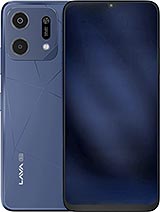
Virat V1
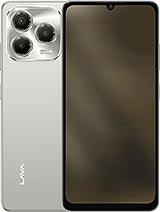
Bold N2 Pro
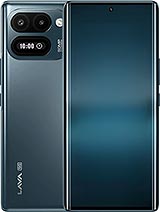
Virat Curve
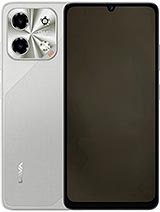
Shark 2
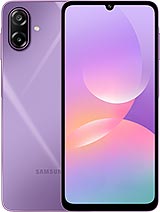
Galaxy M17e