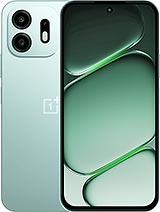
Lava Yuva 2 5G review
This phone suits buyers in South Asia and the Middle East who need 5G, long battery life, and a large screen on a tight budget and do not mind fuzzy text or basic cameras. Anyone seeking sharper display or faster performance at this price should look to established brands with stronger regional support.
This review is written with AI assistance from Lava’s published specifications and public benchmark data for the Lava Yuva 2 5G, and the rating is spec-based. GoSolo does not physically test devices; where we estimate real-world behaviour such as battery life or charge time, we say so. How we rate phones.
Overview
The Lava Yuva 2 5G is a budget 5G phone with a large 6.53-inch screen and all-day battery, but the 720p resolution looks pixelated and the 18W charging crawls. For the price in South Asian markets, it covers the essentials—connectivity, size, stamina—if you accept basic cameras and soft text rendering.
Design & Build
The Yuva 2 5G sits comfortably in hand at 208 grams and 9.1mm thick, neither heavy nor flimsy. The body feels sturdy enough for casual drops, and the dual nano-SIM slots plus microSD expansion mean you are not locked into internal storage. Build specs are minimal in the spec sheet, so expectations should match the price; do not expect glass or premium materials. For a phone under 120 EUR, the industrial design is unremarkable but functional.
Display
Here is where the compromise hits hardest. The 6.53-inch IPS LCD runs 720 by 1600 pixels, which Lava stretches to roughly 269 ppi—well behind the 300+ ppi standard in this price bracket. Text, icons, and UI elements look soft and slightly pixelated when you look closely, especially browsing or reading. The 90Hz refresh rate does smooth scrolling and makes animations feel less stuttered, but it cannot hide the sharpness deficit. For video and casual web use, it is passable; for anyone accustomed to sharper screens, this will feel like a step backward.
Performance
The Unisoc T750 is a modest six-nanometre chip with two faster Cortex-A76 cores and six efficiency cores, paired with a Mali-G57 GPU. In real terms, it comfortably handles social media, messaging, YouTube, and light browsing. Light games like Candy Crush or Subway Surfers run without issue. Anything demanding—Genshin Impact, Fortnite, or heavier 3D titles—will require graphics downgrade and will still see frame drops. The phone does not stutter during everyday use, but it is not built for gaming or heavy multitasking. Four gigabytes of RAM is the bare minimum for Android 13; no headroom for browser tabs or app switching. For the price and market, this is adequate, but it is not fast.
Software
Android 13 is two versions behind the current release, a practical consequence of the budget tier. Lava has not announced upgrade roadmaps for this model, so expect to stay on Android 13 for the phone's lifespan. The OS itself runs cleanly without obvious bloat, though the lack of guaranteed future software support is a weakness in a long-term ownership view. Security patches will likely arrive sporadically.
Camera
The rear setup is a single 50MP main sensor with a 2MP macro lens and LED flash. The 50MP count is marketing; real detail is limited. Daylight photos are acceptable, with decent colour and exposure, but fine detail softens noticeably. There is no optical zoom and no night mode, so distant subjects and low-light scenes will disappoint. The macro lens is a gimmick; 2MP is too low to produce sharp close-ups. The 8MP selfie is adequate for video calls but shows its limits in bright sunlight. For a phone at this price, the camera is basic but usable if you shoot in daylight and do not demand night performance.
Battery & Charging
The 5000mAh battery paired with the Unisoc T750 and 720p screen delivers roughly five to seven hours of screen-on time in mixed daily use—enough for a full day if you are not streaming video constantly. Standby is solid. The real frustration is charging: 18W fills the battery in about 80 minutes from empty, which is slow compared to rivals offering 33W or 65W at the same or slightly higher price. If you charge overnight, this is not a deal-breaker. If you need a quick top-up, you will wait.
Value & Verdict-Context
At around 110 EUR, the Yuva 2 5G targets buyers in India, Southeast Asia, and the Middle East who prioritise 5G access and screen real estate over display sharpness and camera quality. In 2024, 5G in this price tier is a meaningful differentiator; most rivals still cap out at LTE. The 6.53-inch display, even at low resolution, appeals to video watchers and people who prefer big screens. The all-day battery and microSD slot add practical value. The trade-offs—fuzzy display, slow charging, basic camera, aging chipset—are real, but they are the obvious cuts for the money. Against phones like the Realme 12 or Samsung Galaxy A15 5G, the Yuva 2 is not a standout, but it is a legitimate budget option in markets where Lava has distribution and service. Outside those regions, it is hard to recommend.
Verdict
This phone suits buyers in South Asia and the Middle East who need 5G, long battery life, and a large screen on a tight budget and do not mind fuzzy text or basic cameras. Anyone seeking sharper display or faster performance at this price should look to established brands with stronger regional support.
- 5G connectivity across most major bands, a rarity at this price point in 2024
- Large 6.53-inch display with 82.7% screen-to-body ratio and 90Hz refresh for everyday scrolling
- 5000mAh battery delivers a full day of mixed use without fussing over charge cycles
- Side-mounted fingerprint sensor, dual SIM, and microSD slot for storage expansion
- 720p resolution on a 6.53-inch screen yields 269 ppi—text and icons are noticeably fuzzy compared to rivals at this price
- 18W charging fills the 5000mAh battery in roughly 80 minutes, slow by current standards
- Unisoc T750 handles social media and light apps but chokes on demanding games and heavier tasks
Lava Yuva 2 5G Key Specifications
The essentials at a glance. See the full spec sheet.
| Released | 2024, March 30 |
|---|---|
| Display | 6.53 inches, 102.9 cm2 (~82.7% screen-to-body ratio), IPS LCD, 90Hz |
| Resolution | 720 x 1600 pixels, 20:9 ratio (~269 ppi density) |
| Chipset | Unisoc T750 (6 nm) |
| RAM & storage | 64GB 4GB RAM, 128GB 4GB RAM |
| Main camera | 50 MP, (wide), AF 2 MP (macro) |
| Selfie camera | 8 MP |
| Battery | 5000 mAh |
| Charging | 18W wired |
| Software | Android 13 |
| Dimensions | 163.4 x 76.2 x 9.1 mm (6.43 x 3.00 x 0.36 in) |
| Weight | 208 g (7.34 oz) |
| Network | GSM / HSPA / LTE / 5G |
| NFC | No |
| USB | USB Type-C 2.0, OTG |
Lava Yuva 2 5G FAQ
Common questions, answered from the spec sheet.
Does the Yuva 2 5G support 5G?
Yes. The Yuva 2 5G supports 5G networks.
What chipset does the Yuva 2 5G use?
The Yuva 2 5G runs on the Unisoc T750 (6 nm).
What display does the Yuva 2 5G have?
A 6.53 inches, 102.9 cm2 (~82.7% screen-to-body ratio) IPS LCD, 90Hz, 720 x 1600 pixels, 20:9 ratio (~269 ppi density).
How big is the Yuva 2 5G battery?
The Yuva 2 5G has a 5000 mAh battery. Charging is rated at 18W wired.
Does the Yuva 2 5G have NFC?
No, the Yuva 2 5G does not list NFC support.
Does the Yuva 2 5G support a microSD card?
Yes, the Yuva 2 5G supports expandable storage (microSDXC).
Does the Yuva 2 5G have a headphone jack?
Yes, the Yuva 2 5G has a 3.5mm headphone jack.
Alternatives to consider
If the Yuva 2 5G isn’t quite right, these are the closest calls.
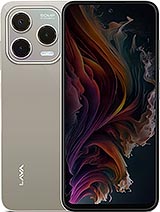
Shark 4G
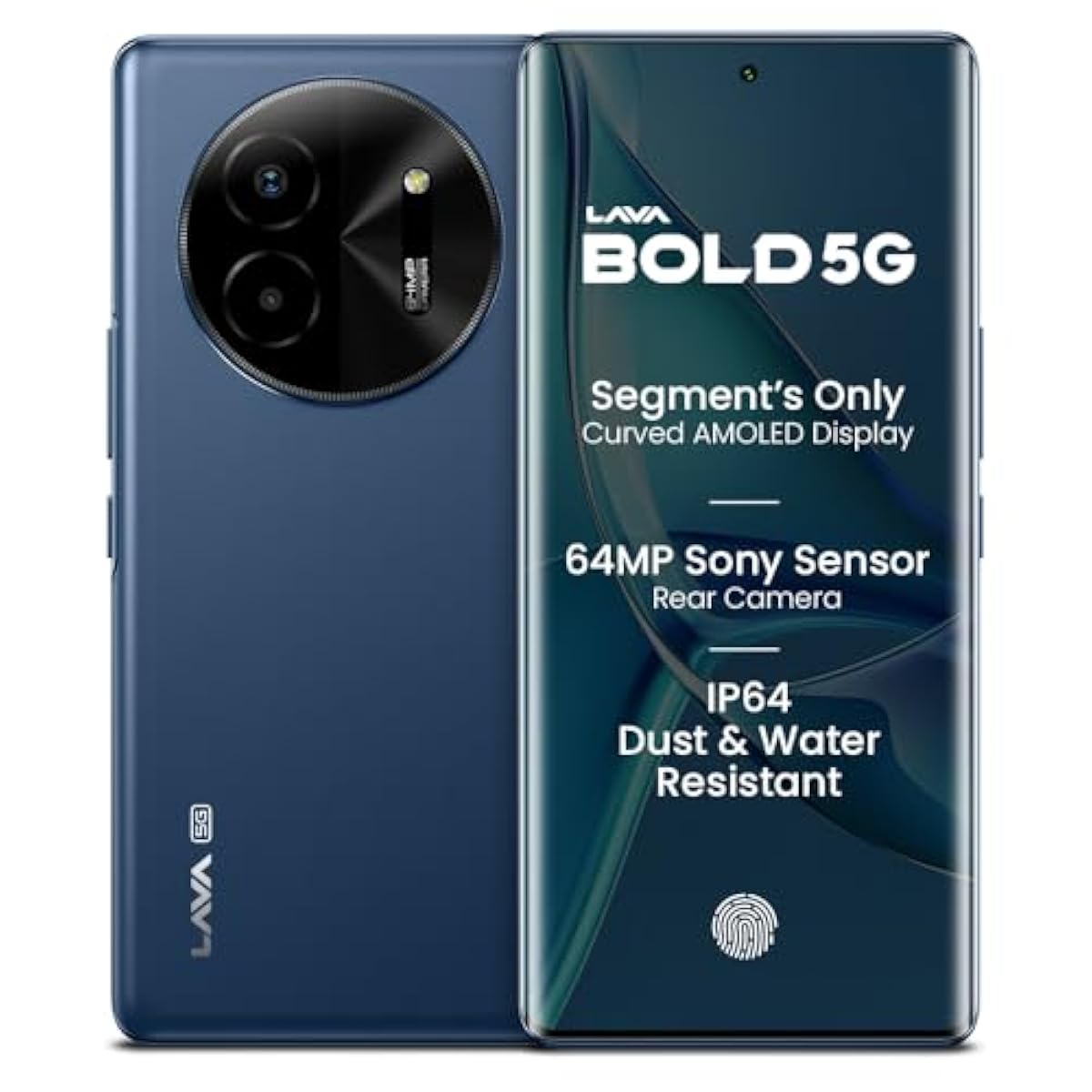
Lava Bold 5G
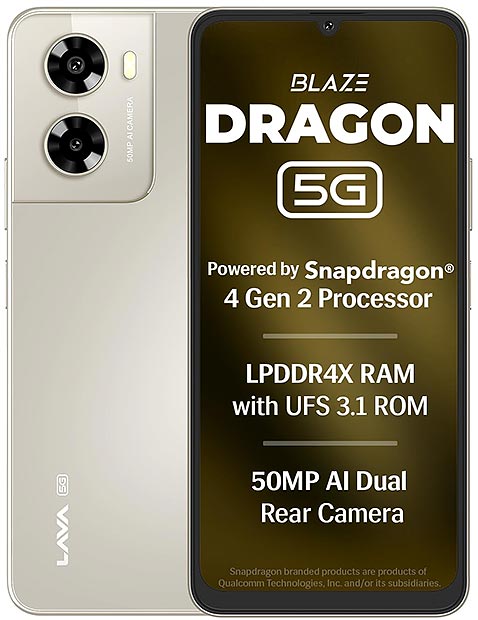
Lava Blaze Dragon 5G
Yuva 5G
Galaxy M17e