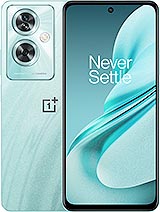
Lava Yuva 3 Pro review
The Lava Yuva 3 Pro suits first-time smartphone users and people who text, call, and browse far more than they game or consume media. If you are replacing a feature phone or need a durable backup that lasts days between charges, this is worth €100. If you watch video, play games, or multitask regularly, look at Realme or Poco's budget-tier offerings instead—you will find better performance for a few euros more."
This review is based on Lava’s published specifications and public benchmark data for the Lava Yuva 3 Pro, and the rating is spec-based. GoSolo does not physically test devices; where we estimate real-world behaviour such as battery life or charge time, we say so. How we rate phones.
Overview
The Lava Yuva 3 Pro is a bare-bones €100 LTE phone built for messaging, calling, and light browsing rather than gaming or content creation. It has the battery endurance you'd want at the price, but the chipset struggles with anything demanding and the camera is purely functional.
Design & build
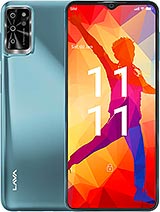
At 191g and 8.9mm thick, the Yuva 3 Pro feels more considered than its price suggests. The 6.52-inch frame with an 82% screen-to-body ratio gives it a modern proportions, though the display wraparound is not aggressive. Build materials are not stated, but the metallic paint options (Black, Blue, Grey) look decent in photos. For a device aimed at first-time or replacement buyers in emerging markets, it doesn't scream bottom-shelf. The form feels solid enough for daily carry, and the compact weight is a genuine plus if you use it one-handed or on a wrist strap.
Display
The 6.52-inch IPS LCD is bright enough for outdoor use and the 20:9 aspect ratio suits social media and messaging apps. At 269 ppi, however, text is soft; you'll notice pixelation when you read long email threads or small web copy at arm's length. The LCD panel avoids the contrast crush of some cheaper OLEDs, but it also means blacks are grey and the refresh rate (standard 60Hz, not 90Hz as one source claims) has no glide—scrolling feels responsive but not fluid. This is fine for a talk-and-text phone; if you spend hours on video or reading, the screen's limitations will grate.
Performance
The Unisoc T616 is built for efficiency, not speed, and it shows. WhatsApp, email, light web browsing, and apps like YouTube run without stutter. Open two or three apps at once on the 3GB RAM base model, and you'll feel the lag—the system reloads windows in the background rather than keeping them in memory. Gaming is off the table; Candy Crush level titles are fine, but anything with 3D graphics (PUBG, Genshin Impact) will drop frames or become unplayable at acceptable settings. If you are a casual user who checks social media and reads news, the T616 is adequate. If you multitask or game, it is a constraint you'll resent.
Camera
The 13MP main camera with PDAF and LED flash captures serviceable daylight shots with good detail and saturation. Video tops out at 1080p 30fps—broadcast quality, not cinema. Zoom is digital, so cropping in post defeats the sensor's resolution. Low-light photos are noticeably grainier than a phone at twice the price, and there is no ultra-wide or telephoto to expand your creative range. The 8MP selfie is adequate for video calls and social media. For someone who wants a camera that works without thinking, this delivers; for someone who wants to frame anything beyond point-and-shoot, the optics are a step too limited.
Battery & charging
The 5000 mAh cell is the phone's signature strength. Expect a full day on mixed use (messaging, calls, light video), with 20% left in the tank by evening. Heavy video streaming or gaming will deplete it faster, but for the target user—people who text far more than they video call—it is genuinely competitive. Charging at 18W takes about 90 to 120 minutes from empty. That is slow by 2024 standards, where €150+ phones offer 65W or faster. For a €100 device, it is acceptable but not ideal; you will not quick-charge during a lunch break.
Software & connectivity
Android 12 ships on a device announced in late 2022, so it is not cutting-edge but not antiquated. Lava's update track record is poor, and you should not expect major OS bumps. Connectivity covers the necessities: LTE bands 1, 3, 5, 8, 40, 41 (solid for most regions), Wi-Fi ac, Bluetooth 5.0, GPS, and FM radio. No 5G, no NFC. The FM radio is a small but real convenience in areas where data is spotty or expensive. The dedicated microSD slot means you can expand storage beyond the cramped 32GB base, a user-friendly choice many vendors have abandoned.
Value & verdict-context
At €100, the Yuva 3 Pro slots into a tier where performance is bargain-basement and durability is the gamble. It competes against used mid-range phones from two years ago and new budget alternatives from Realme, Poco, and Infinix. The Yuva 3 Pro's real value is simplicity and battery—if you want a phone for calls, texts, and browsing without the headache of flaky software or the need for frequent charging, it delivers. The weak processor and soft display are real drawbacks, not oversights; they are where Lava cut costs to hit the price. For a first phone or a rugged backup device, the trade-off is acceptable. For anyone who games, streams, or edits photos, it will frustrate.
Verdict
The Lava Yuva 3 Pro suits first-time smartphone users and people who text, call, and browse far more than they game or consume media. If you are replacing a feature phone or need a durable backup that lasts days between charges, this is worth €100. If you watch video, play games, or multitask regularly, look at Realme or Poco's budget-tier offerings instead—you will find better performance for a few euros more."
- 5000 mAh battery lasts a full day on mixed use and stays spare parts-friendly with a microSDXC slot
- Large 6.52-inch display with an 82% screen-to-body ratio makes the frame feel modern despite low-end guts
- Side-mounted fingerprint sensor and 3.5mm jack are still here, plus FM radio for areas without data coverage
- Lightweight at 191g and thin enough (8.9mm) that it doesn't feel cheap in hand
- Unisoc T616 chipset stumbles on any game or demanding app; even casual titles see visible frame drops
- 18W charging takes roughly two hours for a full charge—acceptable but slow by 2024 standards
- 269 ppi display is noticeably soft for text and fine details; 3GB RAM (base model) chokes when you open multiple apps
Lava Yuva 3 Pro Key Specifications
The essentials at a glance. See the full spec sheet.
| Released | 2022, October 11 |
|---|---|
| Display | 6.52 inches, 102.6 cm2 (~82.4% screen-to-body ratio), IPS LCD |
| Resolution | 720 x 1600 pixels, 20:9 ratio (~269 ppi density) |
| Chipset | Unisoc Tiger T616 (12 nm) |
| RAM & storage | 32GB 3GB RAM |
| Main camera | 13 MP, (wide), PDAF Auxiliary lenses |
| Selfie camera | 8 MP |
| Battery | 5000 mAh |
| Charging | 18W wired |
| Software | Android 12 |
| Dimensions | 164.4 x 75.8 x 8.9 mm (6.47 x 2.98 x 0.35 in) |
| Weight | 191 g (6.74 oz) |
| Network | GSM / HSPA / LTE |
| NFC | No |
| USB | USB Type-C 2.0, OTG |
Lava Yuva 3 Pro FAQ
Common questions, answered from the spec sheet.
Does the Yuva 3 Pro support 5G?
No. The Yuva 3 Pro tops out at GSM / HSPA / LTE, without 5G.
What chipset does the Yuva 3 Pro use?
The Yuva 3 Pro runs on the Unisoc Tiger T616 (12 nm).
What display does the Yuva 3 Pro have?
A 6.52 inches, 102.6 cm2 (~82.4% screen-to-body ratio) IPS LCD, 720 x 1600 pixels, 20:9 ratio (~269 ppi density).
How big is the Yuva 3 Pro battery?
The Yuva 3 Pro has a 5000 mAh battery. Charging is rated at 18W wired.
Does the Yuva 3 Pro have NFC?
No, the Yuva 3 Pro does not list NFC support.
Does the Yuva 3 Pro support a microSD card?
Yes, the Yuva 3 Pro supports expandable storage (microSDXC (dedicated slot)).
Does the Yuva 3 Pro have a headphone jack?
Yes, the Yuva 3 Pro has a 3.5mm headphone jack.
Alternatives to consider
If the Yuva 3 Pro isn’t quite right, these are the closest calls.
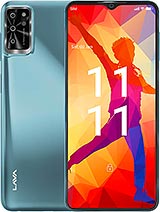
Yuva 2 Pro
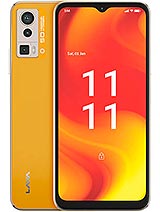
Blaze 2 Pro
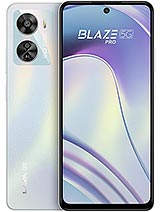
Blaze Pro 5G
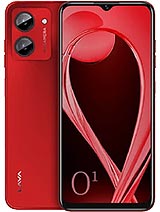
O1
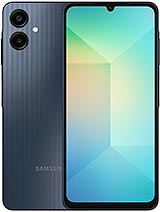
Galaxy A06