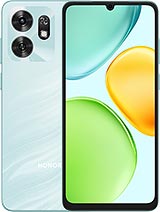
Lava Yuva 4 review
The Yuva 4 is for buyers who need a phone to last a full day of messaging and calling without fuss, have carrier-switching needs, or value the headphone jack and FM radio. Anyone planning to use more than a handful of apps simultaneously or facing data-heavy work should look at competitors with more RAM and a newer chip, even if the price climbs a little."
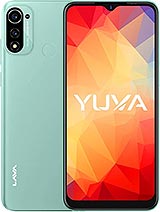
This review is based on Lava’s published specifications and public benchmark data for the Lava Yuva 4, and the rating is spec-based. GoSolo does not physically test devices; where we estimate real-world behaviour such as battery life or charge time, we say so. How we rate phones.
Overview
The Lava Yuva 4 is a 2021 budget phone with a large 6.5-inch screen and dual SIM that survives on a modest Helio G25 chip and 2GB RAM, serving buyers in India and emerging markets who need basic calling, messaging, and light apps without expectation of speed. It is honest entry-level work: no frills, no 5G, no fast charging, but a 4000mAh battery that will last a full day of moderate use and a headphone jack and FM radio still present.
Design & build
At 210g and 9.2mm thick, the Yuva 4 is unremarkable but solid. The metallic finish and dual-SIM nano trays feel durable enough for the price tier, though there is no gorilla glass or IP rating. The display bezels are chunky by modern standards, and the 81.8% screen-to-body ratio reflects budget-friendly engineering rather than efficiency. USB Type-C 2.0 is standard for 2021, though USB 2.0 speed (not 3.0) means slow file transfers. For a phone at this price in emerging markets, it checks the basics without pretending to be more.
Display
The 6.5-inch IPS LCD at 720 x 1600 pixels is a trade-off. At 270 ppi, individual pixels become faintly visible if you stare from 20cm away, but at normal arm's length, text and photos read clearly enough for social media, email, and video playback. The 20:9 aspect ratio feels tall and narrow—better for scrolling but awkward for gaming. There is no refresh rate mentioned in the specs, so assume 60Hz; scrolling will feel responsive enough against competitors at this price, though it will not feel as fluid as the 90Hz displays now common in this bracket.
Performance
The Mediatek Helio G25 is a 2019-era chip and it shows. Everyday apps—WhatsApp, Gmail, YouTube, light web browsing—run without stuttering, but any attempt at multitasking (several Chrome tabs, music in background, switching apps) reveals the limits of 2GB RAM and the octa-core Cortex-A53 design. Gaming is a non-starter except for casual 2D titles; 3D games will lag. Android 11 Go edition strips down the OS for these low specs, removing features and RAM-hungry services, which means faster boot times but also a less polished feel. For a worker taking calls and messages all day, it works. For anything heavier, it does not.
Camera
The 8MP rear sensor with LED flash shoots decent photos in bright daylight, and HDR helps balance exposure. Autofocus is useful, though at this resolution and sensor size, zoom crops soft fast. Low-light shots rely on the LED flash, which produces harsh lighting in close quarters. The 5MP selfie camera is adequate for video calls but unremarkable. Video tops out at 1080p at 30fps—no 4K, no 60fps, no slow-motion—which is ordinary for this class and year, though rivals at this price sometimes offer slightly better sensors now. Do not expect portrait mode, night mode, or computational photography.
Battery & charging
The 4000mAh battery is modest but aligns with the phone's power consumption. Light users—messaging, calls, light web browsing, social media—should expect about 1.5 days of use. Heavy video playback or gaming will drain it to a single day. The 10W charging speed is a real drawback: two-plus hours from empty to full, which forces overnight charging or significant downtime. Rivals at this price often include 15W or 18W by 2021, so Lava is behind. There is no fast-charging trick to mitigate the battery size.
Software & connectivity
Android 11 Go edition is streamlined for low-spec hardware, which means it boots faster and uses less memory, but it also lacks features and feels noticeably stripped compared to stock Android on higher-end phones. Lava's update track record for budget phones is patchy; expect security updates to drop off within a year or two. On the connectivity side, LTE (4G) support covers most populated areas in India and Africa, but no 5G. Wi-Fi is limited to 802.11 b/g, which is slow by today's standard (no ac or 6); expect 30-50 Mbps on a good day rather than the 100+ Mbps of modern routers. Bluetooth 5.0 is fine for headsets. Dual SIM is valuable for workers switching carriers or regions.
Value & verdict
At about 80 EUR (roughly 6500–7500 INR in India, or similar in other emerging markets), the Yuva 4 is a bare-minimum smartphone: calls, messages, light apps, nothing more. It is not weak for the price—the battery life, headphone jack, dual SIM, and microSD slot offer practical value—but it is also not a deal by 2021 standards. The 2GB RAM and Helio G25 chip are already dated, and Android Go edition signals compromise over capability. Buyers in this segment typically choose between this and slightly more expensive alternatives with better RAM, faster chips, or larger batteries. The Yuva 4 suits someone in a low-signal area who needs long battery life and dual carriers, or a parent buying a first phone for a child with minimal data. Anyone with real app needs should stretch to 32–40 EUR more and buy a 2021 phone with 4GB RAM and a more modern chip.
Verdict
The Yuva 4 is for buyers who need a phone to last a full day of messaging and calling without fuss, have carrier-switching needs, or value the headphone jack and FM radio. Anyone planning to use more than a handful of apps simultaneously or facing data-heavy work should look at competitors with more RAM and a newer chip, even if the price climbs a little."
- Dual SIM with microSDXC expansion slot, useful for switching carriers or storing apps and photos without relying on cloud
- 3.5mm headphone jack and FM radio present—increasingly rare and valued in India and parts of Africa
- Large 6.5-inch display at 270 ppi stays legible for reading and browsing despite the 720p resolution
- 4000mAh battery with modest power consumption should deliver a full day of light to moderate use without stress
- Only 2GB RAM with 32GB storage leaves almost no breathing room; multitasking stutters and storage fills quickly without microSD expansion
- Mediatek Helio G25 is ageing and struggles with any demanding app or game; Android 11 Go edition is stripped-down and will feel bare
- 10W charging is glacially slow—two-plus hours to full from empty, and battery capacity only compounds the wait
Lava Yuva 4 Key Specifications
The essentials at a glance. See the full spec sheet.
| Released | 2021 |
|---|---|
| Display | 6.5 inches, 102.0 cm2 (~81.8% screen-to-body ratio), IPS LCD |
| Resolution | 720 x 1600 pixels, 20:9 ratio (~270 ppi density) |
| Chipset | Mediatek Helio G25 (12 nm) |
| RAM & storage | 32GB 2GB RAM |
| Main camera | 8 MP, (wide) Auxiliary lens |
| Selfie camera | 5 MP |
| Battery | 4000 mAh |
| Charging | 10W wired |
| Software | Android 11 (Go edition) |
| Dimensions | 164.6 x 75.8 x 9.2 mm (6.48 x 2.98 x 0.36 in) |
| Weight | 210 g (7.41 oz) |
| Network | GSM / HSPA / LTE |
| NFC | No |
| USB | USB Type-C 2.0, OTG |
Lava Yuva 4 FAQ
Common questions, answered from the spec sheet.
Does the Yuva 4 support 5G?
No. The Yuva 4 tops out at GSM / HSPA / LTE, without 5G.
What chipset does the Yuva 4 use?
The Yuva 4 runs on the Mediatek Helio G25 (12 nm).
What display does the Yuva 4 have?
A 6.5 inches, 102.0 cm2 (~81.8% screen-to-body ratio) IPS LCD, 720 x 1600 pixels, 20:9 ratio (~270 ppi density).
How big is the Yuva 4 battery?
The Yuva 4 has a 4000 mAh battery. Charging is rated at 10W wired.
Does the Yuva 4 have NFC?
No, the Yuva 4 does not list NFC support.
Does the Yuva 4 support a microSD card?
Yes, the Yuva 4 supports expandable storage (microSDXC (dedicated slot)).
Does the Yuva 4 have a headphone jack?
Yes, the Yuva 4 has a 3.5mm headphone jack.
Alternatives to consider
If the Yuva 4 isn’t quite right, these are the closest calls.
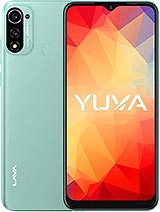
Yuva 3
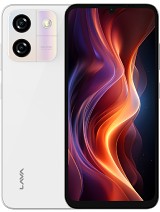
Yuva Star
Yuva Star 2
Blaze X
Y50 5G