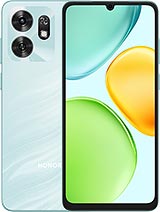
Lava Yuva Star review
The Yuva Star suits buyers in markets where battery endurance, a headphone jack, and expandable storage are daily necessities and screen sharpness is a nice-to-have. Anyone expecting a modern display or performance for media and apps should look elsewhere; a slightly higher budget brings far sharper screens and faster hardware.
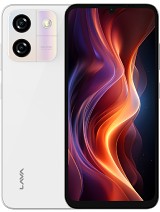
This review is based on Lava’s published specifications and public benchmark data for the Lava Yuva Star, and the rating is spec-based. GoSolo does not physically test devices; where we estimate real-world behaviour such as battery life or charge time, we say so. How we rate phones.
Overview
The Lava Yuva Star is a 2024 budget phone aimed at light daily use, with a 5000 mAh battery and 3.5mm jack that appeal to cost-conscious users in markets where those features matter. The low-resolution 720p display and entry-level Unisoc chipset mean you're sacrificing smoothness and can't handle demanding apps or gaming.
Design & build
The Yuva Star weighs 193 g and is 8.8 mm thick, which is light and slim for its 6.75-inch footprint. The phone sits comfortably in one hand and fits shallow pockets. The finish is glossy (in black, lavender, or white), so fingerprints will show, but that's typical for this price. Nano-SIM + Nano-SIM dual-slot support is useful for regional users juggling work and personal numbers, or travellers rotating SIMs. The side-mounted fingerprint sensor is a practical touch for unlock speed, though in practice the optical or in-display sensors you'd see at twice the price are faster and more reliable.
Display
The 6.75-inch IPS LCD is large and useful for video calls, reading articles, and streaming, and the 87.6% screen-to-body ratio is decent bezel management for an affordable phone. However, 720 × 1600 pixels yields 260 ppi, which is noticeably softer than the 300+ ppi standard budget phones have settled on since 2022. Text and fine details lack crispness; you'll notice it scrolling through news or messaging apps, especially if you've used a phone from the prior tier. Refresh rate and peak brightness specs are absent from the sheet, so assume a standard 60 Hz refresh and modest sunlight legibility, not outdoor-in-bright-sun performance.
Performance
The Unisoc SC9863A is an eight-core entry-level chip built on 28 nm process. With 3 or 4 GB RAM, it handles everyday tasks—calling, messaging, light social media, basic browsing—at normal speed. Android 14 (Go edition) is optimised for modest hardware, so the OS doesn't bog down on such a chip. However, demanding games, heavy multitasking, or media editing will stall visibly. This is a phone for people who open one app at a time, not those juggling work tools or gaming in downtime. The IMG8322 GPU is competent for 2D graphics but not for 3D gaming.
Software
Android 14 (Go edition) is a streamlined variant of Android designed for low-ram, low-storage devices. Updates are typically lighter, the Play Store is filtered to exclude bloated apps, and the overall feel is faster on weak hardware than full Android would be. That said, Go edition does impose some limits: storage space feels tight on a 64 GB phone (system takes roughly 10–12 GB), and certain apps don't run or run in simplified form. For a phone aimed at calls, messaging, and light browsing, this is not a blocker, but if you plan to sideload larger apps or expect the full Android experience, this will surprise you.
Camera
The 13 MP main camera shoots 1080p video and includes LED flash, HDR, and panorama mode. In good daylight, photos are acceptable and colour rendering is fine for a budget sensor. However, there's no optical zoom or ultra-wide lens, so framing distant subjects or group shots is a compromise—you'll step back or crop later. The 5 MP selfie camera is adequate for video calls and casual selfies, but low resolution means fine details vanish in reviews. Low-light performance will be grainy; this is a daylight camera, not a versatile one.
Battery & charging
The 5000 mAh battery is generous for a 2024 budget phone. With typical light use—calling, messaging, social media, occasional video—you'll reach evening and sometimes overnight. Heavy video streaming or gaming will drain it by afternoon, as is true of any modest battery. Charging at 10W takes about 2 to 2.5 hours from empty; that's slow by current standards, where budget rivals now offer 30W and upwards. If you need the phone ready fast, you'll feel the wait. The inclusion of a 3.5mm jack means you can charge while listening on wired headphones, a small convenience no longer available on most phones.
Value & verdict
At around 70 EUR, the Yuva Star is aimed at users who prioritise battery longevity, a headphone jack, and a large screen over cutting-edge display sharpness or speed. For light daily use in emerging markets where a phone needs to last many hours between charging, this hits a real need. The 720p display is the main compromise for the price; most budget rivals at this cost have moved to 90+ ppi in the past two years, and the softness here will feel like a step backward if you've used newer phones. The entry-level chipset and basic camera rule out gaming and serious photography. If you want a phone that simply calls, texts, and browses without complaint and doesn't need to impress on screen clarity, this delivers. Otherwise, spending 10–15 EUR more unlocks sharper displays and faster chips.
Verdict
The Yuva Star suits buyers in markets where battery endurance, a headphone jack, and expandable storage are daily necessities and screen sharpness is a nice-to-have. Anyone expecting a modern display or performance for media and apps should look elsewhere; a slightly higher budget brings far sharper screens and faster hardware.
- 5000 mAh battery and 10W charging are modest but standard for the budget tier; with light use (messaging, calls, social media), you'll reach evening comfortably
- Dedicated microSD slot and 3.5mm headphone jack remain, which matters if you rely on wired audio or need storage expansion without fussing with cloud
- Large 6.75-inch screen is useful for reading and video, even if pixel density is low; 87.6% screen-to-body ratio minimizes bezels for the size
- Android 14 (Go edition) keeps the OS lean and responsive on minimal hardware, and dual SIM support is practical for work/personal or roaming users
- 720 × 1600 resolution at 260 ppi looks soft and lacks sharpness for reading text or viewing photos, a real step down from the budget mainstream which has moved to 90+ ppi
- 10W charging takes about 2 to 2.5 hours from empty; rivals in this price bracket now offer 30W and above, making this feel slow if you're in a hurry
- Single 13 MP camera with no zoom or ultra-wide lens means distant or group shots lose detail quickly; 1080p video is basic by 2024 standards
Lava Yuva Star Key Specifications
The essentials at a glance. See the full spec sheet.
| Released | 2024, August 06 |
|---|---|
| Display | 6.75 inches, 110.0 cm2 (~87.6% screen-to-body ratio), IPS LCD |
| Resolution | 720 x 1600 pixels, 20:9 ratio (~260 ppi density) |
| Chipset | Unisoc SC9863A (28 nm) |
| RAM & storage | 64GB 3GB RAM, 64GB 4GB RAM |
| Main camera | 13 MP, (wide), AF auxiliary lens |
| Selfie camera | 5 MP |
| Battery | 5000 mAh |
| Charging | 10W wired |
| Software | Android 14 (Go edition) |
| Dimensions | 165 x 76.1 x 8.8 mm (6.50 x 3.00 x 0.35 in) |
| Weight | 193 g (6.81 oz) |
| Network | GSM / HSPA / LTE |
| NFC | No |
| USB | USB Type-C 2.0, OTG |
Lava Yuva Star FAQ
Common questions, answered from the spec sheet.
Does the Yuva Star support 5G?
No. The Yuva Star tops out at GSM / HSPA / LTE, without 5G.
What chipset does the Yuva Star use?
The Yuva Star runs on the Unisoc SC9863A (28 nm).
What display does the Yuva Star have?
A 6.75 inches, 110.0 cm2 (~87.6% screen-to-body ratio) IPS LCD, 720 x 1600 pixels, 20:9 ratio (~260 ppi density).
How big is the Yuva Star battery?
The Yuva Star has a 5000 mAh battery. Charging is rated at 10W wired.
Does the Yuva Star have NFC?
No, the Yuva Star does not list NFC support.
Does the Yuva Star support a microSD card?
Yes, the Yuva Star supports expandable storage (microSDXC (dedicated slot)).
Does the Yuva Star have a headphone jack?
Yes, the Yuva Star has a 3.5mm headphone jack.
Alternatives to consider
If the Yuva Star isn’t quite right, these are the closest calls.
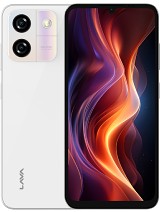
Yuva Star 2
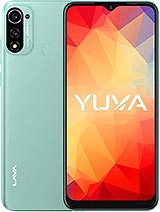
Yuva 3
Blaze X
Yuva 4
Y50 5G