Lenovo Legion Tab review
This tablet is built for the mobile gamer or video watcher who values compactness and raw compute over fast charging and outdoor versatility. If you live in a climate where you game or stream mostly indoors and you have access to a plug for an hour or more each evening, the performance and portability justify the spend. Anyone expecting flagship-tier charging speeds or brightness should cross-shop larger rivals or devices released later in 2025.
This review is based on Lenovo’s published specifications and public benchmark data for the Lenovo Legion Tab, and the rating is spec-based. GoSolo does not physically test devices; where we estimate real-world behaviour such as battery life or charge time, we say so. How we rate phones.
Overview
The Legion Tab is a compact 8.8-inch tablet built around the still-capable Snapdragon 8+ Gen 1 and a punchy 144Hz display, hitting the sweet spot for mobile gaming and media without the bulk of larger slates. At 380 EUR it undercuts rivals with similar power, but slower 45W charging and 500-nit brightness limit its appeal in a world where 100W+ and AMOLED are becoming standard for the price.
Design & build
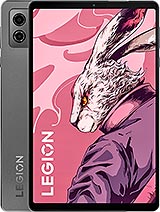
At 350g and 7.6mm thick, this tablet punches above its class in portability. It slots between phone and full-size iPad without the deadweight of larger slates, and the 16:10 screen ratio keeps it relatively narrow for one-hand grip. The Storm Grey finish and tight bezels suggest Lenovo did not cut corners on the chassis, though the spec sheet offers no detail on materials or drop testing. For a device at this price aimed at gamers, durability feels like an afterthought, but the footprint alone sets it apart from ten-inch models that dominate store shelves.
Display
The 144Hz refresh and 1600×2560 resolution work in concert to make scrolling buttery and gaming fluid without the spec-sheet bloat of higher res. At 343 ppi, text is crisp and edges are clean; there is no visible pixelation at arm's length. Dolby Vision and HDR10 support are nice touches, though the 500-nit typical brightness is the real limitation. Outdoor daylight will wash it out faster than competitors offering 1000+ nits, and you will find yourself hunting for shade or cupping the screen during midday video sessions. For indoor gaming and video streaming, it shines.
Performance
The Snapdragon 8+ Gen 1, paired with 12GB RAM, is a two-year-old flagship chip but still overkill for anything Android throws at it. PUBG Mobile, Genshin Impact, and Honkai Star Rail run on high settings without frame drops, and switching between dozens of apps feels snappy. Gaming load times are quick. The Adreno 730 GPU has enough muscle that you will not feel held back by anything in the Play Store, and the 256GB UFS 3.1 storage is fast enough that app launches and file transfers do not lag. For a tablet aimed at gamers and power users, this chipset is the right call, even if it is not cutting-edge in mid-2024.
Software
Android 13 shipped with the tablet in August 2024, so it is already a minor version behind by review time. Lenovo has not spelled out how many years of updates to expect, which is a concern at any price. The interface is close to stock Android with minimal bloat, though JBL has tuned the audio stack for what Lenovo claims is richer sound. In practice, the dual stereo speakers are loud and clear, well-suited to gaming and video, though they do not rival proper tablet audio systems. One OS release behind is not a deal-breaker for a gaming tablet, but buyers shopping in 2025 or later should confirm ongoing support.
Camera
The rear 13MP main sensor plus 2MP macro is pedestrian and reflective of tablet design priorities. Video tops out at 1080p, and low-light photos will show noise and loss of detail faster than a modern phone. The 8MP front camera handles video calls decently if the lighting is kind. If you are buying this as a note-taking or document-scanning companion, the cameras will get the job done; if you are expecting DSLR-grade stills, you will be disappointed. For a gaming tablet, camera chops are a distant afterthought, and Lenovo has treated them accordingly.
Battery & charging
The 6550 mAh battery yields roughly 10–12 hours of screen-on time under medium gaming or heavy streaming, enough for a long travel day or afternoon into evening before panic mode. Quick Charge 3.0 at 45W is where the tab stumbles. Competitors at this price now deploy 100W+ charging, pulling a full battery in 20–30 minutes; this tablet needs 60–90 minutes, which feels slow when you are chasing every minute of screen time. If you game heavily or consume video in marathon sessions, slow charging means planning ahead or living tethered to a wall for an hour-plus each evening.
Value & verdict
At 380 EUR, the Legion Tab asks for a clear choice: portability and gaming grunt over speed of refill. The Snapdragon 8+ Gen 1 at this price is a bargain compared to flagship phones, and the compact chassis makes it genuinely pocketable where ten-inch slates are not. The microSD slot is a real feature most flagships axed years ago. Against that sits slower charging than you will find in rivals, weaker brightness for daylight use, and cameras that exist only out of obligation. For mobile gamers who game mostly indoors and do not mind a 90-minute charge cycle, this is a solid value play. For anyone who expects a modern tablet at modern prices to recharge in under an hour or handle direct sun, look elsewhere.
Verdict
This tablet is built for the mobile gamer or video watcher who values compactness and raw compute over fast charging and outdoor versatility. If you live in a climate where you game or stream mostly indoors and you have access to a plug for an hour or more each evening, the performance and portability justify the spend. Anyone expecting flagship-tier charging speeds or brightness should cross-shop larger rivals or devices released later in 2025.
- Snapdragon 8+ Gen 1 and 12GB RAM handle AAA mobile games and heavy multitasking with zero stutter
- 144Hz 1600×2560 IPS screen is sharp (343 ppi) and smooth for scrolling and gaming, with Dolby Vision support
- Compact 350g, 7.6mm form factor feels light and pocketable for an 8.8-inch tablet
- microSD slot up to 1TB expansion is a genuine asset in a 2024 tablet
- 45W charging tops out well below 100W rivals now deliver at similar prices; expect 60–90 minutes to full, not 20–30
- 500-nit peak brightness struggles in direct sunlight despite the high refresh rate, limiting outdoor use
- 13MP rear camera and 8MP front are functional but uninspiring, adequate only for casual video calls and snapshots
Lenovo Legion Tab Key Specifications
The essentials at a glance. See the full spec sheet.
| Released | 2024, August 13 |
|---|---|
| Display | 8.8 inches, 224.5 cm2 (~83.2% screen-to-body ratio), IPS LCD, 144Hz, Dolby Vision, HDR10, 500 nits (typ) |
| Resolution | 1600 x 2560 pixels, 16:10 ratio (~343 ppi density) |
| Chipset | Qualcomm SM8475P Snapdragon 8+ Gen 1 (4 nm) |
| RAM & storage | 256GB 12GB RAM |
| Main camera | 13 MP, (wide) 2 MP (macro) |
| Selfie camera | 8 MP |
| Battery | 6550 mAh |
| Charging | Quick Charge 3.0 up to 45 W |
| Software | Android 13 |
| Dimensions | 208.5 x 129.5 x 7.6 mm (8.21 x 5.10 x 0.30 in) |
| Weight | 350 g (12.35 oz) |
| Network | No cellular connectivity |
| NFC | No |
| USB | 2x USB Type-C 3.1 Gen2, DisplayPort 1.4 |
Lenovo Legion Tab FAQ
Common questions, answered from the spec sheet.
Does the Legion Tab support 5G?
No. The Legion Tab tops out at No cellular connectivity, without 5G.
What chipset does the Legion Tab use?
The Legion Tab runs on the Qualcomm SM8475P Snapdragon 8+ Gen 1 (4 nm).
What display does the Legion Tab have?
A 8.8 inches, 224.5 cm2 (~83.2% screen-to-body ratio) IPS LCD, 144Hz, Dolby Vision, HDR10, 500 nits (typ), 1600 x 2560 pixels, 16:10 ratio (~343 ppi density).
How big is the Legion Tab battery?
The Legion Tab has a 6550 mAh battery. Charging is rated at Quick Charge 3.0 up to 45 W.
Does the Legion Tab have NFC?
No, the Legion Tab does not list NFC support.
Does the Legion Tab support a microSD card?
Yes, the Legion Tab supports expandable storage (microSDXC (dedicated slot)).
Alternatives to consider
If the Legion Tab isn’t quite right, these are the closest calls.
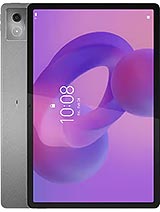
Idea Tab Pro

Legion Tab 8.8 Gen 3
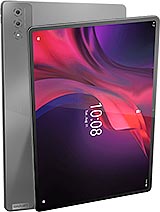
Tab Extreme

Yoga Pad Pro AI

MatePad Pro 12.2