LG G3 A review
This phone is not a functional device anymore; it is a curiosity. The only audience for it is collectors or people who want to experience 2014 industrial design in person. Anyone looking for a working phone should pass."
This review is written with AI assistance from LG’s published specifications and public benchmark data for the LG G3 A, and the rating is spec-based. GoSolo does not physically test devices; where we estimate real-world behaviour such as battery life or charge time, we say so. How we rate phones.
Overview
The G3 is a 2014 flagship that feels slim and light thanks to its 8.9mm body, and the 1440p 5.5-inch display was genuinely sharp for its time. Today it's a relic: the Snapdragon 801 is slow by modern standards, the 3000mAh battery is small, and Android 4.4 cannot be safely used on the modern internet.
Design & build
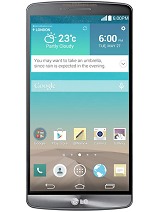
The G3 is objectively one of the thinnest phones ever made, and it still impresses when you hold it. At 8.9mm and 149g, it feels insubstantial in a way modern flagships intentionally avoid. The frame is plastic, the back is plastic, and the Gorilla Glass 3 front is what it is for 2014, but the overall feel is sophisticated for the era. Weight distribution is good. This phone was built to be thin first and tough second, which is fine if you accept that trade; it was a deliberate choice, not a failure.
Display
The 1440 x 2560 5.5-inch IPS panel at 538ppi was a headline feature in 2014, and it remains visually sharp. Text is crisp, colours are accurate for IPS, and the aspect ratio is 16:9, which modern apps may not fill perfectly. By today's standards, 75.3% screen-to-body ratio looks chunky—thick bezels top and bottom, audible bezels either side. Refresh rate is 60Hz only, of course. The display ages reasonably; it is not OLED burn-in prone, but it will not match the brightness or fluidity of current phones.
Performance
The Snapdragon 801 at 2.5GHz was flagship-class in 2014. In 2025, it is unusable for anything modern. Android 6.0 (Marshmallow) is the maximum, released a decade ago, and the combination of dual-core or quad-core depending on load, 2–3GB RAM, and eMMC 5.0 storage means opening a web browser or social media app will cause visible lag and freezes. Benchmarks from 2014 are meaningless now; what matters is that this phone will struggle to run current versions of everyday apps, and many will refuse to install at all. Even simple tasks feel sluggish compared to a mid-range phone from 2024.
Software
Android 4.4 KitKat shipped with the G3; it can upgrade to 6.0 Marshmallow, which added better battery management and a few refinements but is still a decade old. No security patches since 2015 or so, which means this phone is unsafe for banking, email, or messaging if the accounts matter to you. App support has evaporated; newer apps will not run, and older versions installed beforehand will degrade. If you want a working Android phone, this is not a realistic path forward unless you keep it offline and use it only as a media player or alarm clock.
Camera
The 13MP main camera with f/2.4 aperture, optical image stabilisation, and laser autofocus was respectable in mid-2014 and competitive. 4K recording at 30fps was a feature most flagships lacked that year. The 2.1MP selfie camera is typical of the era and weak by any standard. In practical terms, the main camera will still take acceptable daylight photos, but noise, dynamic range, and color science will look flat and dated compared to modern phones. The real problem is that modern apps won't run, so you cannot easily share or process these images on the device itself.
Battery & charging
The 3000mAh battery was adequate for a 5.5-inch phone in 2014, but modern usage and inefficient hardware mean the G3 today will deliver around 4–5 hours of mixed web, app, and social use before needing a charge. Standby is not the issue; it is active use that drains quickly. The upside is that the battery is removable, which was a real benefit before fast charging became standard; you can swap in a spare battery if you kept one. There is no fast charging, and microUSB 2.0 was slow even then. For intermittent use only, this phone is frustrating.
Value & context
The G3 launched at approximately €300 in 2014, making it expensive for its day. Today, it is a museum piece masquerading as a phone. The design and display were exceptional a decade ago; the performance was decent for 2014. Now every aspect of the experience is compromised by obsolescence. If you are looking for a working Android smartphone, do not buy this. If you are nostalgic for how phones felt ten years ago and have no intention of using it for real work, it is a remarkable artifact of industrial design. For a GoSolo readership in the global south where budget and durability matter, a low-cost modern phone from 2024 or 2025 will be faster, safer, and longer-lasting than a refurbished G3.
Verdict
This phone is not a functional device anymore; it is a curiosity. The only audience for it is collectors or people who want to experience 2014 industrial design in person. Anyone looking for a working phone should pass."
- Display resolution of 538ppi was exceptional in 2014 and still renders text and images crisply
- At 8.9mm thick and 149g, it remains one of the slimmest phones ever made; lighter than most current flagships
- 13MP camera with OIS and laser AF held its own against rivals of the year; 4K recording was rare then
- MicroSD slot and removable battery were genuine conveniences that all modern flagships abandoned
- Snapdragon 801 and 2–3GB RAM are far too slow for modern apps; expect stuttering and frequent crashes on current Android
- 3000mAh battery combined with inefficient older hardware means realistically 4–5 hours of mixed use today
- Maximum OS is Android 6.0 (Marshmallow, 2015); no security updates for a decade and incompatible with modern app stores
LG G3 A Key Specifications
The essentials at a glance. See the full spec sheet.
| Released | 2014, May. Released 2014, June |
|---|---|
| Display | 5.5 inches, 82.2 cm2 (~75.3% screen-to-body ratio), True HD-IPS + LCD |
| Resolution | 1440 x 2560 pixels, 16:9 ratio (~538 ppi density) |
| Chipset | Qualcomm MSM8974AC Snapdragon 801 (28 nm) |
| RAM & storage | 16GB 2GB RAM, 32GB 3GB RAM |
| Main camera | 13 MP, f/2.4, 29mm (standard), 1/3.1", 1.12µm, PDAF, OIS |
| Selfie camera | 2.1 MP, f/2.0 |
| Battery | 3000 mAh |
| Software | Android 4.4.2 (KitKat), upgradable to 6.0 (Marshmallow) |
| Dimensions | 146.3 x 74.6 x 8.9 mm (5.76 x 2.94 x 0.35 in) |
| Weight | 149 g (5.26 oz) |
| Build | Glass front (Gorilla Glass 3), plastic back, plastic frame |
| Network | GSM / HSPA / LTE |
| NFC | Yes |
| USB | microUSB 2.0 (SlimPort), OTG |
LG G3 A FAQ
Common questions, answered from the spec sheet.
Does the G3 A support 5G?
No. The G3 A tops out at GSM / HSPA / LTE, without 5G.
What chipset does the G3 A use?
The G3 A runs on the Qualcomm MSM8974AC Snapdragon 801 (28 nm).
What display does the G3 A have?
A 5.5 inches, 82.2 cm2 (~75.3% screen-to-body ratio) True HD-IPS + LCD, 1440 x 2560 pixels, 16:9 ratio (~538 ppi density).
How big is the G3 A battery?
The G3 A has a 3000 mAh battery.
Does the G3 A have NFC?
Yes, the G3 A has NFC.
Does the G3 A support a microSD card?
Yes, the G3 A supports expandable storage (microSDXC (dedicated slot)).