LG Phoenix 2 review
The LG Phoenix was a budget phone for 2011, suitable only for people making phone calls and texts and willing to tolerate a tiny screen and slow performance. By any current standard—or even by the judgment of a 2011 buyer with options—it is too slow, too small, and too storage-constrained to recommend; it is a discontinued device with no place in today's market.
This review is written with AI assistance from LG’s published specifications and public benchmark data for the LG Phoenix 2, and the rating is spec-based. GoSolo does not physically test devices; where we estimate real-world behaviour such as battery life or charge time, we say so. How we rate phones.
Overview
The LG Phoenix is a compact budget Android phone from 2011 with a tiny 3.2-inch display, 600 MHz processor, and 1500 mAh battery—essentially a point-and-shoot phone that happened to run Android. It was affordable and light for its time, but even then it was underpowered and storage-starved; today it is a museum piece with no relevance to any buyer.
Design & Build
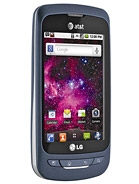
The Phoenix is genuinely pocket-friendly at 91 grams and 13 mm thick, a real featherweight by any era's standard. At 3.2 inches and in violet, it looks like a colorful toy compared to modern phones. The build quality on budget LG phones of this period was passable but not memorable—it feels plastic-y and cheap. For 2011, the compact size was a selling point for buyers who found even the original iPhone too large; by today's perspective it is cramped and almost claustrophobic to use.
Display
The 3.2-inch TFT screen with 320x480 resolution and 180 ppi density is dim, washed out, and has a 45% screen-to-body ratio, meaning thick bezels and not much usable space. Text is small and the colors are flat and lifeless—typical of budget TFT panels from that era. Even for 2011, this was not a strong point; budget competitors like the HTC Wildfire had similarly cramped screens, but the Phoenix did not stand out. Viewing angles are poor and outdoor visibility is poor.
Performance
The 600 MHz Snapdragon S1 with 512 MB of RAM (not listed but typical for this chipset) is the bottleneck that defines the phone. Android 2.2 Froyo (upgradable to 2.3 Gingerbread) loads, but slowly and with frequent stuttering. Opening a second app while one is still running will lag noticeably. Games and intensive tasks are out of the question. Even in 2011, this was entry-level; a buyer stepping up to a mid-range Android phone that year would feel a dramatic difference. The Adreno 200 GPU does not help—it was underpowered even then.
Camera
The 3.15 MP fixed-focus camera produces grainy, soft images in poor light and is serviceable only in bright daylight. Autofocus is listed, but the image processing is basic and there is no flash. Video recording exists but is low resolution. By 2011 budget standards, 3 MP was common, so this was not a weakness relative to peers, but it was never a strength. You get a basic point-and-shoot camera, nothing more.
Battery & Charging
The 1500 mAh removable battery delivers about 7.5 hours of talk time and 20 days of standby (per the spec sheet), meaning you are charging this phone every single day or carrying a spare battery. Even for 2011, this was tight; rivals in the budget segment often hit 2000+ mAh. The removable battery was a genuine bonus because it let you swap in a fresh one in the field, but that only masks the real problem: the battery is simply too small for a day's use.
Software & Storage
Android 2.2 runs, but 160 MB of internal storage is the killer flaw. The system alone consumes most of it, leaving almost no room for apps or updates. The included 2 GB microSD card is essential, not a perk. Apps cannot run from the card, and many applications of even modest size will not fit on the phone. Even by 2011 standards, 160 MB was considered stingy; peers often shipped with 256 MB or more. Gingerbread support is a minor plus, but it does not fix the core limitation.
Value & Verdict
At 140 EUR (roughly $150-170 USD at the time), the Phoenix was positioned as a gateway to Android for people who wanted a cheap smartphone without a contract subsidy. It delivered that, but the tradeoffs were severe: a tiny screen, weak processor, and storage nightmare. In 2011, you could stretch slightly more and get a HTC Wildfire or a used original Motorola Droid, which were faster and had better screens. Today, the Phoenix is a curiosity for collectors of mobile history, not a functional device for anyone who expects email, messaging, or basic apps to work smoothly.
Verdict
The LG Phoenix was a budget phone for 2011, suitable only for people making phone calls and texts and willing to tolerate a tiny screen and slow performance. By any current standard—or even by the judgment of a 2011 buyer with options—it is too slow, too small, and too storage-constrained to recommend; it is a discontinued device with no place in today's market.
- Extremely compact and light at 91 grams
- FM radio and removable battery (rare by today's standards)
- Included 2GB microSD card provided some relief to the 160MB internal storage
- 160MB of internal storage is cripplingly small even by 2011 budget standards, leaving almost no room for apps
- 600 MHz single-core Snapdragon S1 struggles with Android itself; any multitasking is painful
- 1500 mAh battery gives only about 7.5 hours of talk time, requiring daily charging
LG Phoenix 2 Key Specifications
The essentials at a glance. See the full spec sheet.
| Released | 2011, April. Released 2011, April 17 |
|---|---|
| Display | 3.2 inches, 30.5 cm2 (~45.3% screen-to-body ratio), TFT, 256K colors |
| Resolution | 320 x 480 pixels, 3:2 ratio (~180 ppi density) |
| Chipset | Qualcomm MSM7227 Snapdragon S1 |
| RAM & storage | 160MB |
| Main camera | 3.15 MP, AF |
| Selfie camera | No |
| Battery | 1500 mAh |
| Software | Android 2.2 (Froyo), upgradable to 2.3 (Gingerbread) |
| Dimensions | 114 x 59 x 13 mm (4.49 x 2.32 x 0.51 in) |
| Weight | 91 g (3.21 oz) |
| Network | GSM / HSPA |
| USB | microUSB 2.0 |
LG Phoenix 2 FAQ
Common questions, answered from the spec sheet.
Does the Phoenix 2 support 5G?
No. The Phoenix 2 tops out at GSM / HSPA, without 5G.
What chipset does the Phoenix 2 use?
The Phoenix 2 runs on the Qualcomm MSM7227 Snapdragon S1.
What display does the Phoenix 2 have?
A 3.2 inches, 30.5 cm2 (~45.3% screen-to-body ratio) TFT, 256K colors, 320 x 480 pixels, 3:2 ratio (~180 ppi density).
How big is the Phoenix 2 battery?
The Phoenix 2 has a 1500 mAh battery.
Does the Phoenix 2 support a microSD card?
Yes, the Phoenix 2 supports expandable storage (microSDHC (dedicated slot), 2 GB included).