LG VS410 Optimus Zone review
This phone was a stopgap for budget-conscious Verizon users in 2013 and has no place in 2024. Anyone considering a cheap used phone should look for something ten years newer with modern security and app support.
This review is written with AI assistance from LG’s published specifications and public benchmark data for the LG VS410 Optimus Zone, and the rating is spec-based. GoSolo does not physically test devices; where we estimate real-world behaviour such as battery life or charge time, we say so. How we rate phones.
Overview
The LG Optimus Zone is a 2013 budget Android phone with a cramped 3.2-inch display and 512MB RAM that struggles under Gingerbread's demands, making it slow and frustrating even for basic tasks. At 60 EUR it was cheap, but the dated hardware and limited software support make it a relic best left in the past.
Design & Build
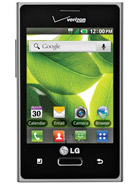
The Optimus Zone is tidy: 110 grams, 11.9mm thick, small enough to slip into a jeans pocket without complaint. The 3.2-inch frame feels right for its era, before phones grew into slabs. Build quality is basic plastic, but at this price point and year, that was standard. The removable battery and dedicated microSD slot are practical touches, though by 2013 even some flagships were beginning to lock these away. For a Verizon prepaid phone aimed at light users and kids, the form factor makes sense; it was never meant to compete on build quality.
Display
The 3.2-inch TFT screen with 240x320 resolution feels tight by any standard—125 ppi is well below what makes text crisp, and 65K colors lack the vibrancy of even modest IPS panels. The 50% screen-to-body ratio is high bezel by today's reckoning, but typical for the era. Web pages are cramped, fonts are hard to read without zooming, and it's a chore to compose a text message. This was a practical size in 2013 for one-handed use, but it makes prolonged use unpleasant.
Performance
An 800MHz single-core processor paired with just 512MB RAM is severely hamstrung. Gingerbread (Android 2.3.6) was already three years old when this phone launched, and the hardware struggles to keep up. App switching is slow, the browser crawls, and even unlocking the phone feels sluggish. There is no graphics processor listed, and the CPU has to handle everything. By 2013, entry-level rivals like the Motorola Moto G were offering better CPU performance and more RAM for similar money; this feels like a step backward even for its year.
Software & Support
Stuck on Android 2.3.6 with no upgrade available, the Optimus Zone was obsolete from the moment it arrived. Gingerbread lacks the efficiency and security patches of later Android versions, and most modern apps won't even install. The Google Play Store is functional but a time capsule—many utilities and games have been retired or updated beyond compatibility. For anything beyond calls, texts, and very basic tasks, this phone is a dead end.
Camera
The 3.15MP rear camera is strictly functional, delivering muddy, low-contrast shots outdoors and useless blurs indoors. Video recording is listed but low-resolution, and the lack of any front camera rules out selfies or video calls. By 2013, even budget phones had moved to 5MP or better; this sensor feels cheap and slow.
Battery & Charging
The 1540mAh Li-Ion battery is tiny by modern standards but appropriate for the phone's low power demands. LG claims up to 264 hours of standby (about 11 days) and 10 hours of talk time on 3G, figures that match the weak hardware. Charging speed isn't specified, but over microUSB it would be slow by today's standards. For light users who check their phone a few times a day, this would stretch to two or three days; heavy users would plug in daily.
Value & Verdict
At 60 EUR in 2013, the Optimus Zone was a pragmatic choice for prepaid or backup use—cheap, compact, and tough to break. But even then, faster rivals existed at similar prices. Today, it is an artifact. The hardware cannot run any modern Android version safely, the screen is hard to read, and the software is a liability. There is no reason to seek one out now.
Verdict
This phone was a stopgap for budget-conscious Verizon users in 2013 and has no place in 2024. Anyone considering a cheap used phone should look for something ten years newer with modern security and app support.
- Removable battery and dedicated microSD slot—practical features that modern budget phones have ditched
- Light and compact at 110g, fitting comfortably in a pocket
- Long estimated standby time (up to 264 hours on 3G), useful for a phone you won't use often
- 512MB RAM is strangled by Gingerbread and makes even basic navigation laggy
- 3.15MP camera produces poor low-light shots and lacks any front-facing option
- Stuck on Android 2.3.6 with no upgrade path, leaving it vulnerable and unable to run modern apps
LG VS410 Optimus Zone Key Specifications
The essentials at a glance. See the full spec sheet.
| Released | 2013, June. Released 2013, June |
|---|---|
| Display | 3.2 inches, 31.7 cm2 (~50.3% screen-to-body ratio), TFT, 65K colors |
| Resolution | 240 x 320 pixels, 4:3 ratio (~125 ppi density) |
| Chipset | Processor clock: 800 MHz |
| RAM & storage | 4GB 512MB RAM |
| Main camera | 3.15 MP |
| Selfie camera | No |
| Battery | 1540 mAh |
| Software | Android 2.3.6 (Gingerbread) |
| Dimensions | 102.6 x 61.5 x 11.9 mm (4.04 x 2.42 x 0.47 in) |
| Weight | 110 g (3.88 oz) |
| Network | CDMA / EVDO |
| NFC | No |
| USB | microUSB 2.0 |
LG VS410 Optimus Zone FAQ
Common questions, answered from the spec sheet.
Does the VS410 Optimus Zone support 5G?
No. The VS410 Optimus Zone tops out at CDMA / EVDO, without 5G.
What chipset does the VS410 Optimus Zone use?
The VS410 Optimus Zone runs on the Processor clock: 800 MHz.
What display does the VS410 Optimus Zone have?
A 3.2 inches, 31.7 cm2 (~50.3% screen-to-body ratio) TFT, 65K colors, 240 x 320 pixels, 4:3 ratio (~125 ppi density).
How big is the VS410 Optimus Zone battery?
The VS410 Optimus Zone has a 1540 mAh battery.
Does the VS410 Optimus Zone have NFC?
No, the VS410 Optimus Zone does not list NFC support.
Does the VS410 Optimus Zone support a microSD card?
Yes, the VS410 Optimus Zone supports expandable storage (microSDHC (dedicated slot)).