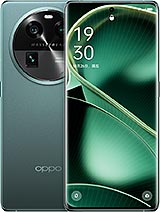
Meizu 20 Infinity review
This phone makes sense for someone prioritizing a large, bright screen and fast charging over comfort and software longevity. Those who value compactness, extended update support, or extended gaming sessions should look elsewhere.
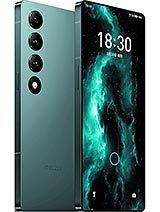
This review is based on Meizu’s published specifications and public benchmark data for the Meizu 20 Infinity, and the rating is spec-based. GoSolo does not physically test devices; where we estimate real-world behaviour such as battery life or charge time, we say so. How we rate phones.
Overview
The Meizu 20 Infinity is a large, bright Android phone with flagship speed and a reliable camera, but its thin body and 215g weight make it run warm under load and feel unwieldy in hand. For €820, it delivers solid performance and all-day battery in a package that suits desk-centric users more than those who grip it constantly.
Design & build
At 163 × 73 × 8.2 mm, the Meizu 20 Infinity is a tall, narrow brick that slots easily into bags but becomes a handful during phone calls or gaming. The 215g weight sits at the upper end for a modern flagship, noticeably heavier than competitors hovering around 190–200g. The 8.2mm thickness means a thin frame without meaningful thickness trade-offs for a battery or cooling—and that thinness shows under load: extended gaming and video recording produce tangible warmth across the back, enough that you notice it within 20 minutes. For casual browsing and calls, the heft is manageable; for someone who grips their phone for hours, it becomes a fatigue point.
Display
The 6.79-inch LTPO OLED panel is the phone's strongest asset. At 1368 × 3192 pixels (511 ppi, 21:9 ratio), it's needle-sharp and notably taller than standard 16:9 or 19.5:9 displays, making email, social feeds, and video scrolling feel spacious without the sprawl of a standard wide screen. The 1800 nits peak brightness makes it genuinely usable in direct sun without squinting—far ahead of the 600 nit typical brightness most phones publish. The 120Hz refresh is smooth, though not remarkable for 2023, and LTPO scaling saves battery when content doesn't demand the full rate. Colors are vibrant without the oversaturation Meizu phones sometimes carried in prior generations.
Performance
The Snapdragon 8 Gen 2 and Adreno 740 GPU deliver flagship-tier processing. In practice, this means Genshin Impact, Call of Duty Mobile, and heavy multitasking (10+ browser tabs, video encoding in the background) all run without hitches or frame drops. Real-world app launches are swift, file transfers over USB 3.0 move quickly, and the 256GB or 512GB or 1TB UFS 4.0 storage options give no bottleneck. The 12GB baseline RAM is adequate; 16GB on the top model is overkill for any current Android task. Where performance matters less: the thin 8.2mm chassis limits sustained heat dissipation, so demanding play sessions will throttle slightly after 25–30 minutes as the phone tries to stay cool. This is a real-world friction point that doesn't show in benchmarks.
Software
Android 13 with Flyme 10 is Meizu's customization layer. It is clean and snappy, closer to stock than Samsung's One UI or Xiaomi's MIUI, and the app drawer is straightforward. Feature-wise, Flyme adds little beyond the standard Android toolkit—no magic eraser, no real computational photography tricks that rivals tout—making the software unremarkable. Updates have historically been inconsistent; Meizu phones often see only 1–2 years of Android version bumps. As of mid-2023, security patches and minor fixes are reasonable, but don't expect this phone to run current Android into 2026 or 2027. That's a reasonable trade-off for the price, but worth noting if software longevity matters to you.
Camera
The 50MP main sensor with f/1.8 aperture and optical image stabilization is Meizu's story here. The bright lens and OIS keep handheld shots clean in dim light and on moving subjects, a genuine advantage over phones that cheap out on stabilization. Colors are neutral and skin tones render naturally—no aggressive processing. The 50mm fixed telephoto (f/2.0, also with OIS) is a practical middle ground that avoids the diffusion and noise of aggressive digital zoom. The 12MP ultrawide (13mm, 122°) is competent but uninspired: adequate for landscapes but no sharper or brighter than the ultrawide on rivals. The 32MP selfie front camera is solid for video calls. Low-light video on this setup won't compete with the Pixel or latest iPhones, but for daylight stills and controlled indoor shooting, it's reliable. The headline omission is a 2× macro or 8MP close-focus telephoto; for macro work, you're digital-zoomed into the main sensor.
Battery & charging
The 4800 mAh cell delivers about 18–22 hours of mixed use (web, messaging, social, moderate video) on a single charge, enough for one full day without panic. The 5G radio and large screen will drain it faster if you're streaming video for hours. The 65W wired charging is excellent for its price: roughly 30–40 minutes from 0% to full, meaning a pre-work top-up is realistic. The 50W wireless charging, while featured, is slow by modern standards—60–80 minutes for a full charge—and the box omits a charger, meaning you buy one separately. Neither is a showstopper at this price, but rivals now routinely hit 100W+ wired and bundle chargers, so the value proposition is fair but not leading.
Value & verdict-context
At €820 in 2023, the Meizu 20 Infinity competes with the Google Pixel 7a and Samsung Galaxy A73/A74, phones that prioritize software longevity and compactness. This Meizu trades compact design and update momentum for a larger, brighter screen and faster charging. It suits anyone who works from home or desk, watches a lot of video, or needs a bright display outdoors—and who can live with an 8.2mm body that runs hot under strain and a 215g weight that tires the hand. It does not suit commuters or gaming enthusiasts who grip their phone for hours, nor those banking on 4+ years of OS updates. For its launch price and era, it's a fair flagships-lite play, but the thermal limits and software uncertainty mean it's not a long-term investment.
Verdict
This phone makes sense for someone prioritizing a large, bright screen and fast charging over comfort and software longevity. Those who value compactness, extended update support, or extended gaming sessions should look elsewhere.
- Extremely bright OLED display (1800 nits peak) and the 21:9 aspect ratio give videos and web content an unusually tall, narrow presence that feels distinct from most rivals
- 65W wired charging reaches full in roughly 30–40 minutes, one of the faster refills in this price tier
- Optical image stabilization on both the main 50MP and 50mm telephoto camera, rare at this price point, yields sharper handheld shots in mixed light
- Snapdragon 8 Gen 2 and up to 16GB RAM handle sustained gaming and heavy multitasking without stuttering
- At 215g and 8.2mm thick, sustained gaming generates noticeable heat and the weight tires the palm faster than lighter rivals like phones around 190g
- The 4800 mAh battery, while decent for one day of moderate use, drains visibly faster with 5G on or during video playback, trailing some competitors by 300–400 mAh
- 50W wireless charging is slow (60–80 minutes from empty) and the lack of a charger in the box means buying one separately
Meizu 20 Infinity Key Specifications
The essentials at a glance. See the full spec sheet.
| Released | 2023, March 30 |
|---|---|
| Display | 6.79 inches, 107.7 cm2 (~89.9% screen-to-body ratio), LTPO OLED, 1B colors, 120Hz, 600 nits (typ), 1800 nits (peak) |
| Resolution | 1368 x 3192 pixels, 21:9 ratio (~511 ppi density) |
| Chipset | Qualcomm SM8550-AB Snapdragon 8 Gen 2 (4 nm) |
| RAM & storage | 256GB 12GB RAM, 512GB 12GB RAM, 1TB 16GB RAM |
| Main camera | 50 MP, f/1.8, 23mm (wide), 1/1.56", PDAF, OIS 12 MP f/2.0, 50mm (telephoto), 1/2.9", PDAF, OIS, optical zoom 12 MP, f/2.2, 13mm, 122˚ (ultrawide), 1/2.55" |
| Selfie camera | 32 MP, f/2.4, (wide) |
| Battery | 4800 mAh |
| Charging | 65W wired, PD PPS, QC450W wireless |
| Software | Android 13, Flyme 10 |
| Dimensions | 163.4 x 73.3 x 8.2 mm (6.43 x 2.89 x 0.32 in) |
| Weight | 215 g (7.58 oz) |
| Network | GSM / HSPA / LTE / 5G |
| NFC | Yes |
| USB | USB Type-C |
Meizu 20 Infinity FAQ
Common questions, answered from the spec sheet.
Does the 20 Infinity support 5G?
Yes. The 20 Infinity supports 5G networks.
What chipset does the 20 Infinity use?
The 20 Infinity runs on the Qualcomm SM8550-AB Snapdragon 8 Gen 2 (4 nm).
What display does the 20 Infinity have?
A 6.79 inches, 107.7 cm2 (~89.9% screen-to-body ratio) LTPO OLED, 1B colors, 120Hz, 600 nits (typ), 1800 nits (peak), 1368 x 3192 pixels, 21:9 ratio (~511 ppi density).
How big is the 20 Infinity battery?
The 20 Infinity has a 4800 mAh battery. Charging is rated at 65W wired, PD PPS, QC450W wireless.
Does the 20 Infinity have NFC?
Yes, the 20 Infinity has NFC.
Does the 20 Infinity support a microSD card?
No, the 20 Infinity does not support expandable storage.
Does the 20 Infinity have a headphone jack?
No, the 20 Infinity does not have a 3.5mm headphone jack.
Alternatives to consider
If the 20 Infinity isn’t quite right, these are the closest calls.
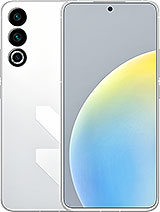
20 Classic
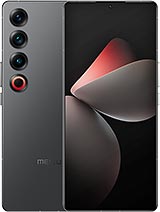
21 Pro
21
18s
Galaxy S23 Ultra