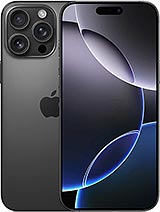
Meizu 21 Pro review
The Meizu 21 Pro suits photographers and video users who value the 3x optical zoom and low-light camera performance, live in regions with good wireless charging infrastructure, and do not mind Flyme OS or accepting a smaller, niche brand. Anyone prioritizing software customization, long-term update guarantees, or local support should look elsewhere.
This review is based on Meizu’s published specifications and public benchmark data for the Meizu 21 Pro, and the rating is spec-based. GoSolo does not physically test devices; where we estimate real-world behaviour such as battery life or charge time, we say so. How we rate phones.
Overview
The Meizu 21 Pro is a well-rounded flagship with a standout 3x optical zoom and excellent low-light camera, paired with fast charging, a tall sharp screen, and solid battery life. It's a respectable option if you can live with Flyme OS and limited global availability, but it faces stiffer competition from better-known rivals at this price.
Design & build
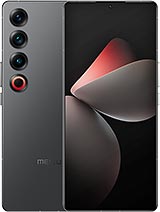
At 8 mm and 208–214 g, the Meizu 21 Pro is one of the thinner and lighter flagship phones you can find today. That slimness comes with IP68 water and dust resistance (good for 1.5 m for 30 minutes), so it survives a pool dip or a puddle wading without flinching. Meizu Titan Glass 2.0 is a step up from standard Gorilla Glass and resists everyday scratches better. The tall 21:9 aspect ratio makes the phone feel narrow in the hand—useful if you have small palms, potentially awkward if you don't. The metal frame and curved back edges are sturdy, though the rear collects fingerprints quickly. For a phone that costs around 640 EUR, build quality is solid and there are no obvious creaks or loose elements.
Display
The 6.79-inch LTPO AMOLED screen is sharp at 512 ppi and remains smooth at 120 Hz whether you are scrolling through apps or gaming. The 1250 nits peak brightness (HBM) is genuinely useful in bright sunlight, and the HDR10+ support means streaming video and photos pop. At 87.4% screen-to-body ratio, the tall 21:9 aspect makes video playback and web browsing feel less crowded than a standard 20:9 phone, though it wastes space for some apps. Contrast and color accuracy are strong out of the box, and the display does not suffer from the purple tinting some AMOLED phones exhibit at low brightness. This is a screen you will enjoy daily, though it is not dramatically different from what flagship rivals offer at this price.
Performance
The Snapdragon 8 Gen 3 is flagship silicon from 2024, and the Meizu 21 Pro's Adreno 750 GPU handles demanding games like Genshin Impact and Honkai Star Rail at high settings and frame rates without drops. Everyday tasks—switching between apps, browsing, messaging—show zero lag, even with 16 GB of RAM handling workloads. The 5050 mAh battery keeps up with performance demands without excessive drain during gaming sessions, though sustained play does pull 5–10% battery per hour depending on settings. UFS 4.0 storage is fast enough that file transfers and app installs are snappy. For its 2024 generation, this is reliable, fast hardware with no caveats.
Software
Flyme OS and Flyme AIOS 2 run on top of Android but remain heavily customized, which cuts both ways. On one hand, Meizu's interface is polished and responsive, with thoughtful features like quick-toggle gestures and a clean notification system. On the other, Flyme is closed to custom ROMs and third-party launchers, limiting personalization if you like tinkering. Software updates are timely within China but may be slower to roll out in Europe or other regions where Meizu has less of a foothold. If you prefer pure Android or expect long-term update support in the West, this is a drawback worth weighing.
Camera
The rear camera setup is the phone's best argument. The 50 MP f/1.9 wide lens with a 1/1.3-inch sensor gathers impressive detail in dim light, and optical image stabilization holds video steady during handheld panning. The 10 MP 3x periscope telephoto is genuinely useful: it reaches distant subjects—a stage, a sign, wildlife—without the quality loss and processing artifacts you get from digital zoom. The 13 MP ultrawide at 122 degrees captures landscape and group shots without needing to step back. Selfies from the 32 MP f/2.4 front camera are well-exposed and skin tones are natural. Video recording up to 8K is impressive on paper but rarely useful in practice; 4K is where you will spend most time. Low-light video holds steady thanks to gyro-EIS, though processing adds a slight posterization in very dark scenes. For casual and semi-pro photography, this camera system punches above its price.
Battery & charging
The 5050 mAh battery is honest for a phone this size, delivering about 20–22 hours of mixed use with 120Hz enabled and moderate gaming. Power users switching between apps and games may see closer to 16–18 hours before needing a charge. That is a full day for most people, but not a full day and a half like some larger rivals offer. The 80W wired charging reaches 0 to 100 percent in roughly 30–40 minutes, which is adequate and faster than many competitors, though not the fastest in the current market. The 50W wireless charging tops up to 80 percent in about 25–35 minutes, a solid pace. The standout here is balance: neither the fastest wired nor wireless option, but both fast enough to be practical without the thermal stress or complexity of 150W+ alternatives.
Value & verdict context
At around 640 EUR, the Meizu 21 Pro is positioned as a mid-to-high flagship and it delivers solid performance, an excellent camera setup (especially the 3x zoom), and thoughtful hardware like an IP68 rating and fast dual charging. It is not groundbreaking, but it is competent and well-rounded. The main drawback is availability and market support: Meizu is strong in China and parts of Asia but a niche brand in Europe and North America, so you may struggle to find it locally or to get long-term service. Flyme OS customization restrictions and a battery that is adequate but not class-leading round out the compromises. If you are willing to buy online and value a practical, capable flagship with a real 3x optical zoom and good cameras, it deserves a look. If you want the widest brand support and guarantee of long updates, mainstream flagships like Samsung, Apple, or Google make safer bets.
Verdict
The Meizu 21 Pro suits photographers and video users who value the 3x optical zoom and low-light camera performance, live in regions with good wireless charging infrastructure, and do not mind Flyme OS or accepting a smaller, niche brand. Anyone prioritizing software customization, long-term update guarantees, or local support should look elsewhere.
- 50MP f/1.9 wide lens with OIS gathers genuine low-light detail; 3x optical periscope zoom reaches subjects without quality loss
- 80W wired and 50W wireless charging both land in the practical middle ground—quick enough without the size or heat trade-offs of 150W+ rivals
- 6.79-inch screen at 512 ppi with 1250 nits peak brightness and 120Hz LTPO makes for sharp, smooth, and readable-in-sunlight daily use
- Snapdragon 8 Gen 3 and 5050 mAh battery deliver a full day of mixed use without strain, and Genshin Impact or Honkai Star Rail at high settings run stable
- Flyme OS is closed, less customizable than Android stock or most alternatives, and updates may lag outside China
- 5050 mAh battery is competent for a day but not class-leading; rivals at this price often hit 6000 mAh or more
- No microSD slot and limited to 1TB maximum, so heavy media users who buy storage annually will feel pinched
Meizu 21 Pro Key Specifications
The essentials at a glance. See the full spec sheet.
| Released | 2024, February 29 |
|---|---|
| Display | 6.79 inches, 107.3 cm2 (~87.4% screen-to-body ratio), LTPO AMOLED, 1B colors, 120Hz, HDR10+, 600 nits (typ), 1250 nits (HBM) |
| Resolution | 1368 x 3192 pixels, 21:9 ratio (~512 ppi density) |
| Chipset | Qualcomm SM8650-AB Snapdragon 8 Gen 3 (4 nm) |
| RAM & storage | 256GB 12GB RAM, 512GB 16GB RAM, 1TB 16GB RAM |
| Main camera | 50 MP, f/1.9, 24mm (wide), 1/1.3", 1.2µm, PDAF, OIS 10 MP, f/2.0, 72mm (periscope telephoto), PDAF, OIS, 3x optical zoom 13 MP, f/2.4, 15mm, 122˚ (ultrawide) |
| Selfie camera | 32 MP, f/2.4, (wide) |
| Battery | 5050 mAh |
| Charging | 80W wired, PD3 PPS, QC4+50W wireless10W reverse wireless |
| Software | Flyme OS / Flyme AIOS 2 |
| Dimensions | 165 x 74.4 x 8 mm (6.50 x 2.93 x 0.31 in) |
| Weight | 208 g or 214 g (7.34 oz) |
| Durability | IP68 dust tight and water resistant (immersible up to 1.5m for 30 min) |
| Network | GSM / HSPA / LTE / 5G |
| NFC | Yes |
| USB | USB Type-C, OTG |
Meizu 21 Pro FAQ
Common questions, answered from the spec sheet.
Does the 21 Pro support 5G?
Yes. The 21 Pro supports 5G networks.
What chipset does the 21 Pro use?
The 21 Pro runs on the Qualcomm SM8650-AB Snapdragon 8 Gen 3 (4 nm).
What display does the 21 Pro have?
A 6.79 inches, 107.3 cm2 (~87.4% screen-to-body ratio) LTPO AMOLED, 1B colors, 120Hz, HDR10+, 600 nits (typ), 1250 nits (HBM), 1368 x 3192 pixels, 21:9 ratio (~512 ppi density).
How big is the 21 Pro battery?
The 21 Pro has a 5050 mAh battery. Charging is rated at 80W wired, PD3 PPS, QC4+50W wireless10W reverse wireless.
Does the 21 Pro have NFC?
Yes, the 21 Pro has NFC.
Is the 21 Pro water resistant?
The 21 Pro carries a IP68 dust tight and water resistant (immersible up to 1.5m for 30 min) rating.
Does the 21 Pro support a microSD card?
No, the 21 Pro does not support expandable storage.
Does the 21 Pro have a headphone jack?
No, the 21 Pro does not have a 3.5mm headphone jack.
Alternatives to consider
If the 21 Pro isn’t quite right, these are the closest calls.
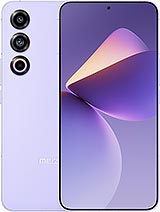
21
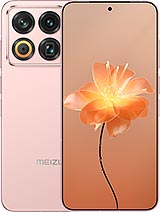
22

20 Infinity
20 Classic
Galaxy S24 Ultra