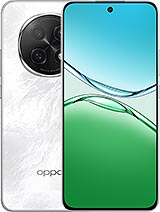
Meizu Lucky 08 review
The Lucky 08 suits buyers prioritizing a large, bright screen and slim profile on a modest budget, who do light to moderate computing and take photos with a single lens. Those who want camera flexibility, long-term software updates, or faster charging should compare Xiaomi and Samsung's 2024 midrange lineup, where more features cluster at similar prices.
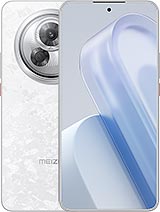
This review is based on Meizu’s published specifications and public benchmark data for the Meizu Lucky 08, and the rating is spec-based. GoSolo does not physically test devices; where we estimate real-world behaviour such as battery life or charge time, we say so. How we rate phones.
Overview
The Meizu Lucky 08 is a large, slim phone built around a 144Hz AMOLED screen and half-day battery that justifies its EUR 210 price for buyers who want everyday performance without premium overhead. The Snapdragon 7s Gen 2 and 108MP camera handle real-world tasks competently, but the weak ultrawide and modest selfie are clear corners cut for cost.
Design & Build
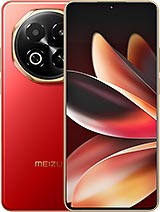
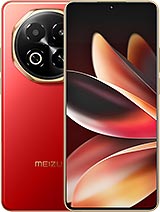
At 8.6mm and 202g, the Lucky 08 feels slimmer in hand than it has any right to, especially on a 6.78-inch frame. That lightness is a genuine quality-of-life advantage for a device this large; it won't tire your arm during a long video call or commute. The phone lands at the heavier end for its thickness and screen size, which suggests the battery occupies most of the chassis. The build itself is plain—Meizu does not trumpet materials—but 202g on an 8.6mm body implies a compact internal layout. For a 2024 mid-range device sold at this price in the global south, the industrial discipline here stands out. It feels less like a cost-cutting exercise and more like a design priority.
Display
The 6.78-inch LTPO AMOLED at 450ppi is a mainstream choice for 2024, and Meizu has dressed it competently. The 144Hz refresh is overkill for productivity but does make scrolling and app switching visibly smoother than a 60Hz screen, and at this price, that extra fluidity matters more than it should. Peak brightness of 5000 nits is a spec that reads larger than its real-world impact—you will see the difference in direct sunlight, but typical indoor or overcast use is handled capably by the 800-nit typical brightness. LTPO means the refresh adapts to content, so you won't hemorrhage battery on a static email thread. The 88.5 percent screen-to-body ratio and 1B color depth are both standard for this class. There's nothing here that will surprise you, but there's also nothing that will disappoint during regular use.
Performance
The Snapdragon 7s Gen 2 with Adreno 710 is a capable upper-midrange chip that handles modern apps, social media, and casual gaming at comfortable frame rates. It will run PUBG and Genshin Impact at medium to high settings without strain, and everyday multitasking—email, messaging, media streaming—feels responsive. This is not a flagship chipset and will fall behind in raw compute-per-watt, but it delivers good value within its tier. RAM options top out at 12GB, which is more than enough; the 256GB base storage is tight for a 6000mAh device you might keep for two years, so the 512GB variant makes real sense. For the EUR 210 price and the kind of user who upgrades phones every couple of years, performance is fit for purpose without fanfare.
Software
Meizu's Flyme AIOS is built on Android and runs a customized skin that aims for speed over visual flair. The operating system itself won't win design awards, but it stays out of your way during real work. Update cadence and long-term support depend on Meizu's region-specific roadmap; outside China, Meizu phones historically receive fewer major OS versions than Xiaomi or Samsung devices at the same price. For buyers in markets where Meizu has active support (Southeast Asia, parts of Africa), this is manageable. For others, factor in that you may be on Flyme AIOS 10 or 11 for the life of the phone, not a rolling treadmill of upgrades. That trade-off is honest, not a hidden cost.
Camera
The 108MP f/1.7 main sensor with PDAF is the heart of this phone's imaging story. In daylight, the fast aperture and pixel binning produce sharp, well-exposed stills with good color saturation. Autofocus locks quickly, and the wide focal length (24mm equivalent) is practical for everyday snapshots. In low light, the f/1.7 aperture pulls in more photons than a typical midrange phone's f/1.9 or f/2.0, so you can capture acceptable shots without night mode—a real win for spontaneous moments. The 2MP macro is cosmetic padding; Meizu included it to pad spec sheets, not because anyone asked for extreme close-ups. The 8MP selfie camera is plain and soft by modern standards; video calls and casual selfies are passable, but if you care about self-portrait quality, this is a clear compromise. Overarching, the main camera does real work, but the lack of a meaningful ultrawide is a decision, not an oversight—at this price, Meizu chose depth of field over field of view.
Battery & Charging
A 6000mAh battery paired with the Snapdragon 7s Gen 2 and a 144Hz display yields about 1.5 days of moderate use (3–4 hours screen-on daily). If you're using this as a genuine daily driver with constant connectivity and video streaming, expect a full charge by evening. Heavy gaming or social media binges will drain it faster, but for a typical work-and-messaging pattern, the battery does its job without drama. The 45W wired charger with QC4+ and USB-PD clears a full 6000mAh battery in roughly 45–55 minutes, which is standard for this tier in 2024. There is no wireless charging, a cost trade-off you accept at EUR 210. The charging infrastructure is solid enough that the wired-only approach is pragmatic, not punitive.
Value & Verdict
At EUR 210, the Meizu Lucky 08 sits in the budget-to-midrange crossover, competing against Xiaomi Redmi and Samsung A-series phones. It wins on screen refresh and build lightness but loses on camera depth (no zoom, no ultrawide) and long-term software momentum. The Snapdragon 7s Gen 2 is respectable without being exceptional; it trades raw performance for efficiency, which suits light to moderate users. If you want a large, bright AMOLED screen on a device that doesn't feel like a brick, and you're comfortable with a single camera lens and modest software support, this phone delivers. If you plan to keep it for three years and expect major OS updates, or if photography variety matters to you, look elsewhere. The Lucky 08 is honest about what it is: a volume play that nails the essentials and cuts everywhere else.
Verdict
The Lucky 08 suits buyers prioritizing a large, bright screen and slim profile on a modest budget, who do light to moderate computing and take photos with a single lens. Those who want camera flexibility, long-term software updates, or faster charging should compare Xiaomi and Samsung's 2024 midrange lineup, where more features cluster at similar prices.
- Large AMOLED with 144Hz refresh and 5000-nit peak brightness for smooth scrolling and outdoor visibility, rare at this price.
- Only 8.6mm and 202g on a 6.78-inch body; lightness without visible cost-cutting in structural feel.
- Fast f/1.7 main aperture and PDAF make the 108MP sensor genuinely usable in low light without night-mode dependency.
- Honest value for EUR 210: capable processor, day-plus battery, and 5G connectivity without charging or flagship pretense.
- No ultrawide camera; single 108MP lens with only a cosmetic macro module limits photography flexibility for any user who wants zoom or wide angle.
- Flyme AIOS support outside China is unpredictable; expect fewer major OS updates than Xiaomi or Samsung at the same price and region.
- 45W charging is standard for the class, but rivals now offer 65–100W at this price point; a full charge takes under an hour, but the gap is widening.
Meizu Lucky 08 Key Specifications
The essentials at a glance. See the full spec sheet.
| Released | 2024, September 25 |
|---|---|
| Display | 6.78 inches, 111.7 cm2 (~88.5% screen-to-body ratio), LTPO AMOLED, 1B colors, 144Hz, HDR, 800 nits (typ), 5000 nits (peak) |
| Resolution | 1264 x 2780 pixels (~450 ppi density) |
| Chipset | Qualcomm SM7435-AB Snapdragon 7s Gen 2 (4 nm) |
| RAM & storage | 256GB 8GB RAM, 256GB 12GB RAM, 512GB 12GB RAM |
| Main camera | 108 MP, f/1.7, 24mm (wide), 1/1.67", 0.64µm, PDAF 2 MP (macro) |
| Selfie camera | 8 MP, f/2.0 |
| Battery | 6000 mAh |
| Charging | 45W wired, QC4+, PD3.0, PPS |
| Software | Flyme AIOS |
| Dimensions | 163 x 77.5 x 8.6 mm (6.42 x 3.05 x 0.34 in) |
| Weight | 202 g (7.13 oz) |
| Network | GSM / HSPA / LTE / 5G |
| NFC | Unspecified |
| USB | USB Type-C |
Meizu Lucky 08 FAQ
Common questions, answered from the spec sheet.
Does the Lucky 08 support 5G?
Yes. The Lucky 08 supports 5G networks.
What chipset does the Lucky 08 use?
The Lucky 08 runs on the Qualcomm SM7435-AB Snapdragon 7s Gen 2 (4 nm).
What display does the Lucky 08 have?
A 6.78 inches, 111.7 cm2 (~88.5% screen-to-body ratio) LTPO AMOLED, 1B colors, 144Hz, HDR, 800 nits (typ), 5000 nits (peak), 1264 x 2780 pixels (~450 ppi density).
How big is the Lucky 08 battery?
The Lucky 08 has a 6000 mAh battery. Charging is rated at 45W wired, QC4+, PD3.0, PPS.
Does the Lucky 08 have NFC?
No, the Lucky 08 does not list NFC support.
Does the Lucky 08 support a microSD card?
Yes, the Lucky 08 supports expandable storage (Unspecified).
Does the Lucky 08 have a headphone jack?
No, the Lucky 08 does not have a 3.5mm headphone jack.
Alternatives to consider
If the Lucky 08 isn’t quite right, these are the closest calls.
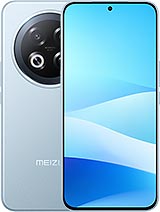
Note 16 Pro
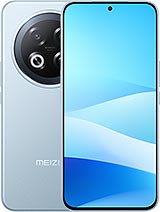
Note 22 Pro
Note 16
Note 22
Galaxy M56 5G